

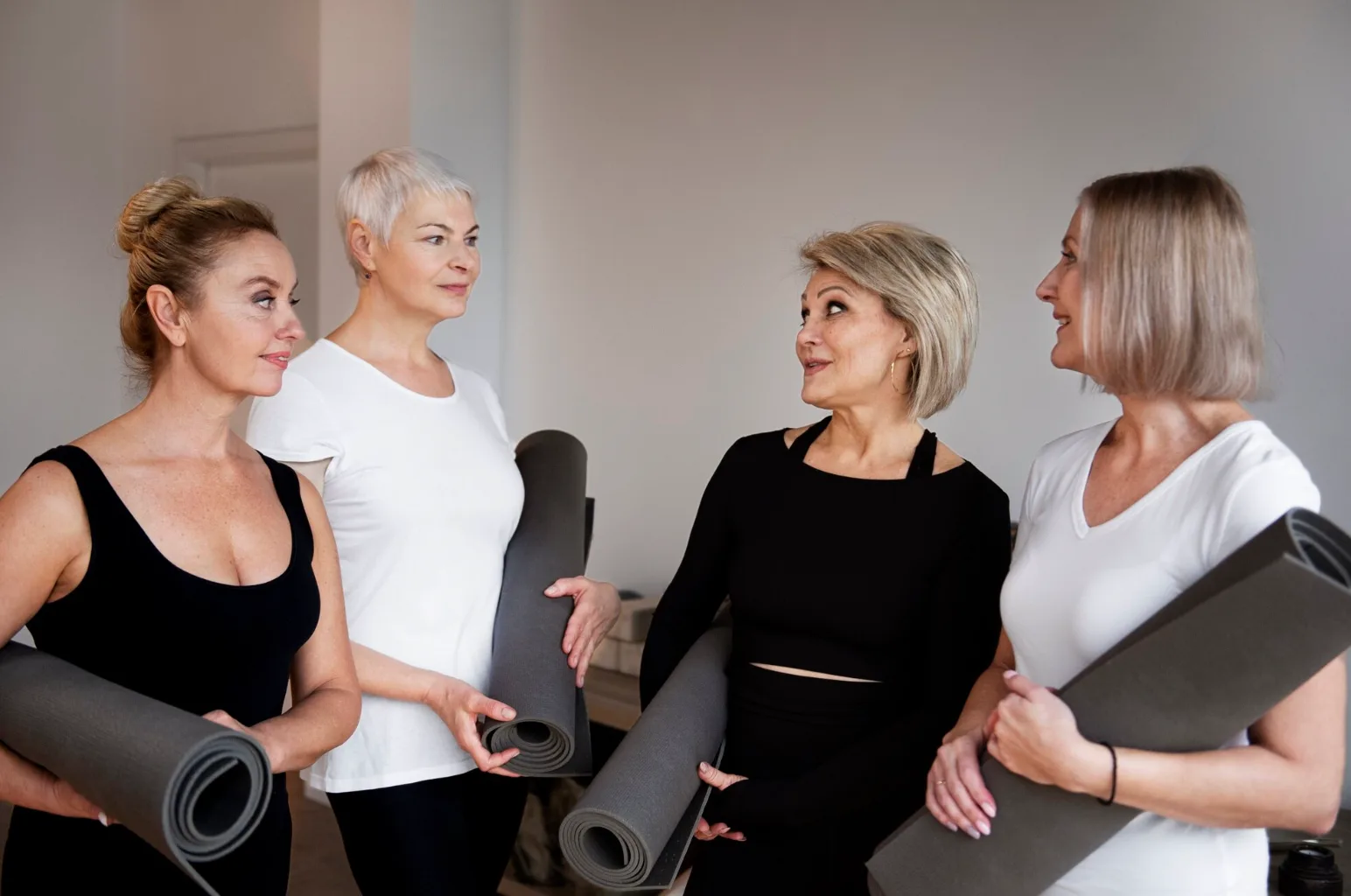
Parkinson’s disease is complex. It affects not only the muscles but also the brain’s ability to initiate, coordinate, and control movements. People with a Parkinson’s diagnosis are told that exercise can help, that movement matters. For many professionals in the movement space, there are moments of quiet uncertainty. When a client with a diagnosis comes in hopeful but cautious, the instructor may be asking an unspoken question. What can really help?
Traditional fitness training, even when well-intentioned, can often fall short because it is not designed for neurological conditions. Exercises that are deemed good in theory can miss the mark in practice when they lack the specificity needed to help create measurable, real change. It is right here that Pilates 4 Parkinson’s steps in, with good intentions and effective outcomes, and a new kind of system that is redefining what’s possible.

A Smarter Approach to Movement and Neurology
At the core of this method was a simple but powerful idea: Parkinson’s affects movement, but correctly applied movement can also influence Parkinson’s. This is about precision and understanding of how the brain and body communicate. This knowledge was used by Pilates 4 Parkinson’s to design movements that actively support neurological function.
Instructors who are unsure of what to try will learn how it works and how to apply it. Skillfully developed through decades of clinical application and grounded in neuroscience, the approach equips movement professionals with more than just exercises. It gives them a strategy, a framework, and a way to move forward with clarity. And it’s a shift that can change everything.
The First Step: Building a Foundation That Works
Without a clear foundation, even the most motivated instructor can feel overwhelmed by the complexity of Parkinson’s. For professionals who find themselves in this space, the starting point is often the most important. And this is where the 5 Hour Workshop: The 11 ABSOLUTE MUST-DO Exercise Mini Sets for Parkinson’s Disease-An Instructor’s Guide comes in. Offering a focused, intense experience designed to help deliver immediate, actionable insight for clients.
This 5-hour live workshop is designed as an important entry point into a highly specialized methodology. The curated set of essential movement sequences, referred to as “Mini-Sets,” is the backbone of effective Parkinson’s training. While the program is not overwhelming in theory alone, participants learn why each movement matters and how it directly impacts the neurological challenges that are associated with Parkinson’s. The course’s highlighted features:

- A structured, clear movement system: Participants are introduced to the 5 Hour Workshop: The 11 ABSOLUTE MUST-DO Exercise Mini Sets for Parkinson’s Disease-An Instructor’s Guide , which address the key Parkinson’s-related impairments.
- Immediate application: Each concept is designed to be used immediately, allowing instructors to implement what they learn with clients straight away.
- Neuroscience-backed insights: The workshop is a bridge between brain function and movement that helps professionals understand the “why” behind each Mini-Set.
- Focus on functional areas: These include posture and spinal mobility. Coordination, gait, and balance are all critical elements that are often affected by the disease.
- Live and recorded access: This flexibility ensures that participants can interact with the material in real time or revisit it later for a more in-depth understanding.
- Professional development benefits: The workshops offer NPCP continuing education credits, making it both career-enhancing and educational.
From Understanding to Mastery: 20 Hour Instructor Certificate Course (P4P-ICC)
5 Hour Workshop: The 11 ABSOLUTE MUST-DO Exercise Mini Sets for Parkinson’s Disease-An Instructor’s Guide provides an active shift in perspective, one that can transform how instructors approach movement, programming, and ultimately, client outcomes. For those wanting to go deeper once the foundation is in place, who want to build a complete and effective program for individuals at different stages of Parkinson’s, the 20 Hour Instructor Certificate Course (P4P-ICC) offers a high-impact learning experience. It allows instructors to adapt, progress, and personalize their services.
The 20 Hour Instructor Certificate Course (P4P-ICC) is a comprehensive 20-hour training course, specifically designed for professionals who are ready to move beyond foundational knowledge and into an informed, confident program design.
The course, delivered over 8 consecutive weeks, offers a structured and in-depth exploration of how to work with Parkinson’s across its many stages. It provides instructors with tools that can create long-term, meaningful change for their clients. The course highlights include:
- Comprehensive assessment training: Understanding the individual client’s needs and learning how to evaluate movement patterns and identify limitations.
- Adaptation strategies: Gain the skills to adapt exercise effectively and safely as symptoms evolve.
- Program progression and design: Learn to create progressive, structured programs that are tailored to the different stages of the disease.
- Step-by-step framework: Repeatable, clear systems to help build confidence in decision-making.
- Advanced neurological understanding: In-depth knowledge of how Parkinson’s affects the brain, and how targeted movements can support function. Real-world application: Designed to bridge practice and theory to ensure that each concept can be translated into actionable results for clients.
- Flexible learning structure: Weekly sessions offer an ideal amount of time to apply, absorb, and refine understanding over time.
- Continuing education credits: Offers support while expanding expertise in a highly specialized area, supporting professional growth.

A System Designed for Real Life Impact
The methods offer not only content but also intention. Every element of the training was developed around one goal: to help professionals create measurable, meaningful improvement in the lives of those living with Parkinson’s. This includes a strong emphasis on:
- Spinal mobility helps maintain fluid and efficient movement.
- Postural alignment to help counteract the forward-flexed tendencies seen in Parkinson’s.
- Gait training to reduce fall risk and improve walking patterns.
- Coordination exercises that support a smoother, more controlled movement.
- Functional independence supports quality of life in everyday activities.
5 Hour Workshop: The 11 ABSOLUTE MUST-DO Exercise Mini Sets for Parkinson’s Disease-An Instructor’s Guide and The 20 Hour Instructor Certificate Course (P4P-ICC) provide a mindset shift that can change everything. These are goals with tangible outcomes that directly support how someone with Parkinson’s lives, feels, and moves. When instructors are equipped with the correct tools, the outcomes become far more achievable.
Perhaps the most powerful transformation isn’t only in the client but in the professionals themselves. Without learning the methodology or the understanding required, many instructors can find themselves uncertain. Not being able to rely fully on general principles, their approach can feel unprepared. The course offers a shift. An opportunity to see patterns more clearly, to understand movement on a deeper level, and to be able to teach with confidence and intention. And it is through this confidence that instructors can guide clients with greater clarity, purpose, and progress.

Changing Lives Through Movement
The Pilates 4 Parkinson’s 5 Hour Workshop: The 11 ABSOLUTE MUST-DO Exercise Mini Sets for Parkinson’s Disease-An Instructor’s Guide and The 20 Hour Instructor Certificate Course (P4P-ICC) offer a rare clarity: a structured, clear, science-informed path forward. They provide a powerful method that is grounded in understanding and refined through experience.
For professionals who are ready to elevate their practice, it represents an opportunity to step into a new level of expertise. And for the clients they serve, it represents something far more meaningful. Movement guided by purpose, hope backed by science, and a future that is shaped by possibility.