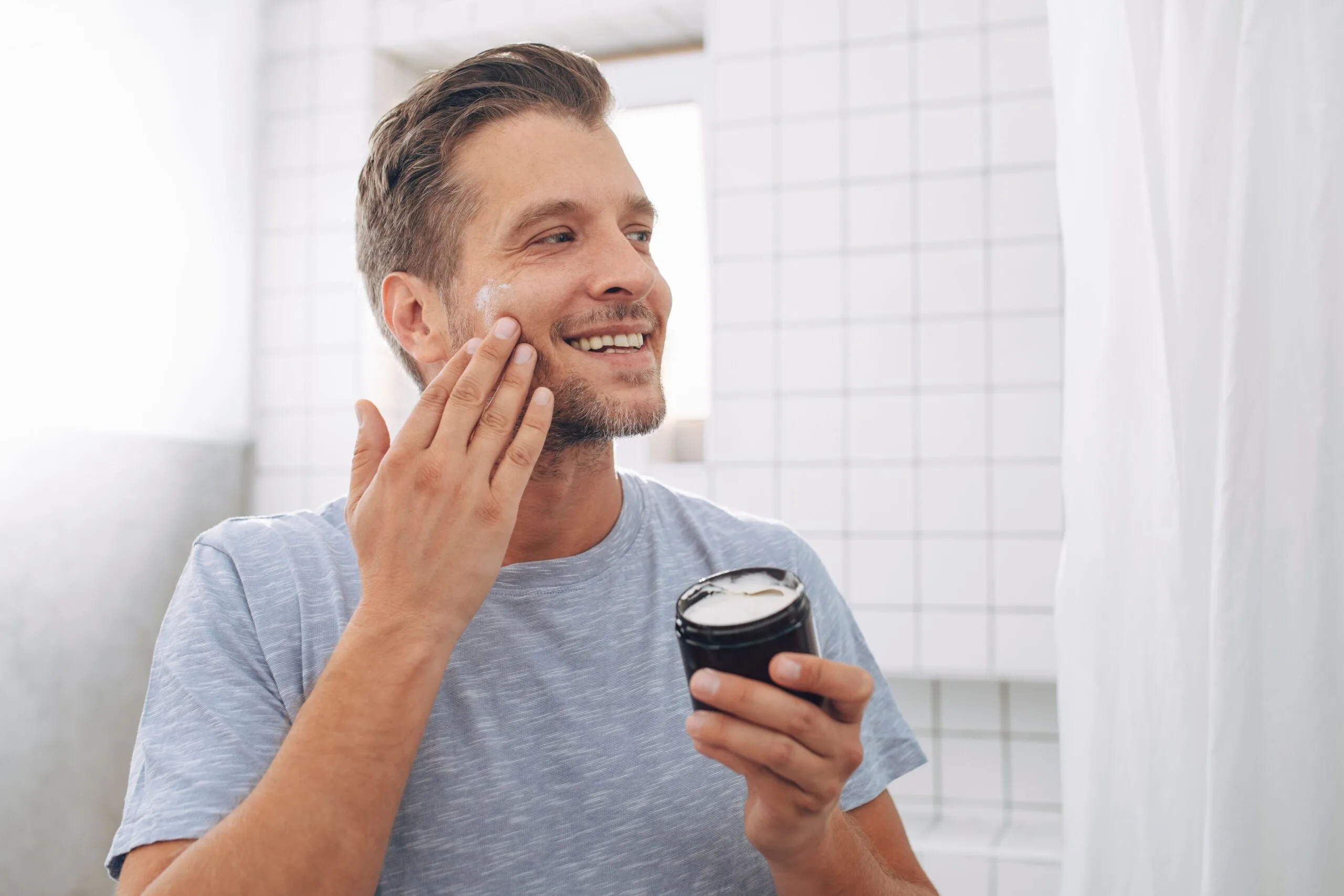


She knew the jar was almost empty without looking. Her thumb had started finding the bottom of it each morning. The familiar dip where there had once been cream now felt strangely deep beneath her fingertip. She tilted the jar anyway, scraped what remained along the side, and caught the last little smear between two fingers.
She knew the texture of that cream. How much her skin needed on a cold morning compared with a humid one. She understood that if she used too much, her face felt coated; too little, and the tightness around her cheeks returned by lunchtime. She knew the product by touch.
What she did not know was who had made it. That thought stayed with her as she stood at the sink.
Most skincare enters our lives in a strangely anonymous way. We pick it up because someone recommended it, because the bottle caught our attention, because an ingredient became fashionable, or because the words on the label promised something we wanted to see in the mirror.
Then, if we like it, it becomes part of us. We learn the sound of the pump. The number of drops. The way it spreads between our palms. We know exactly where it sits on the bathroom shelf, but rarely do we think about the hands on the other side of the bottle.

A Skincare Brand That Started with a Problem at Home
In 2015, Kristin Mutchler was looking for a way to soothe her baby’s severe eczema.
Drawing on her background as a cosmetic formulator and herbalist, she turned to botanical ingredients and created what became the Eczema Elixir. The product’s origin is worth remembering because it explains something about the company’s personality today: the formulation came first, the business came later.
Pickle’s Potions has since grown well beyond those early batches, with stores in Maine and customers beyond the state, but the company continues to emphasize small-batch production and hands-on formulation.
That detail changes how the products can be understood.
“Small batch” is sometimes used as a visual shorthand for handmade beauty: amber bottles, botanical illustrations, and a little rustic charm, but there is another meaning. It suggests attention. It suggests someone is close enough to the process to notice the details, and in skincare, details are important.
That includes the concentration of an ingredient, the stability of a formula, and how a product spreads. It means noticing whether a botanical overwhelms the rest of the formulation or blends into it, and whether the finished product feels pleasant enough that someone will actually keep using it.
Pickle’s Potions says its formulas are researched, designed and beta-tested before launch, with production taking place in Winthrop, Maine. The brand also emphasizes ingredient transparency, translating INCI terminology into more accessible language.
That is a very different invitation from simply telling someone what to buy.
When Botanical Does Not Have to Mean Basic
When it comes to botanical skincare, there is a tendency to imagine that “natural” and “scientific” occupy opposite sides of the room. They do not. A plant is chemistry, too. So is an essential oil.
A seed, flower or fruit contains compounds that can behave very differently depending on how they are extracted, concentrated and formulated.
The question no longer revolves around whether nature or science wins; it is whether the two can be used intelligently together.
That approach is visible throughout Pickle’s Potions, where recognizable botanicals sit alongside familiar cosmetic ingredients such as hyaluronic acid, niacinamide, panthenol, vitamin E and vitamin C derivatives.


When a Serum Has More Than One Job
There are mornings when the mirror catches something before the mind does. The skin looks a little flat. It doesn’t look older or troubled. It just appears less alive. The complexion can seem uneven after a week of poor sleep or too much time outdoors. Texture becomes more noticeable. The face looks as though it needs a little more attention than usual.
Pickle’s Potions’ ‘Chi’ Serum – Brightening Collagen Stimulant combines three forms of vitamin C: magnesium ascorbyl phosphate, aminopropyl ascorbyl phosphate and tetrahexyldecyl ascorbate, with bakuchiol, ferulic acid, vitamin E, panthenol, hyaluronic acid and allantoin.
Vitamin C derivatives are commonly used in cosmetic formulations for antioxidant and brightening-focused care. Bakuchiol, a botanical ingredient derived from the babchi plant, has also attracted attention as an ingredient used in products targeting the appearance of texture and visible signs of aging.
Around those ingredients are components that support hydration and skin comfort.
The product isn’t positioned as a wonder fix for the skin. The point is that a well-considered formula can have several complementary purposes without turning the bathroom cabinet into a laboratory. Pickle’s Potions recommends applying two to three drops after cleansing and toning, followed by moisturizer.
The Comfort Step Matters Too
A serum can be precise. A moisturizer is often more instinctive. There is the moment after cleansing when the skin feels slightly exposed, and the hand reaches almost automatically for something soothing because it feels better to put something between freshly washed skin and the rest of the day.
The first thing about Pickle’s Potions’ Cucumber + Calendula Moisturizer is sensory. It comes in an airless pump bottle and is designed to work as a daily facial lotion or as the final step of an evening routine.
Hyaluronic acid and glycerin provide familiar hydration-focused ingredients, while sodium PCA and amino acids such as proline, serine and arginine complement the skin’s own moisturizing systems. The formula also contains niacinamide, calendula extract, vitamins C and E, CoQ10, wheat and soy proteins, and cholesterol.
Cholesterol is perhaps the ingredient that makes people stop. The word carries so much baggage that it can seem surprising to find it in a face cream. But topical cholesterol is not the same thing as the cholesterol discussed in a blood test. It is naturally present in the skin and is one of the lipids that helps make up the skin barrier.
That is an important distinction because it brings the conversation back to something more fundamental than anti-aging. Skin needs a barrier. It needs water to stay where it belongs. It needs lipids. It needs protection from the constant friction and exposure of ordinary life.
The Cucumber + Calendula Moisturizer approaches that idea from several directions at once: hydration, conditioning, barrier-supportive ingredients and antioxidants, all within a formula intended to feel comfortable enough for everyday use.

A Routine That Does Not Need to Become a Project
Put Chi and the Cucumber + Calendula Moisturizer together and the logic becomes simple.
Chi is the more targeted step. The moisturizer then becomes the quieter second act. It brings hydration and conditioning ingredients into the routine without asking the user to add another complicated layer.
There is something appealing about that pairing because neither product needs to carry the entire burden of skincare. One is targeted. One is comforting. One asks you to think about what you want to address. The other asks you to notice how your skin feels. Together they create a routine that can take less time than scrolling through reviews of the next product you are thinking about buying.
Knowing What Your Skin Knows
The jar from the beginning is still sitting beside the sink. Only now, imagine that it is not quite empty. There’s a small amount of Cucumber + Calendula lining the bottom of the bottle. One final press of the pump sends the last bit into the open palm. The texture is familiar by now. Light. Fresh. Enough to spread across the face without leaving the skin feeling forgotten beneath a layer of product.
The serum has already been absorbed. Now comes the moisturizer. For a moment, there is nothing to optimize. Just the simple recognition of what feels good.
That may be the more meaningful promise of skincare built with intention. Not that a formula can stop time or turn skin into something it was never meant to be, but that it can make caring for the skin feel more understandable.
The brand story begins with Kristin “Pickle” Mutchler trying to formulate something for her own child. It continues through small-batch products that bring together botanicals and modern cosmetic ingredients, including Chi’s trio of vitamin C derivatives and bakuchiol, and the Cucumber + Calendula Moisturizer’s combination of cucumber, calendula, humectants, amino acids, niacinamide, antioxidants and barrier-supportive components.
But the story ultimately comes back to something much smaller. A hand reaching for a bottle or a few drops pressed into the skin. The knowledge that develops when you use something often enough to recognize it without looking.
The next time you find yourself scraping the bottom of a nearly empty jar, pause before reaching for the replacement. Feel what is left between your fingers. Remember what it does. Then turn the bottle around and read the story behind it.
We have become very good at knowing our skincare by touch. Maybe the next step is knowing why we chose it in the first place.