
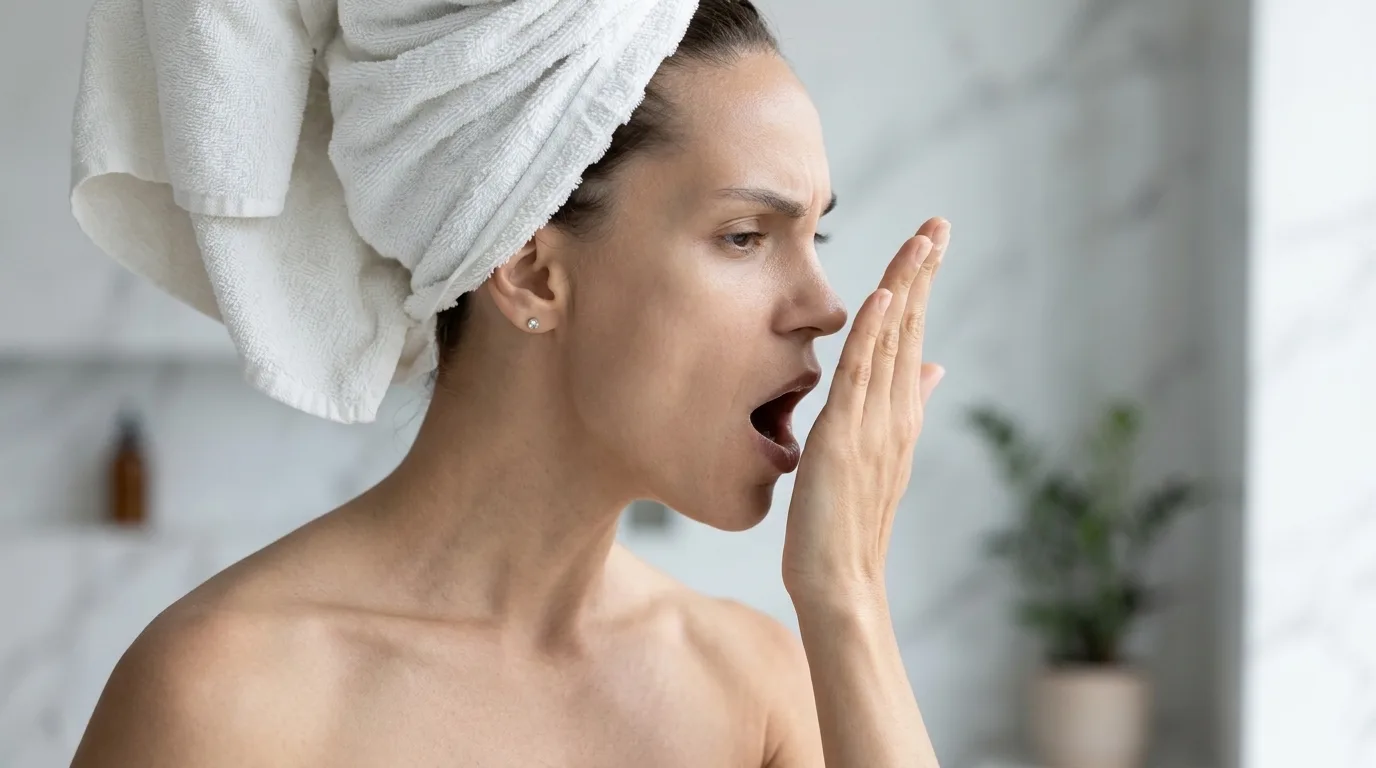
The mint had lost its flavor before she had finished brushing her teeth. She noticed it because she was standing at the bathroom sink, waiting for the tap to warm up, and suddenly became aware of how dry her mouth felt. It wasn’t painfully dry, just that slightly sticky feeling that made her run her tongue across the inside of her cheek and reach for the glass she had left on the windowsill. She took a sip, spat out the toothpaste, and carried on getting ready.
Except it happened again the next morning. A few days later, she found herself keeping water beside the bed. She started noticing her mouth after coffee, after a long conversation, and when she woke during the night.
No one else would have noticed, but she did.

The overlooked side of change
Much of the discussion around GLP-1 therapy understandably centers on weight and metabolic health, but eating and drinking can change in smaller ways too. Familiar routines may begin to feel slightly different. When someone is eating less, drinking less, or simply relating to food differently, familiar habits can shift with them.
The American Dental Association lists GLP-1 receptor agonists among medications that can contribute to or worsen oral dryness. Dehydration, other medications and underlying conditions can also contribute. Persistent dryness is therefore something worth discussing with a dentist or healthcare professional.
FULM has approached that quieter part of the experience from a practical angle. Founded by people who use GLP-1 therapy themselves, the company makes supplements aimed at some of the practical issues people may notice while taking GLP-1 medications. Its first product, Oral Shield, focuses on one particularly easy-to-overlook part of that experience: the mouth.
When the Mouth Becomes Part of the Routine
Oral Shield offers a different format: a fizzy probiotic lozenge designed to dissolve slowly on the tongue.
The formulation contains three probiotic strains: Lactiplantibacillus plantarum Lp-G18, Lacticaseibacillus paracasei LPc-G110 and Ligilactobacillus salivarius LS-G60, providing 10 billion CFU per lozenge at the time of production. There is also a small amount of inulin, 5 mg, along with 105 mg of USP-grade sodium bicarbonate.
Its effervescent base creates a gentle fizz, with citric acid providing a sour note that FULM says helps stimulate saliva flow. The lemon-and-mint flavor is intended to leave the mouth feeling fresh, while the probiotic component is intended to support the oral microbiome.


The formulation is also sugar-free, vegan and gluten-free. Each lozenge contains three calories and zero grams of sugar, with sorbitol, isomalt and stevia used for sweetness.
Oral Shield is not a substitute for ordinary oral care. Hydration, dental hygiene and professional dental attention remain foundational, particularly when dryness is persistent. Oral Shield is presented as a dietary supplement rather than a treatment for dry mouth or another medical condition.
A Useful Pause: What Dryness Can Tell You
Dry mouth is easy to brush off. A glass of water fixes it for a few minutes, the day gets busy, and the sensation disappears again. But when it keeps happening, the pattern becomes harder to ignore.
Water can become surprisingly easy to forget. A smaller appetite may mean smaller meals, and for some people the usual cues around eating and drinking simply aren’t as noticeable. Keeping a bottle or glass nearby is an unremarkable solution, but sometimes the simplest solutions are the ones that actually get used.
For people who keep forgetting to drink, attaching water to something that already happens every day can be more useful than setting another reminder. A glass alongside morning medication, water with the first coffee, or a bottle taken along for a walk creates a cue without adding another task to the day. The idea isn’t to monitor every sip. It is simply to make drinking easier to remember when thirst is no longer providing a reliable prompt.
Brushing twice a day with fluoride toothpaste and cleaning between the teeth remain part of the everyday foundation of oral care. If the mouth is frequently dry, sticky or uncomfortable, it is worth mentioning at the next dental appointment. Persistent or significant symptoms can also be discussed with the healthcare professional managing the medication, particularly when other changes are happening at the same time.

It can help, too, to resist the temptation to explain every new sensation as a side effect. A dry mouth can have several causes, including dehydration, medications other than GLP-1 therapies, mouth breathing and certain health conditions.
The Clues Are Often Ordinary
Sometimes the easiest way to notice a change is to pay attention to what has become slightly inconvenient.
A mouth that feels dry after waking. Food that seems harder to swallow without a sip of water. Lips that keep needing balm. A tongue that feels coated by the middle of the afternoon. Breath that seems different despite brushing. None of these signs, on their own, can tell someone why their mouth feels different. They are clues that something in the routine may have shifted.
They are worth noticing without turning them into a checklist.

One practical habit is to look at the pattern rather than a single uncomfortable morning. Is the dryness worse after coffee? Does it appear on days when very little fluid has been consumed? Is it happening overnight, during exercise, or while talking for long periods? Has a new medication been added? Are there other symptoms alongside it?
A few ordinary adjustments may help. Sipping water regularly can be easier than waiting until thirst becomes obvious. Sugar-free gum or lozenges may help stimulate saliva for some people, while very sugary drinks and frequent sugary snacks can work against oral health. Alcohol and tobacco can also contribute to a dry mouth, so their effect is worth considering when
symptoms persist.
The bathroom mirror can’t explain why the dryness is happening. It can, however, make a pattern easier to notice.
When eating, drinking or medication routines are changing at the same time, those patterns can be useful information. Paying attention doesn’t mean assuming something is wrong. It simply makes it easier to recognize when a change deserves a closer look.

The Details That Count When Nobody is Looking
Changes in health are often presented through things that can be photographed or measured: weight, measurements, the same shirt worn months apart. The before-and-after image is easy to understand.
Sometimes wellness shows up in smaller things: a mouth that no longer feels quite so uncomfortable, a glass of water remembered before thirst sets in, smaller meals that still contain meaningful nutrition, and an awareness of strength alongside weight.
The morning at the bathroom sink becomes less incidental than it first seemed. The glass of water is there now. The tap runs. The toothbrush moves across the teeth, and somewhere halfway through brushing, the mint begins to fade.
There is no photograph of that moment. The mint may still disappear before the brushing is finished.
At least now she notices.