

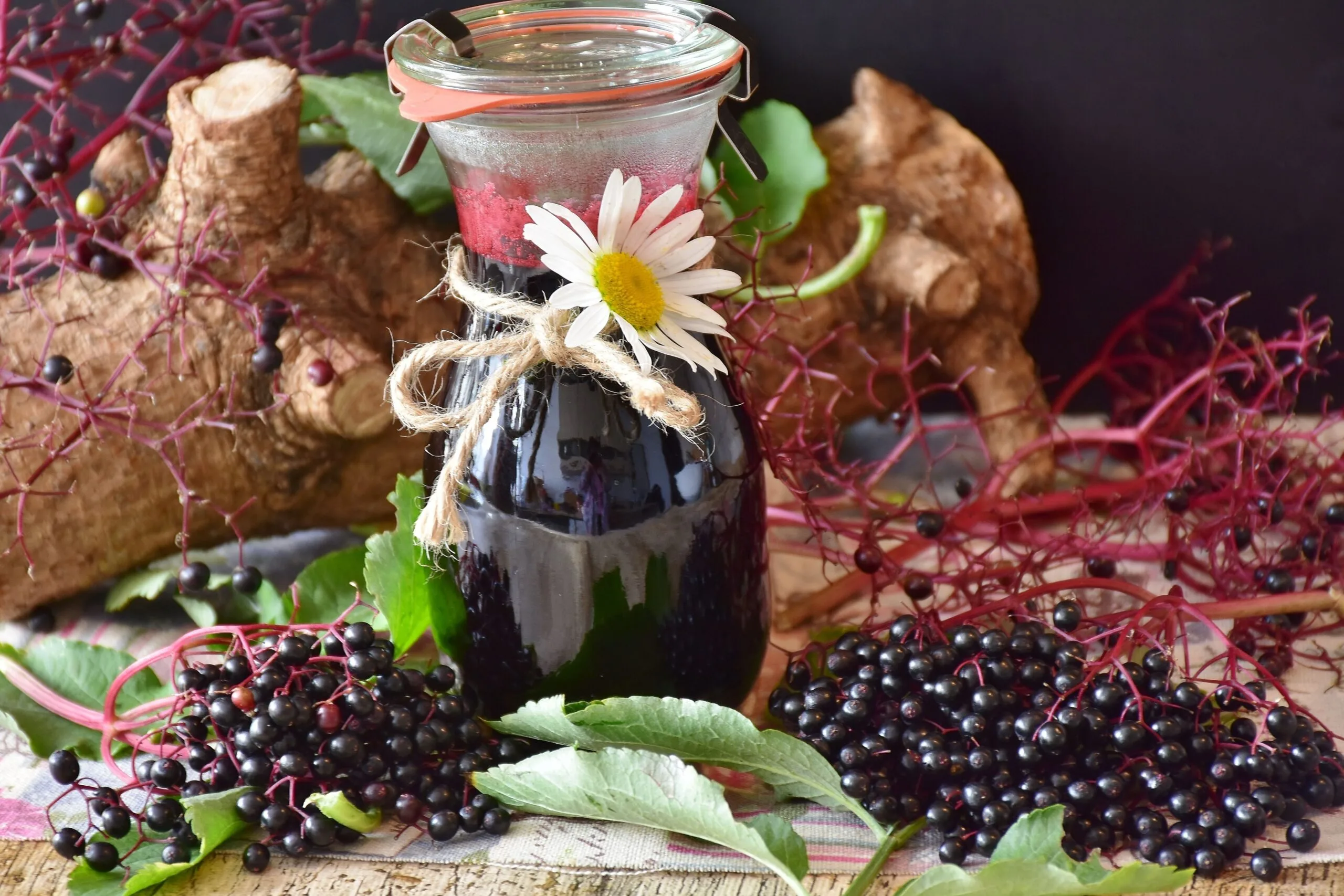
By the time breakfast is over, the kitchen rarely looks quite as it did when the morning began. A bowl waits beside the sink instead of going into the dishwasher, toast has been abandoned on a plate, and crumbs gather around the toaster. The cupboard, meanwhile, holds the things that have become part of the household routine: tea, honey, vitamins, jars opened and closed so often that nobody has to think about where they belong.
Some of those things begin with a deliberate decision. Others simply become familiar through repetition. Some are reached for so often that eventually their place in the cupboard barely registers.
A parent becomes more particular about what goes into the pantry. Certain ingredients become familiar. An herbal preparation that once required looking up gradually becomes something recognized by sight, its place in the cupboard as ordinary as the honey or the tea.

When Wellness Starts at Home
The founder of Katy Elderberry came to elderberry in much the same spirit: through the everyday questions that arrived with becoming a parent. When she and her husband brought their first daughter home in 2011, health and wellness began to take on a different meaning. They started making smaller, more intentional choices around food, vitamins and the products used in their home, while she began learning more about herbs and their traditional uses.
By 2012, she was making elderberry syrup for her own family. What happened afterwards was less a business plan than an extension of something already happening at home. Friends began receiving wellness packages when someone in their family was sick, and over the following years, requests for the syrup continued. Even after the family moved to Houston and she returned to making it only for her own household, the idea of producing it on a larger scale stayed in the background.
The brand eventually grew from that original family recipe into a shelf-stable product that could be shipped, but the company’s story remains rooted in the same small-scale beginning.
The Recipe Takes Shape
The founder describes her interest in herbs as beginning with the belief that they had a purpose beyond flavoring food, which led her to research ways of incorporating them into family wellness.
Elderberry Syrup with Honey combines organic elderberries with organic raw honey, organic Ceylon cinnamon, organic ginger root and organic clove. It is available in 8-ounce and 16-ounce sizes, with the brand providing suggested daily amounts for children and adults.


A Different Sweetness
Katy Elderberry’s Elderberry Syrup with Maple uses organic maple syrup instead of honey, alongside the same basic combination of organic elderberries, Ceylon cinnamon, ginger root and clove. The brand describes it as a vegan-friendly alternative, and its FAQ specifically suggests the maple version for families with children under one year.
The maple syrup is available in the same 8-ounce and 16-ounce sizes. Once opened, it needs to be refrigerated, and the brand advises shaking it before use. The unopened syrup is stated to last for one year, while an opened bottle lasts three to six months when refrigerated.
What to Check Before It Becomes a Routine
When an herbal product moves from something interesting to something kept in the cupboard, the practical details start to matter. Families can look beyond the front label and check the ingredient list, serving directions and storage instructions before deciding where it fits into the household.
That is particularly useful when a product is intended for more than one age group. A child’s suggested amount may differ from an adult’s, and ingredients that are suitable for one household may not suit another. The manufacturer’s guidance should be checked rather than assuming that a familiar ingredient makes every preparation interchangeable.
Storage is another easy detail to overlook. Katy Elderberry advises refrigerating its syrups after opening and shaking the bottle before use, with different stated shelf lives for unopened and opened bottles. Keeping those instructions with the product, rather than relying on memory, makes a household routine easier to follow.
For herbal products generally, it is also worth separating traditional use, a manufacturer’s description and established clinical evidence. They are not the same thing. A family can appreciate an ingredient’s history while still being careful about what is actually known about its effects, particularly when children, pregnancy, medication or an existing health concern is involved.
From Family Recipe to Small Business
The founder made the syrup for her own family. Friends received it, then friends and relatives began asking how they could get more. Eventually, the question became whether something made in one household could be produced and shipped without losing what made it useful to that household.
In 2020, she began researching what would be required to create a product that could be shipped while maintaining the original recipe.
By January 2022, Katy Elderberry had an LLC, a commercial kitchen and third-party testing underway. The product was established as shelf-stable, and the brand began shipping throughout Texas.

According to the company’s supplied history, 2025 became its largest year to date, with shipments reaching 38 states as well as Australia, France and the Virgin Islands. The brand also partnered with an Australian mocktail maker in October 2025, subsequently launching a holiday-friendly drink using the elderberry syrup. Katy Elderberry is now available at nine locations, eight in Texas and one in California.
The founder continues to describe her interest in teaching mothers about wellness, sharing practices used within her own family and giving families tools and encouragement around illness.
What Belongs in the Cupboard
There is a tendency to think of wellness as something that happens during dedicated time.
The workout happens at the gym. Meditation happens on the mat. Healthy eating happens during meal preparation. Self-care happens after the children are asleep.
But much of family wellness does not have such neat boundaries.
It happens while someone is packing a lunch. While a parent is checking the contents of the medicine cabinet. While breakfast is being cleared away. While a bottle is returned to the refrigerator. It exists alongside school runs, work, laundry, dinner and the thousand small interruptions that make up domestic life.
Katy Elderberry’s two syrups sit comfortably within that idea. The honey version retains the original combination of elderberry, honey and warming spices, while the maple version offers an alternative for those seeking a vegan option or, according to the brand, for families with children under one.
The brand also states that both products are made with organic ingredients and that the company operates from a commercial kitchen, holds the appropriate licensing and insurance, and uses third-party testing for shelf stability and purity.

The Small Decisions That Stay
It is easy to overlook how many household routines begin with small decisions: paying closer attention to ingredients, trying something new, keeping it nearby, and eventually making room for it alongside everything else.
Families are rarely transformed by one perfect wellness decision. More often, habits are assembled through repetition: a child prefers one thing to another; a parent becomes more conscious of ingredients; an old family practice gets revisited; a product becomes familiar enough that nobody has to think very hard about where it belongs.
A bottle of elderberry syrup may eventually become just another object on the shelf, surrounded by mugs, jars, vitamins and the inevitable clutter of family life. Its place is simply known. It is reached for when needed and put back among the honey, tea and everything else in the cupboard.