
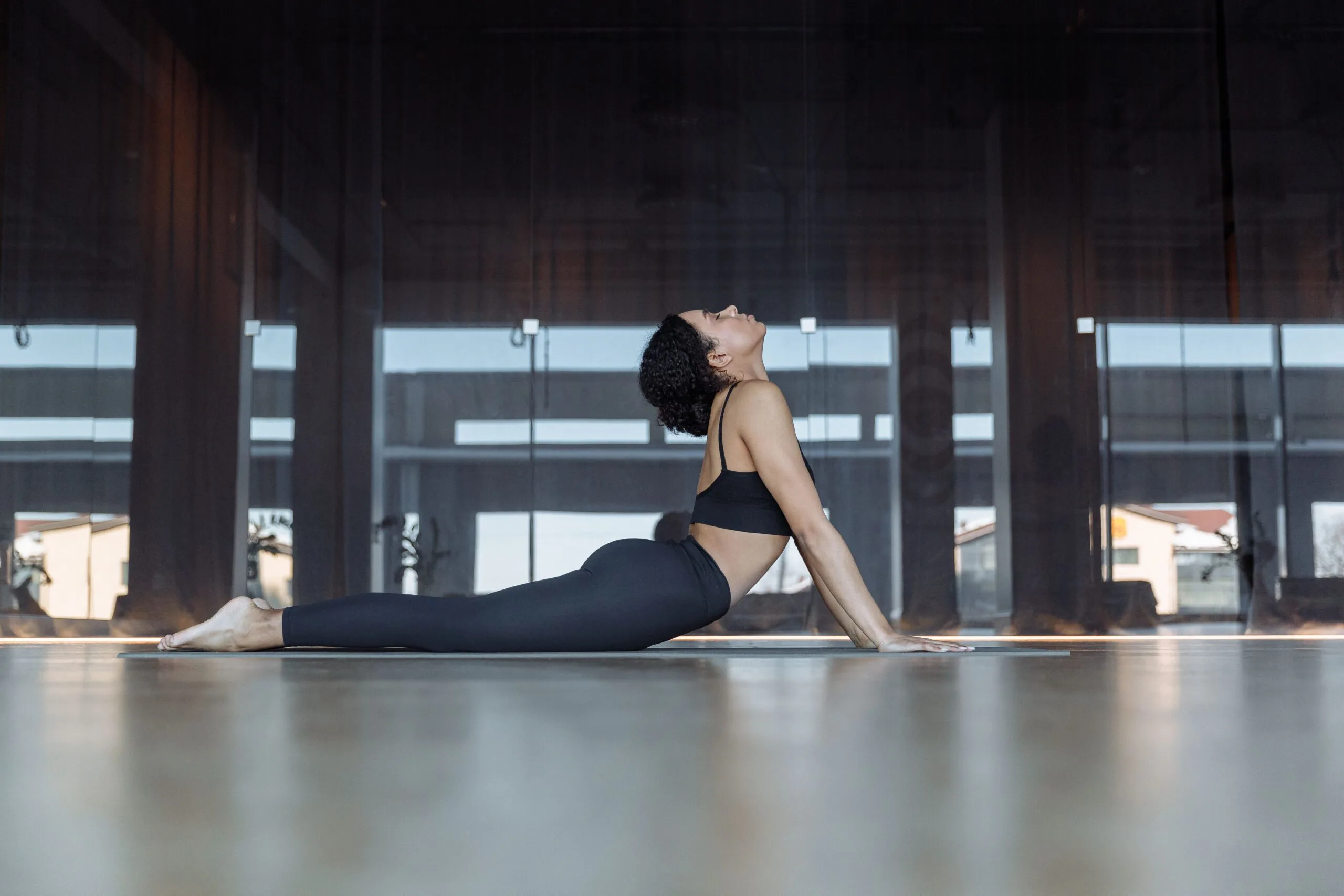
The room is still. Morning light spills softly across the wooden floor, catching tiny dust particles that drift through the air like they have nowhere else to be. Outside, the world is already impatient, traffic hums, phones vibrate, calendars fill, but inside this small pocket of quiet, there is only the sound of a slow inhale and the gentle unfurling of a yoga mat. For a few precious moments, nothing is expected of you. You aren’t answering emails, solving problems, or racing against the clock. You are simply here, meeting yourself exactly as you are.
If you’re anything like many people who practice yoga, this is the moment when everything else finally falls away. You carry your yoga mat, often a rolled yoga mat, like armor, protecting your calm, mindful state of mind.
Then it happens, the moment all yoga enthusiasts experience at least once in their lifetime. It happens in the turn of your shoulder in a crowded subway car, in the way you try not to knock into strangers while apologizing with your body more than your words, and in the small negotiation between pride and practicality as your yoga mat slowly uncoils itself into a weapon of inconvenience.
If you’ve ever carried a rolled-up yoga mat through a crowded city center, you know exactly what this feels like. The mat bumps into someone’s back, and slips off your shoulder. By the time you finally get home, into a space that is already too small, it just stands there, leaning in a corner like a reminder that even wellness takes up space you don’t always have.

Why Most People Stop Using Their Yoga Mat
Wellness is often framed as discipline: Wake up earlier, stretch more, drink more water, meditate longer, be consistent, be intentional, and be better. Very little attention is paid to what actually stops people before they even begin: the small, annoying, invisible resistance between intention and action called friction. Nowhere is that friction more physical, and more accepted, than in the design of the yoga mat itself.
We don’t question it. We just accept that a yoga mat must be rolled. That it must be carried like a cylinder of inconvenience. That it must be stored like a piece of furniture no one designed for real homes.
In that acceptance, something subtle happens: we start practicing less because getting to the practice already feels like work.
The Yoga Mat Problem Nobody Talks About
A yoga practice is meant to create space: mentally, physically, and emotionally. Unfortunately, the object we rely on to access that space often does the opposite. It takes up space in closets, corners, and cars. It collects dust on the floor side and transfers it back onto the practice surface every time it’s rolled. It turns travel into a logistical calculation: Do I really want to carry this through an airport with a portable yoga mat that takes up half my bag? Do I really want to unroll this on a hotel carpet I wouldn’t walk barefoot on?
If you are someone who often travels for work or pleasure, it raises another point of contention. Travel removes control. You don’t choose the floor anymore. You don’t choose the cleanliness. You don’t choose the space. You either carry the mat like luggage you didn’t plan for, or you skip it entirely and end up stretching on something that was never meant to support a human spine.

The Mat You Never Unroll
There is a murmur of truth that sits underneath every intention to practice yoga more often. The mat remains rolled far more often than it ever becomes a surface for movement, moving from bedroom corner to closet shelf, from hallway hook to car trunk, collecting the shape of intention without ever fully transforming into action. In its rolled state, it is always ready, yet somehow never chosen.
Over time, the mat stops being experienced as an invitation and starts becoming a reminder of postponement. It sits in the periphery of daily life, not demanding attention, but not allowing you to forget either. You start to see it as a record of everything you meant to do but didn’t quite begin.
Once something becomes associated with unfinished intention, it becomes easier to avoid it altogether because every encounter carries a small emotional weight. A reminder of a promise you made to yourself in a more motivated moment.
From Fold to Flow: A Different Kind of Design Logic
Fold2Flow started with a simple refusal: to keep pretending that rolling made sense. Nobody enjoys carrying a cylinder, or storing one, yet, almost every yoga mat on the market is built around that shape.
The Fold2Flow Mat replaces the roll with a fold for functionality. Unlike a traditional roll, this foldable yoga mat fits easily into tote bags, carry-ons, shelves, closets, and even under a desk. The shift is deeper than storage.

When the mat folds, the top surface folds inward. The practice surface is no longer constantly touching the floor-facing side. That means less dirt transfer, less debris, and less of that subtle discomfort of wondering what you’re placing your face on during child’s pose.
It sounds like a small detail, but it isn’t. Once you have used the mat it becomes very hard to ignore how normalized “slightly dirty yoga mats” have been for so long.
Comfort Isn’t a Luxury
The Fold2Flow Mat is 6mm thick, and designed to support real practice, not just symbolic movement, but its real flexibility comes from something most mats don’t offer: adaptability. It folds, so it can double, or even triple, and it offers cushioning in specific areas like the knees, wrists, hips, and elbows. Instead of reaching for props or adjusting your body around discomfort, you adjust the mat itself. It becomes less of a fixed surface and more of a responsive one.
From Fold to Flow
Breath settles, and movement softens. Thought slows down just enough to notice itself without interruption. That is the moment most people that say they want to do yoga more consistently are chasing.
Flow is fragile. It doesn’t survive friction well. If practice starts with digging out equipment, carrying it, cleaning it, and storing it, then flow is already compromised before it starts.
Fold2Flow was created to make the transition from intention to movement almost invisible.
The Point Isn’t the Mat
At the end of the day, this isn’t really about a yoga mat. It’s about how many small barriers we’ve normalized in the name of habit, and about how often we confuse difficulty with value. It’s about what becomes possible when something as ordinary as a mat is redesigned not for life as it really is. Fold2Flow is simply removing one of the reasons that prevent you from practicing more.
If we return to the beginning of this story, nothing has really changed in that quiet room. The light still spills across the floor. Dust still drifts like it has nowhere else to be. The world outside is still impatient. But now, the mat you reach for is no longer something you have to wrestle into place or negotiate with before you begin. It is already ready. Unfolded in a single, simple motion.
For a moment, there is only the sound of a slow inhale again. In that return to stillness, you realize the real shift was about what happens when nothing stands between you and the first breath.