
Every morning Sarah wakes up and thinks about stretching before checking her phone. She reaches for a glass of water instead of another coffee, and she remembers, at the last minute, that supplement she promised herself she would take every morning. The moment is gone almost as quickly as it appears. Her phone vibrates. The dog needs to be let out. The kids are already asking for breakfast. Sarah doesn’t decide to give up on her health that morning. She simply runs out of room for it. We don’t abandon healthy habits all at once. We misplace them one busy morning at a time.
We all experience those brief moments in the morning before chaos erupts, and then it disappears.
We often tell ourselves that healthy living is built on major decisions like the day we join the gym, commit to eating better, remember to take our supplements for more than a day or two, or finally decide to take our health seriously. Those decisive moments are only the beginning of the story; they aren’t going to determine long-term success. Real wellness is decided in the invisible space between intention and action. This is the missing middle, and it may be the most overlooked concept in health today.
The wellness industry has always focused on motivation, and has convinced us that if we could become more disciplined, more focused, or more committed, healthier choices would naturally follow. Every day tells a different story.
The executive who forgets their supplements isn’t lazy, nor is the parent who skips a workout lacking ambition. They’re simply navigating lives overflowing with decisions. Every day we make hundreds of choices, many so small they barely register consciously as choices.
Psychologists have long understood that each decision consumes mental resources. By evening, those resources are often depleted. What remains is a brain that naturally seeks convenience because efficiency is one of its oldest survival mechanisms.

Designing for Human Nature
There is an old assumption that if something is helping you feel better or improving your health and wellness, it must be either inconvenient, feel like a punishment, or taste really bad: a difficult workout, a tasteless meal, the bitter tasting shake, or the supplement that leaves an unpleasant aftertaste. We have been led to believe that discomfort is a symbol of commitment.
Humans naturally repeat behaviors that fit smoothly into existing routines. We conserve energy whenever possible because our brains evolved to prioritize efficiency long before they prioritized six-pack abs or marathon medals. This doesn’t make us weak; it makes us more human, and the most successful wellness strategies are recognizing this reality more and more. These strategies don’t expect us to rearrange our lives around our health; they reshape healthy behaviors so they fit naturally into everyday life. The healthiest decision is often the easiest one to repeat.
When Convenience Stops Being a Luxury
Convenience has carried an undeserved reputation in wellness for a long time. It has become associated with compromise: fast food, and processed snacks are all convenient. Truth be told, convenience is morally neutral; it simply amplifies whichever behavior it supports. If unhealthy choices are easier than healthy ones, convenience works against us. If healthy choices become equally effortless, convenience becomes one of wellness’s strongest allies.
That philosophy sits behind an emerging generation of health products that prioritize adherence just as much as formulation.


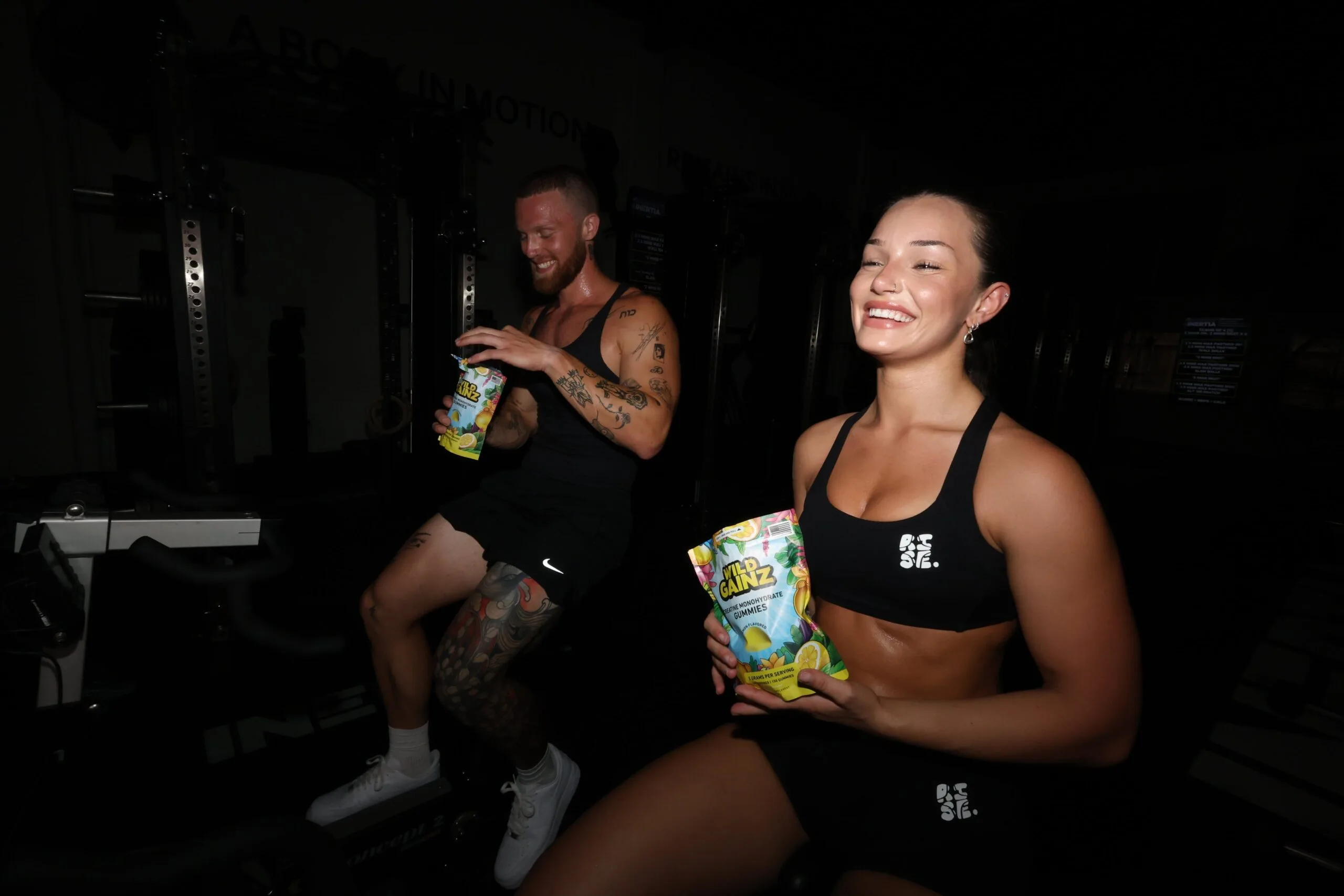
Wild Gainz is one example of this shift. The company’s Creatine Monohydrate Gummies weren’t developed simply to make creatine taste better. They reflect a broader rethink of how consistency is created in everyday life. Traditional creatine powders remain well-researched and widely respected, but for many people, the challenge has never been believing in creatine’s value. The challenge has been taking it every single day. A supplement sitting untouched in the pantry offers little benefit, regardless of the science supporting it.
That realization led Wild Gainz to rethink the experience itself. The brand didn’t just want to add another task to check off on an already busy morning. It transformed creatine into a simple chewable format designed to reduce the small moments of resistance that often interrupt healthy routines.
The Psychology of “Almost Doing It”
Many of us almost succeed at our health goals. We almost remember to take the supplement, go for the run, prep the meal, or start the routine that, in theory, would change everything. Most people don’t fail their health goals in obvious ways. This “almost” space lives in the repeated micro-decisions that never fully materialize into action.

So, the gap between intention and action quietly becomes a graveyard for good habits. What makes this frustrating is that it isn’t a lack of willpower. It’s what happens when tiny inconveniences collide with a brain that’s already making hundreds of decisions before lunch. Every action has a cost: attention, time, and energy. When that cost feels even slightly too high, the brain defers to optimize for ease, as it always does.
From Discipline to Default
Discipline was positioned as the core driver of success in the past. The message was simple: if you want results, you must be willing to do difficult things consistently. However, discipline is not a stable resource; it fluctuates with sleep, stress, workload, and emotional state, and even highly motivated people experience variability.
It is clear to see that systems built on discipline alone are inherently unstable. The alternative is better design. When healthy behavior becomes the norm rather than the exception, it no longer competes with motivation. That shift from discipline-based health to default-based health is the difference between remembering to take a supplement versus having it naturally fit into your routine. For many people, this is where formats like Wild Gainz Creatine Gummies become relevant. They reduce the number of decisions required to act on that science.

Creatine remains one of the most studied compounds in sports nutrition, often associated with muscle energy metabolism and physical performance support. Yet the benefits of any supplement depend entirely on whether it is used consistently.
So, the question becomes: “How do you make something easy enough to repeat without friction?” Wild Gainz reflects this philosophy by turning what has traditionally been a multi-step routine into a single chewable habit. Creatine you’ll actually crave, but without the usual mixing, preparation, or cleanup loop that resets daily resistance.
Closing the Loop
This is about something more precise than hacking the habit loop: removing the space where the loop breaks.
Between intention and action, there is a thin strip of time where everything is still possible, and where most routines disappear. The goal of modern wellness is to shrink that gap until it barely exists. When that happens, health stops feeling like a negotiation. It becomes something closer to momentum, which is easier to sustain than motivation.

In that sense, products like Wild Gainz Creatine Gummies are not just about supplementation. They are about redesigning the moment when health either happens or doesn’t. In real life, the smallest reduction in friction is often what determines whether a habit survives long enough to matter.
Change begins in the quiet, unglamorous space where action becomes easier than avoidance.
Sarah will wake up tomorrow and instead of having to remember her supplements, she will simply be craving them