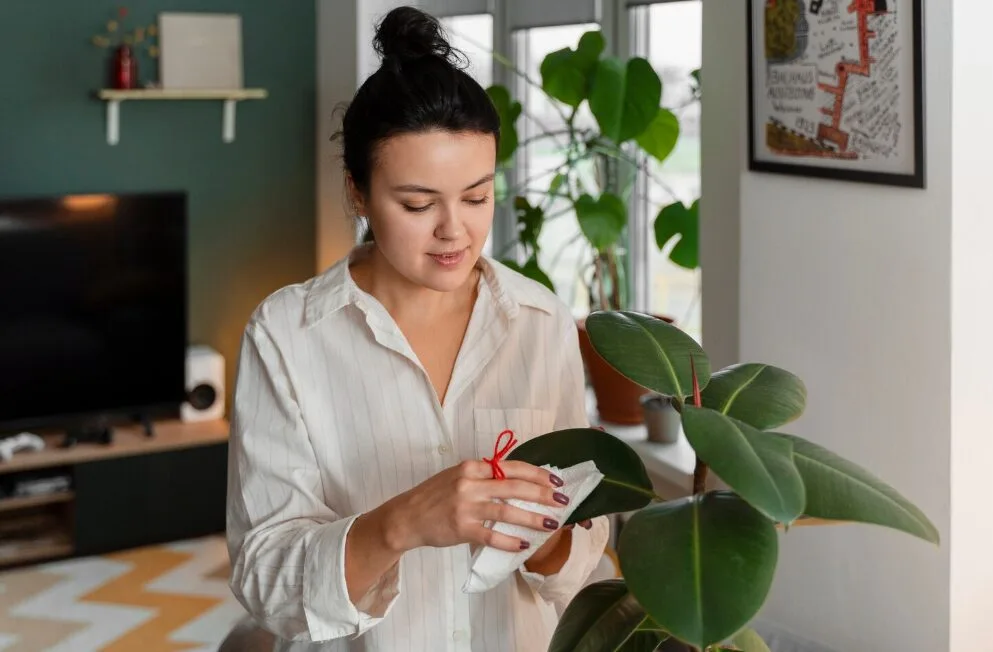

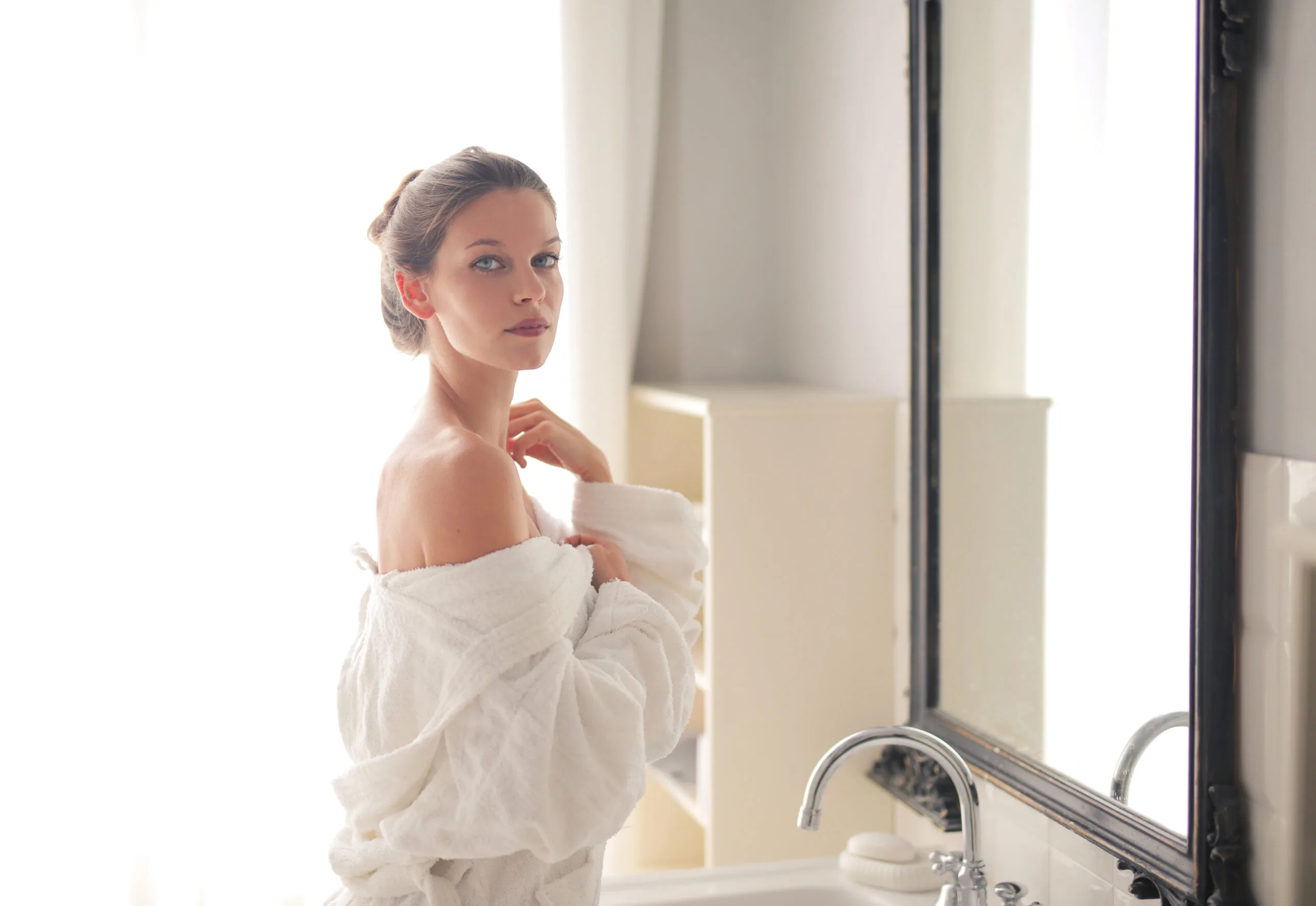
She was halfway through getting dressed for work when she realized she had forgotten to moisturize her hands. The thought came to her as she fastened the cuff of a shirt, one hand catching slightly against the fabric. She looked down. The backs of her hands felt dry, particularly around the knuckles.
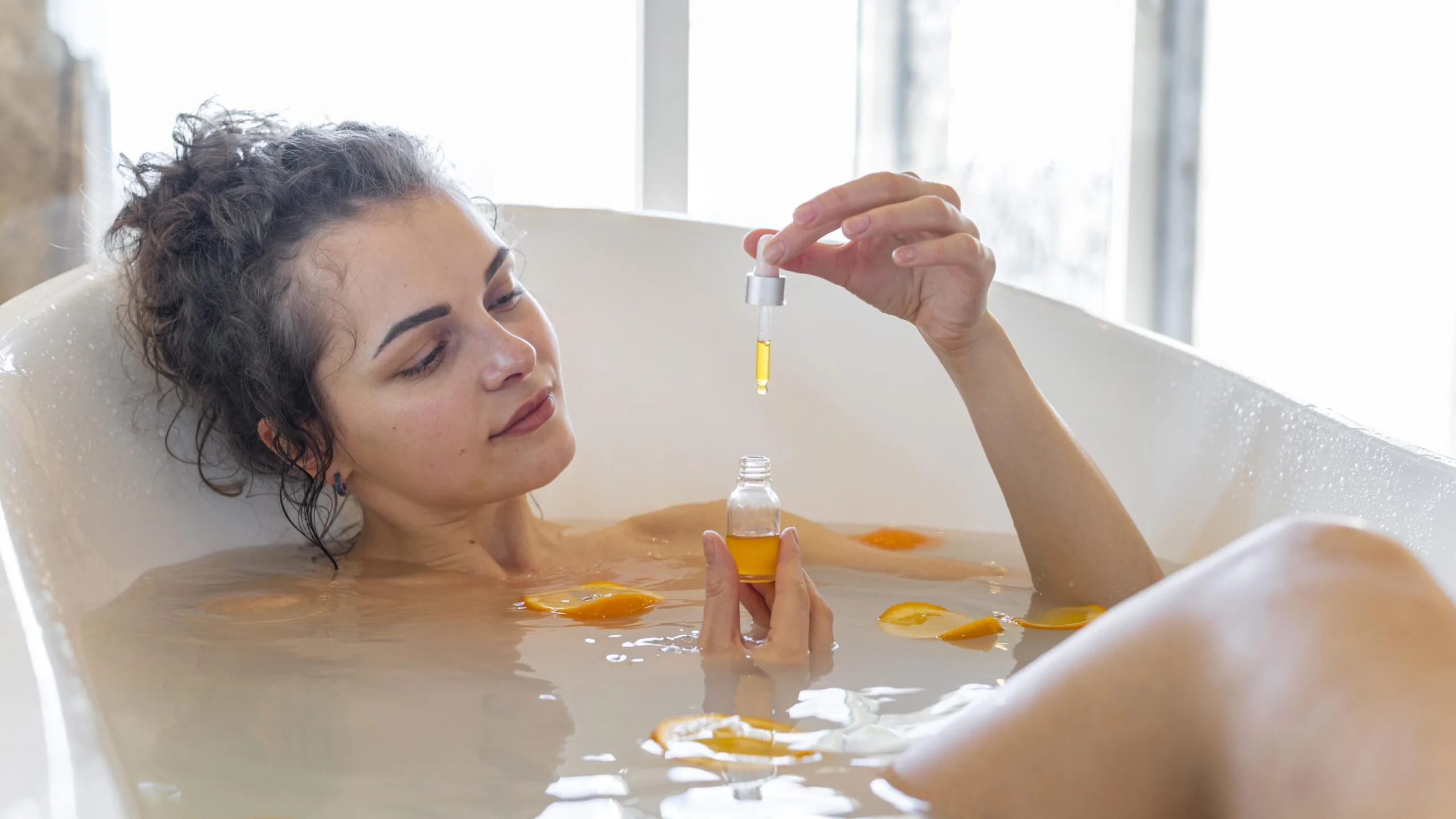
The bathroom was only a few steps away. She went back. On the basin stood the hand cream. Beside it was the face moisturizer, the bottle of cleanser, a serum with a dropper, and a small tube she could no longer immediately remember the purpose of. On the edge of the bath was the body lotion she had bought because her legs had been feeling dry. There was another cream in the cabinet for particularly dry patches.
She stood there for a moment with the hand cream in her palm.
Each one of the products had entered her bathroom for a reason. What struck her was how easily a small act of looking after herself had become something that required remembering.
Face first. Then this. Not that one on the same night. Body after the shower. Hands whenever they felt dry. Something else for somewhere else.
She rubbed the cream into her hands and noticed how quickly the irritation disappeared.
That was all she had wanted.
The moment stayed with her because it seemed to expose something larger about contemporary self-care. The industry had become exceptionally good at identifying individual needs, dividing the body into concerns and supplying a product for each one. Somewhere inside that abundance, care could begin to feel like work.

Why Traditional Ingredients Are Finding Their Way Back into Skincare
Tallow carries a history that sits far outside the polished language of contemporary beauty. It belongs to a world of rendered animal fat, handmade soap and practical household preparations. It has begun appearing in modern skincare, where its familiarity is part of the attraction.
Tallow represents a broader desire to understand what goes into personal-care products and why it is there.
For FarmSilk Skincare, that interest in the familiar and natural is central to the company’s approach. The small, family-owned business builds its skincare around gently rendered grass-fed tallow and raw, unprocessed plant oils, chosen for their naturally occurring qualities and their ability to create skin that feels soft, supple and nourished.
FarmSilk’s story is also unusually personal. The business was not originally conceived as a business at all. After all three of the founder’s children enrolled in school, a season of greater creative space allowed her to begin making products for herself, her family and friends.
The first product she made was tallow balm.
The company takes this approach with its Whipped Tallow Balm. The Rustic Rose version is formulated with grass-fed tallow, organic virgin coconut oil and organic beeswax. The company describes the balm as fluffy, silky and lightweight and positions it for use across the body and for all skin types and ages.
Tallow forms the base. Coconut oil provides another familiar component, while beeswax plays its own distinct role as part of the formulation.
After years in which beauty has become increasingly associated with complexity, recognizable ingredients can offer a different kind of appeal. It is part of the renewed interest in natural skincare, but also in understanding what we are actually putting on the body.
Tallow Balm and the Appeal of Simpler Body Care
The word “whipped” changes the story slightly. Traditional tallow might conjure something dense and heavy, but the FarmSilk Balm is presented in a whipped form, giving the ingredient a lighter, more contemporary physical character. The result illustrates something important about the current interest in traditional skincare: people are not necessarily trying to recreate the past exactly. They are taking pieces of it and asking whether those pieces still make sense now.

There are products for the face, the neck, the hands, the feet, the elbows and practically every individual square centimeter in between. Skin remains skin.
The appeal of a multipurpose body balm lies partly in refusing that fragmentation. The company describes its Whipped Tallow Balm as suitable for use anywhere on the body, making it the kind of product that can move naturally between different parts of a routine.
That was part of the appeal for its founder, too. Her original reason for making tallow balm was not to create another elaborate skincare ritual, but to find something that would provide longer-lasting comfort for her own dry, bumpy skin than a water-based lotion that needed to be reapplied throughout the day.
It is a small distinction, but an important one. The product began with a practical problem: skin that was dry, and a routine that did not leave enough time to keep fixing it.
It is opened. A small amount is taken. It is worked into the skin.
What Makes a Whipped Tallow Balm Different?
The company recommends storing the balm in a cool, dark place away from heat and light, using a clean scoop rather than fingers and keeping water out of the container. The company notes that the product is heat-sensitive because of its natural ingredients.
Much of modern consumer culture is designed around products that demand almost nothing from their owners. They are expected to remain unchanged regardless of where they are stored or how carelessly they are handled.
A natural balm can ask for a little more attention. Not much. Just enough to remember that the object contains a product with physical characteristics of its own.
That small-batch philosophy extends beyond storage. The company intentionally creates its skincare in small batches, with an emphasis on making products fresh and carefully rather than treating scale as the primary measure of success.
Many of its balms are waterless and made without added preservatives, reflecting the company’s preference for simple, carefully chosen ingredients. The trade-off is that the products need to be treated thoughtfully once they reach the bathroom shelf.
There is something fitting about that.
A product built around simplicity can still ask you to pay attention.
Rethinking Deodorant: From Sweat Prevention to Odor Control
Deodorant belongs to another category of everyday care altogether. It is one of those products that can disappear into a morning routine so completely that its design is rarely considered. Yet deodorant occupies an intimate relationship with the body. It sits close to the skin and deals with one of its most ordinary functions: sweating.

The Tallow Deodorant Bar is a solid deodorant formulated with tallow, beeswax, candelilla wax, coconut oil, arrowroot powder, bentonite clay, zinc oxide and magnesium hydroxide. The deodorant is also described as aluminum-free.
The story behind it is particularly revealing. The founder originally wanted an alternative to conventional antiperspirants for her husband and son, something effective but comfortable enough for everyday use. After researching ingredients and testing different versions, she developed a tallow-based bar without baking soda, using zinc oxide, magnesium hydroxide and bentonite clay as part of the formulation.
There is a growing difference between wanting the body to behave differently and simply wanting to care for it as it behaves.
FarmSilk’s approach sits closer to the latter. Its deodorant is designed around odor control and moisture absorption without preventing sweating, rather than treating perspiration itself as something that necessarily needs to be stopped.
The Rise of Solid, Minimalist Personal Care
The solid format contributes another layer to the story. Bars have an immediacy that bottles sometimes lack. They are objects rather than merely containers. They sit on a shelf or dish. They are picked up and used directly.
That physicality fits neatly into the broader movement towards minimalist skincare and lower-complexity personal care. It is not necessarily minimalism in the severe sense of owning almost nothing. Rather, it is a preference for products that earn their place.
The Mediterranean Breeze bar also illustrates how scent can remain part of the experience without turning the product into a conventional perfume object. FarmSilk describes its fragrance as a blend of essential oils including frankincense, lavender, lemon, eucalyptus, rosemary, clove bud, ylang ylang and oregano, inspired by Mediterranean plants.
The company describes wanting customers to feel loved and nourished by its products, and its lightly scented custom essential-oil blends are intended to bring pleasure into otherwise ordinary rituals. Some products are completely unscented, while others use scent as another small sensory pleasure.
That matters because simplicity does not have to mean austerity.
A product can be uncomplicated and still feel luxurious.
Why Simplicity Matters More as Skin Changes
The desire for simpler skincare can become more meaningful as people get older. For anyone thinking about mature skincare, that simplicity can matter for another reason: changing skin does not necessarily require a more complicated response.
Care and correction are not the same thing.
That is where traditional ingredients become interesting again. Their value, in this context, is not that they somehow return a person to an earlier version of themselves. It is that they can make the act of caring for the present body feel tangible.
A balm that can be used on dry hands, feet, lips or other areas does not ask the skin to become something else before it deserves attention. It simply responds to what is there.
And perhaps that is why the founder’s own experience with tallow balm feels relevant to the wider conversation. She did not begin with the ambition of creating a new beauty category. She began because her own skin was dry and because she wanted something that lasted longer than the lotion she had been using.
The business came later.
When Caring for the Body Stops Being About Correction
The bathroom shelf will probably remain crowded.
There will still be bottles that promise to improve something, tubes designed for particular concerns and products whose instructions require a degree of attention that can make even the simplest routine feel like a project. Choice, however, is not the same as necessity.
The deeper appeal of products such as a whipped tallow balm and a solid tallow deodorant is therefore not simply their ingredients. It is the philosophy they happen to represent: that personal care can be physical, understandable and uncomplicated. That looking after the body does not always need to involve correcting it.
There is something particularly compelling about the fact that FarmSilk itself grew slowly. A few months after the founder began perfecting her recipes, she presented the products at a market in her former hometown in California. The response was enthusiastic enough that turning the idea into a business became the natural next step. A store in Anderson, Indiana, later created another opportunity to grow locally and in the surrounding area.
Little by little.
Not all at once.
That pace seems almost radical in a beauty culture built around constant launches, optimization and the promise that there is always another product to discover.

Perhaps that is what the forgotten hand cream revealed that morning. She had not gone back to the bathroom because she wanted another step in her routine. She had gone because the backs of her hands felt dry. She needed something simple, applied to a very ordinary discomfort, before getting on with the rest of her day.
The cream disappeared into her skin. The cuff stopped catching. Nothing had been transformed. Nothing needed to be. She simply noticed something, responded to it, and carried on.
That is where self-care becomes most useful again, not as another form of self-improvement, but as a small act of attention. The kind that does not ask the body to become younger, smoother, more efficient or somehow better before it deserves to be cared for.
Sometimes it is enough to notice the dry hands and reach for something that helps.