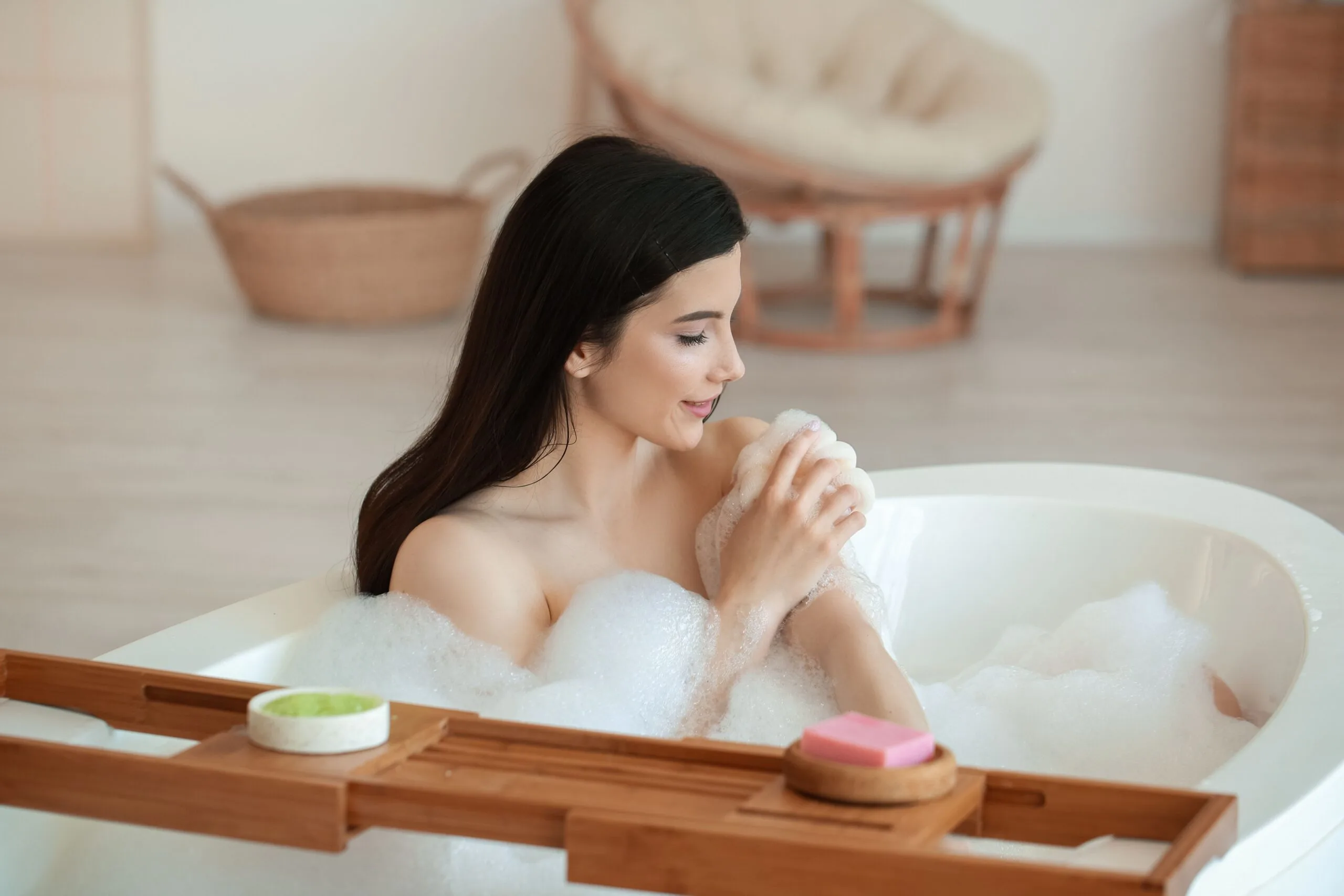


By the time the bathroom mirror had cleared, her shins were starting to feel tight. Her hair was wrapped in a towel, and she was standing at the sink, caught between getting dressed and dealing with the dryness along her arms.
It was hardly an emergency. Just one of those small annoyances that tends to become part of getting ready. She rubbed a hand over one shin, reached for the moisturizer, and started there before moving on to her arms.
It was a familiar part of getting ready. The shower had left her skin wet, but she had managed to dry most of the water off with a towel. The cream was supposed to make everything feel comfortable again. She rubbed it into her shins first, then worked what was left over her arms before reaching for her clothes.

The Difference Between Wet Skin and Moisturized Skin
Dryness usually means reaching for whatever is nearby. A cream after the shower, a serum at night, perhaps something heavier before bed.
The outer layer of skin helps keep moisture in while providing protection from the environment.
Many familiar creams and lotions begin with water as a major component. Water-based skincare has an established place in personal care, and many people use it comfortably every day. But water also means a formula has to be constructed around it. The ingredients need to remain stable, consistent and usable over time, which can require additional components.
Primrose Nectar does not need the same emulsifying system used to keep oil and water blended in a conventional cream. The surfactants used in conventional creams to prevent oil and water from separating can strip your protective skin barrier of lipids, allowing moisture to escape and allergens to enter the body, triggering inflammation. If you suffer with eczema, it can worsen your symptoms. Its formulation also avoids synthetic preservatives, sulfates and artificial perfume. Some preservatives can act as allergens.
For anyone dealing with persistent dryness or eczema, the real test is whether the finished formula leaves the skin more comfortable without provoking further irritation.
After the Shower
The bathroom changes quickly once the water is turned off. Wet hair drips onto the back of the neck. The towel goes on the hook. The mirror starts to clear and there is suddenly the question of whether to moisturize now or get dressed first.
For dry skin, that small gap matters. Primrose Nectar is designed to go onto damp skin, so it fits into that moment rather than becoming another step later in the morning.
A Small Test for Dry Skin Routines
The first application doesn’t tell the whole story. Dry skin will often feel better immediately after almost any moisturizer. The useful part comes later: after another shower, halfway through the day, or when the skin starts feeling tight again.
The skin’s outer barrier contains lipids that help limit water loss and protect against environmental stressors. Primrose Nectar combines several plant oils that contribute different fatty acids and emollient properties to the formula.
Grapeseed and hemp seed oils contain linoleic acid, an essential fatty acid involved in maintaining the skin barrier. Evening primrose oil also contains linoleic acid, along with gamma-linolenic acid (GLA), another omega-6 fatty acid. Avocado oil contributes emollient properties, while coconut, argan and meadowfoam oils strengthen the skin’s protective barrier, which prevents moisture loss and keeps the skin hydrated.
Vegetable glycerin plays a different role is a humectant, meaning it attracts and holds water in the outer layers of the skin. Because Primrose Nectar is designed to be applied to wet skin, the glycerin works alongside the oils: the water supplies moisture, the glycerin helps retain it, and the oils limit its loss.
This combination is important because moisturizing involves more than adding water to the skin’s surface. A well-formulated moisturizer can help maintain hydration by supporting the barrier that keeps water from escaping too quickly. Primrose Nectar is designed around that principle.


What to Notice After the Shower
A moisturizer can look impressive on a bathroom shelf and still do little to keep skin comfortable throughout the day. The better test is less glamorous: how long does the skin stay comfortable before another application seems necessary?
The first few minutes after applying it can be deceptive. The skin feels soft, the moisturizer seems to have done its job, and then the morning gets underway. Sleeves get pulled over the arms. Jeans rub against the legs. Hands get washed. Someone reaches for a bag, makes coffee, gets in the car. By lunchtime, the skin has had plenty of opportunities to make its opinion known.
For dry skin, a few details are worth noticing. Does the tight feeling return soon after showering? Does the skin still feel comfortable once the moisturizer has absorbed? Is there a greasy feeling when clothing goes on? Does the dryness around the shins or elbows come back as quickly as it usually does? Or does it the itching and inflammation get worse?
None of this requires a skincare diary. These are simply the things that become noticeable when a product is part of an ordinary day rather than something tested for five minutes in front of a mirror.
Sometimes the answer is not another product. The moisturizer may be going on too late, after the skin has already dried, or it may simply be unpleasant enough that it gets skipped.
Primrose Nectar is designed for that small stretch of time after washing, while the skin is still damp. A few pumps over the arms and legs, clothes on, and the morning carries on.
The Logic of a Water-Free Moisturizer
2naturelle was founded by Anh Thu Pham, a pharmacist with nearly three decades of experience in the pharmaceutical industry. Pham calls the approach “purposeful simplicity.” It grew out of years spent experimenting with essential oils and oil carriers alongside her pharmaceutical work, as well as her own experience living with dry itchy skin caused by eczema.
Primrose Nectar is built around coconut, avocado, grapeseed, meadowfoam, hemp seed, argan and evening primrose oils, with vegetable glycerin and lavender essential oil. The formula contains no added water, synthetic preservatives, dyes, artificial perfume, parabens, sulfates or animal-derived ingredients.
One or two pumps are massaged in until the product is absorbed. The glycerin is positioned as the humectant in the formula, while the oils form part of the product’s approach to supporting the skin’s moisture barrier.
It can be used on the face, body and scalp, giving the formula a place in several parts of the routine.

When an Oil Becomes a Facial Routine
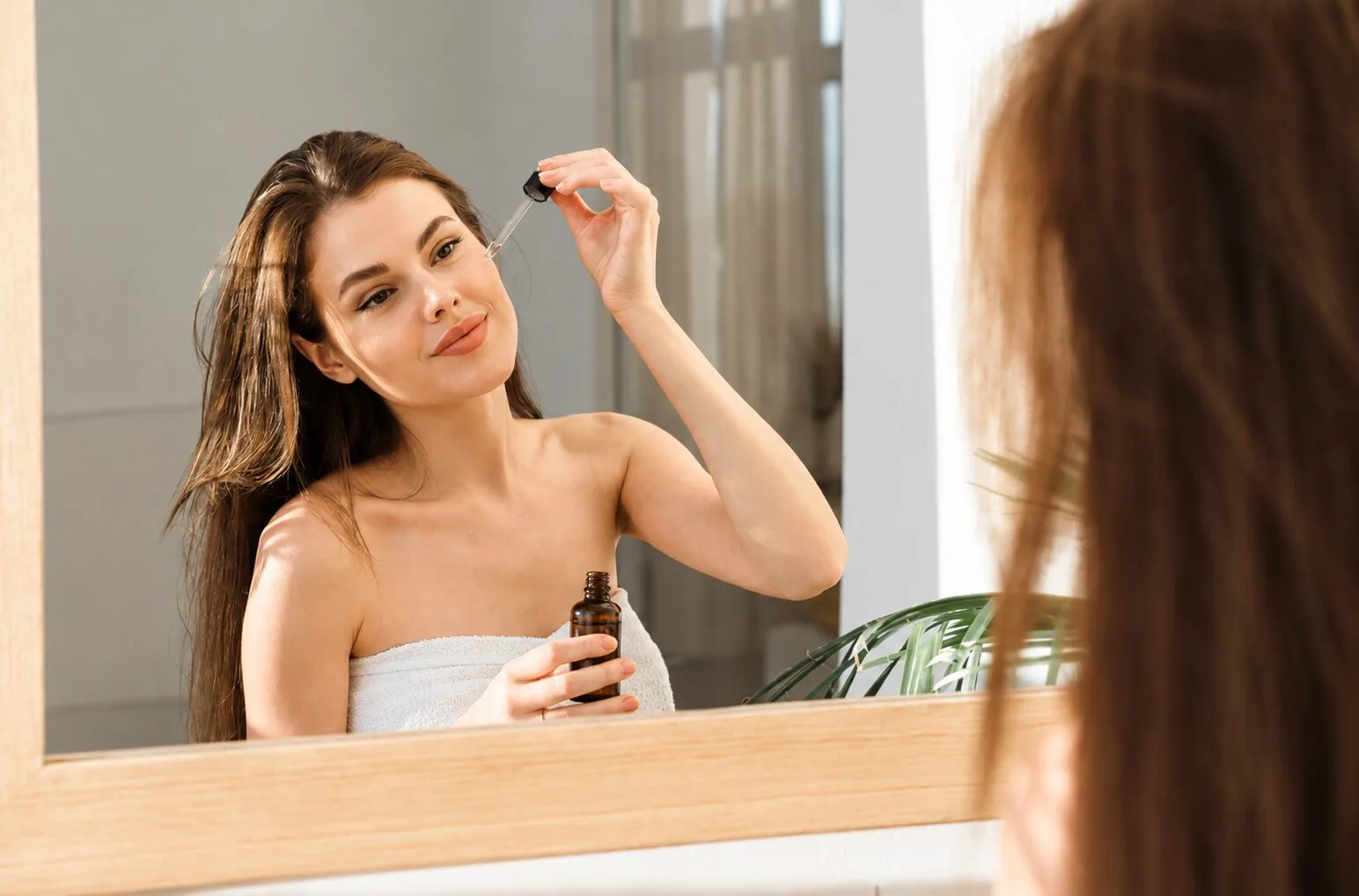
2naturelle carries the same water-free idea into facial care with 2Clear Facial Rejuvenation. It combines babassu, avocado, grapeseed, meadowfoam, hemp seed, evening primrose, argan, castor and sacha inchi oils with glycerin, calendula oil, vitamin E, French lavender essential oil and astaxanthin. The astaxanthin gives the oil its striking red color in the bottle, although that color becomes much less noticeable once a few drops are worked into damp skin. After cleansing, the skin is left slightly damp. A few drops are then massaged over the forehead and cheeks.
Astaxanthin’s importance lies in its antioxidant activity: it has the potential to counter the effects of oxidative stress, which contributes to skin damage and aging.
What Gets Left Out
Skincare has become very good at adding things. There are products for hydration, exfoliation, brightness, texture and overnight use, often sitting side by side on the same shelf. At some point, the bathroom counter can start to look more complicated than the skin actually feels.
A more important question is whether a moisturizer is simply easing the feeling of dryness temporarily, potentially aggravating the skin, or helping address root cause of dry itchy skin.
A good moisturizer is not necessarily the one with the longest ingredient list or the most products surrounding it. What matters is what the formula contributes to the skin. Some ingredients help soften the surface, others attract water, and then there are some that help reduce moisture loss. The right combination can support the skin’s protective barrier, allowing it to retain moisture more effectively. Conversely, an unsuitable or irritating formula can aggravate dryness and leave sensitive skin feeling worse.
Choosing a moisturizer, then, is less about adding another step to the routine and more about understanding what the ingredients are there to do.

A Different Way to Think About Moisture
There is something revealing about a bathroom shelf. Products that were once bought for a specific reason can slowly become part of the scenery, even when nobody is quite sure whether they are still helping.
A moisturizer can be judged by whether it makes sense in the routine and whether the skin actually feels better for using it.
Perhaps the better question is not how much moisture a bottle contains, but what happens to the skin once the product becomes part of an ordinary routine.