
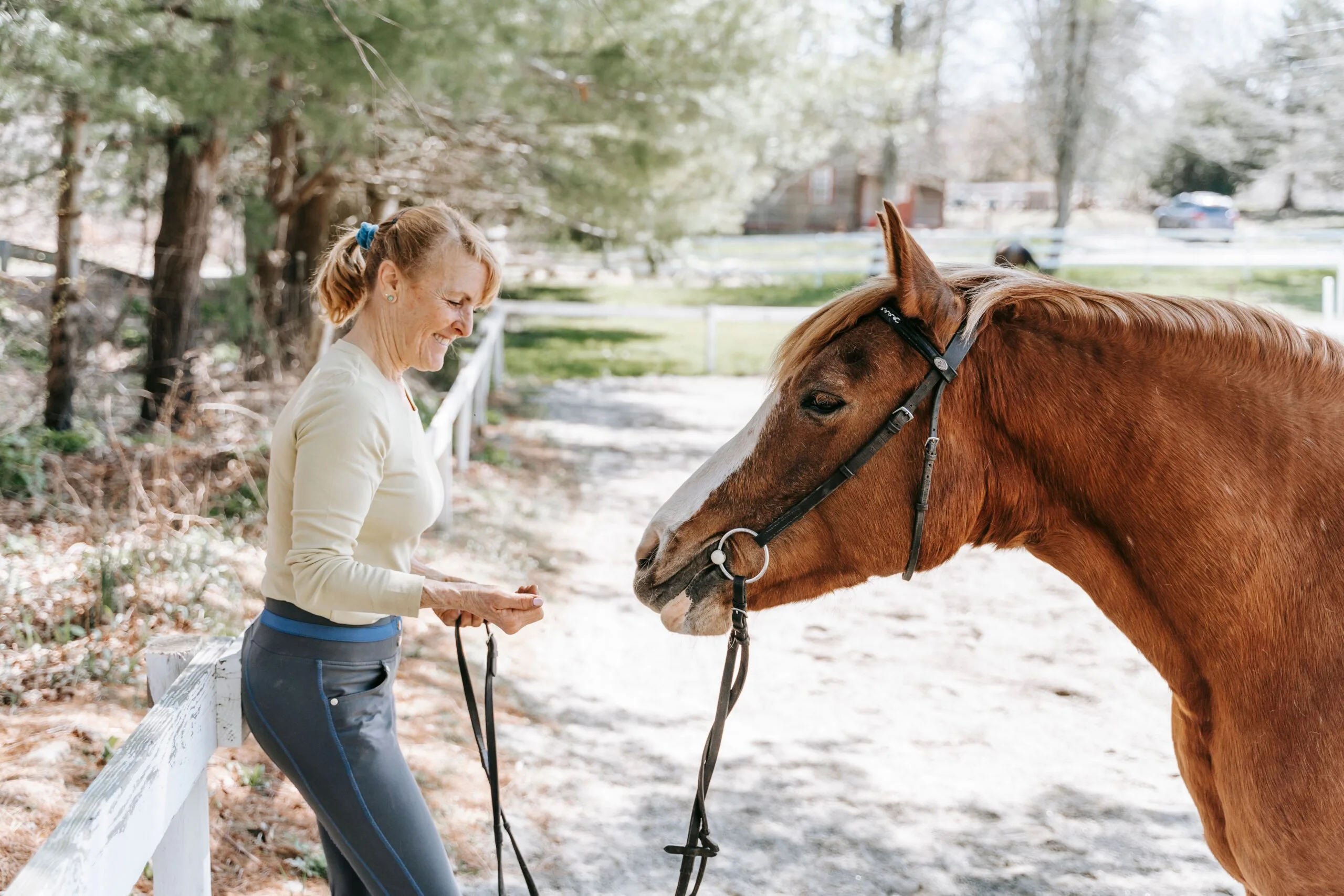
The pellets sat in the feed bucket, mixed through the grain. The horse lowered his head, took a few mouthfuls, then lifted it again. He wasn’t frightened or restless. He simply left the rest behind.
The owner watched for a moment before changing the way the feed was being given. It was a small adjustment, but animals make their preferences known in ways that don’t require explanation. A dog leaves something unfamiliar at the bottom of the bowl. A horse noses through its feed. Another animal accepts the same thing without hesitation.
None of them can read a label or explain what they like about one option and not another. The person caring for them has to pay attention instead.
That makes choosing a product for an animal different from choosing one for yourself. A person can read the ingredients, compare the amount in each serving and decide whether something fits their own routine. An animal relies on the person making that decision to notice the details that cannot be printed on a label: behavior, habits, preferences and the way something fits into an established routine.
For Mikko’s Choice, that distinction is closely connected to the company’s origins. The brand was created with animals in mind, but also around the idea that an animal’s individual circumstances matter. A product may have a recommended starting point, but the animal receiving it is never simply a number on a scale.

Your Animal Isn’t a Number
It’s easy to assume that everything that you give to your animals should follow a simple approach. For dogs, weight is often used as a starting point; with horses, the same kind of thinking can apply. That can make weight seem like the obvious starting point: identify the animal’s size, follow the recommended amount and move on.
Mikko’s Choice takes a different approach and chooses not to position its products as strictly species- or weight-specific. Instead, the company recommends beginning with the product guidelines while paying close attention to the individual animal before making any changes or adjustments.
The approach recognizes that animals can respond differently to the same product. Differences between individual animals become part of the process, with the product guidelines providing a place to begin and observation helping inform any adjustments. There isn’t one single number that can tell the entire story.
That leaves room for the product to be considered alongside the animal’s established habits rather than in isolation.
Where Mikko Changed the Question
The thinking behind the brand took shape while Emma was fostering Mikko, an extremely anxious rescued BLM Mustang. At the same time, she was working with her brother in Los Angeles, where he operated a medical delivery service. The work gave her an opportunity to learn more about business and the cannabis industry, while caring for Mikko kept bringing her attention back to something more specific: animals don’t all respond to their surroundings, routines or care in the same way.
By 2015, Emma had noticed how few cannabinoid products were being made specifically with animals, particularly horses, in mind. With a degree in animal science and experience in the cannabis industry, she began developing Mikko’s Choice.
The name was not incidental. Mikko represented the kind of animal the company was being created around: an individual with his own history, temperament and needs. That perspective continues through the brand’s approach today. Rather than treating an animal as a weight or species alone, the emphasis is on the individual receiving the product and how it fits into an established routine.
Once the individual animal is considered, the practical questions become more specific. What is actually in the product? How much CBD does it contain? And how does its price compare with the amount being provided?
What the Price Doesn’t Tell You
The company describes its formulations as higher-potency products, providing larger amounts of CBD per product and per serving. It also emphasizes the amount of CBD provided in relation to the overall price, rather than looking at the price of the product alone.
Two bottles may appear similar on a shelf while containing very different amounts of CBD. Looking at the total amount provided, and where relevant the cost per milligram, gives another way to understand what the price represents.


The All Animals CBD Tincture contains 5,000 mg of CBD in a 60 ml bottle, while the CBD Pellets contain 3,200 mg of CBD in a one-pound bag. Those quantities provide useful context when comparing the products.
Potency and quantity are part of the equation, alongside the question of how easily a particular format can fit into an animal’s established habits.
A Routine-Friendly Approach: It Depends on the Animal
Beyond the ingredients, the way a product fits into an animal’s existing routine can matter just as much. A tincture may work well when it can be added to food or a treat, while pellets may make more sense when an animal already has a regular feeding routine involving grain or feed. The useful question is less about which format looks best on paper and more about which one can realistically become part of that animal’s day.
The All Animals CBD Tincture contains 5,000 mg of CBD in a 60 ml bottle, with 83 mg of CBD per 1 ml dropper. It uses broad-spectrum hemp extract in MCT fractionated coconut oil and can be added to food or treats. The company recommends starting with a smaller amount and observing the individual animal before making adjustments, rather than relying on weight alone. The product is also third-party tested, with certificates of analysis made available.

For horses, pigs, goats, camelids and other livestock, the CBD Pellets 1 LB offer another way of incorporating CBD into an established feeding routine. The one-pound bag contains 3,200 mg of CBD, with two scoops providing 100 mg. The pellets can be added to regular food or grain, given by hand, or incorporated into a treat. Mikko’s Choice recommends beginning with two scoops once daily and adjusting according to the individual animal.
The brand also offers CBD treats for dogs, adding another format for animals whose routines are different again.
Taken together, the different formats point back to the same question that runs through Mikko’s Choice: not simply what a product contains, but how naturally it fits into the life of the animal receiving it. An animal’s routine already exists. The practical choice is finding a format that can fit within it.

The Things You Can’t See
When a new product is being introduced, there is more to consider than what appears on the front of the label. The products are made from USA-grown hemp and manufactured in the United States and are all third-party tested. Certificates of analysis are also made available, giving the person responsible for the animal another source of information about the product and its testing.
That kind of information matters because transparency is not only about what appears on the front of a package. A certificate of analysis can provide another layer of detail about a product and its testing, allowing the caregiver to look beyond the information printed on the package.
Today, $5 from every sale gets donated to support animal rescues and sanctuaries, supporting a different organization each month.
The pellets in the feed bucket were only a small part of the decision. What mattered was what happened next: the horse left them behind, the owner noticed, and the routine changed.
That is where choosing a product for an animal becomes different from choosing one for yourself. Ingredients, quantities, testing and product formats can provide useful information, but none of them can replace observing the animal in front of you.
The label can explain what is in the product. The animal can only show you how it fits into its day.