

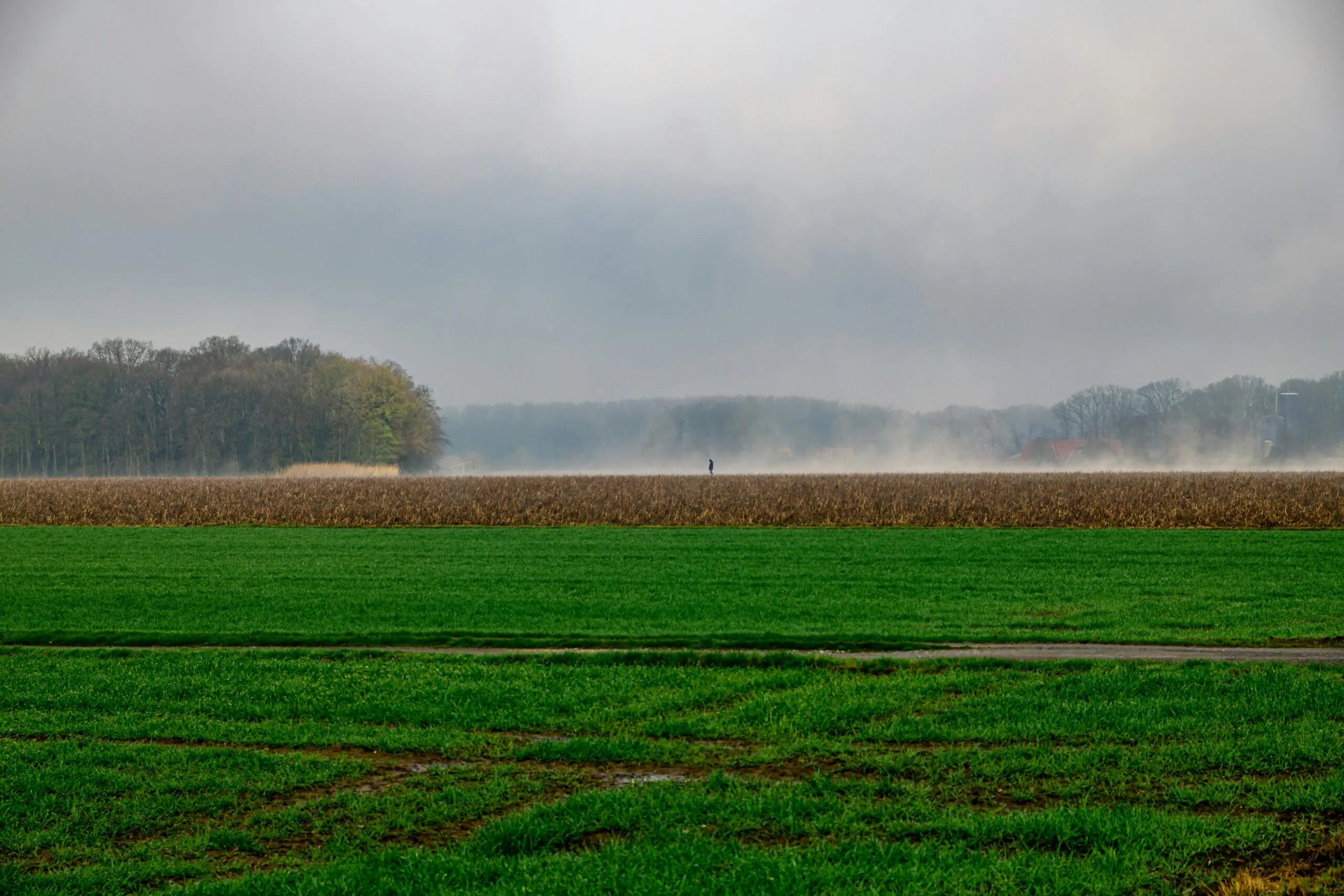
For most people, seeing is taken for granted; it just happens. You wake up, open your eyes, and the world looks a certain way. The morning sky is blue, the stop sign is red. The grass is green. You don’t think about the colors because they are always there. For millions of people with green color deficiency, the world doesn’t look that way. They see browns, dull yellows, and confusing greys.
It really doesn’t have much to do with the looks themselves; it’s about feeling safe and connected to the world around you. For most of us, we can only imagine what it must be like not to be able to tell if a fruit is ripe just by looking at it, or to struggle to read a color-coded chart at work. This exact reality led to the creation of Golden Mermaid Inc.’s flagship line, Pilestone.

The Spark of an Idea
The story of Pilestone started with a friendship. A scientist watched his close friend struggle with color blindness. While others saw a vibrant landscape, his friend saw a flat, less colorful version. The scientist wanted to help. He used his knowledge of light to develop a filter. This filter could block wavelengths of light. He realized he could help the brain distinguish between colors that had previously looked the same. What started as a project to help one person eventually became a mission. Today, Pilestone helps bridge the gap between a dull-looking world and a vivid one. It offers precision-crafted lenses designed to unlock the spectrum of experience.
Understanding Pilestone Technology: The Science of Filtering
To understand why Pilestone lenses are so helpful, it’s essential to know how they work. Human color vision relies on three types of cones in the retina: red, green, and blue. In the eye, these cones have distinct sensitivity ranges. However, in someone with a deficiency, the red and green cones overlap significantly. Pilestone’s patented lens technology acts as a filter. It targets wavelengths of light where the confusion happens. By removing those wavelengths, the lenses create a distinction between red and green signals sent to the brain. The red becomes redder; the green becomes greener.
More Than a Device: The Adventurer Classic
The Adventurer Classic model is designed for life. It doesn’t look like equipment. Instead, it looks like high-quality sunglasses. This is a choice. People with color deficiency don’t want to stand out; they want to fit in and see the world like everyone else. The Adventurer Classic is built for durability and style. It features a frame that suits all face shapes. The lenses are optimized for use where natural light provides the environment for color-enhancing technology.
A New Perspective: The Case of Arthur
To understand the impact of this technology, consider the experience of Arthur. Arthur spent fifty years as a gardener. He loved plants, soil, and being outdoors. However, he always felt like he was missing something. While his wife marveled at the colors, Arthur saw a uniform, almost bland-colored world.
For his birthday, Arthur’s daughter gifted him Pilestone Adventurer Classic glasses. He was skeptical. He had lived fifty years in a world, and he didn’t believe glasses could change that. The first time he put them on was a Saturday morning in his backyard. At first, the world seemed a bit darker. As his eyes adjusted, something remarkable happened. He looked at a rosebush he had tended for years. For the time in his life, the red blooms didn’t blend into the leaves. They “popped.” They were crimson. Arthur spent the three hours walking around his neighborhood. He stopped to look at the stop signs, noticing how “loud” the red was. He looked at the shades of green in lawns and trees. He realized that “green” wasn’t one color but many variations. For Arthur, the glasses weren’t a tool for gardening; they were a tool for connection. He could finally see what his wife had been talking about. He no longer felt like an outsider; he felt like a full participant in the world.

The Emotional Resonance of Color
The story of Arthur is repeated daily across the globe. For many, the first time they put on these lenses is a milestone. There are videos online of people breaking into tears when they see color for the first time. Why is it so emotional? Because color is tied to emotions and memories. We associate yellow with sunshine and happiness. We associate red with passion and urgency. When you are deprived of those cues, you are deprived of a type of emotional vocabulary. Pilestone’s mission is to give that vocabulary back. By focusing on accessibility and affordability, Golden Mermaid Inc. has ensured that this life-changing technology isn’t for the elite.
Practicality in the Professional World
Many professions rely heavily on color perception. Electricians need to distinguish between wires. Designers need to select the color palettes. Pilots and drivers need to interpret signals and lights. For professionals who have spent years “faking it” or using workarounds, these glasses can be a career-saver. They provide a level of confidence that wasn’t there before.

A Simple Solution for a Complex Problem
In an age where technology often feels overwhelming, Pilestone offers something different. You don’t need an app. You don’t need to charge them. You simply put them on and look at the world in awe. The beauty of this model lies in this simplicity. It takes physics. Houses it in a familiar form. It respects the user’s need for a product that works without fuss.
The journey from a scientist’s lab to the faces of people is a testament to focused innovation. Golden Mermaid Inc. didn’t try to reinvent the eye; they found a way to help the eye do what it was meant to do.
Looking Forward
As the world becomes increasingly visual, the need for color clarity has never been higher. Pilestone continues to refine its lens technology. The mission remains the same: to help a friend see the world. Whether that friend is down the street or on the other side of the planet, the goal is to reveal the vibrant world underneath.
For those who have spent their lives in a spectrum, the Adventurer Classic isn’t just glasses. It’s an invitation. An invitation to see the world as vibrant, colorful, and breathtaking. Once you see the world in color, you can never go back to seeing it any other way.