

There was a time when looking after your health meant eating well, moving your body, sleeping enough, and spending time with people you loved. Now it looks like a kitchen counter lined with protein powders, collagen tubs, electrolyte sachets, fiber supplements, creatine containers, probiotic capsules, and vitamin bottles, each with its own instructions, timing, measuring scoop, and promise. Taking care of yourself has become exhausting.

The Hidden Workload of Modern Wellness
Behavior has monopolized wellness conversations for the longest time. We discuss motivation, accountability, consistency, and willpower. There is one factor that plays a vital role that is often left out of these discussions. The logistics of all the invisible work that goes on behind these scenes of every so-called “healthy lifestyle”. Think about it. All the researching, comparing, dosage checking, and ordering all feel like work.
Behavioral scientists have understood for a long time that every additional step between intention and action increases the likelihood that people won’t follow through.
Why More Choice Often Leads to Less Action
The wellness industry has become exceptionally good at specialization. One product supports muscle recovery. Another focuses on gut health. A third, fourth, and fifth offer something completely different. Each category continues expanding, creating more complicated solutions for specific needs. Consumers are left to build an entire nutritional ecosystem from dozens of individual pieces.
The Cost Nobody Talks About
There is another price attached to modern wellness, and it doesn’t appear on a receipt. Every decision carries a small mental cost. Should today’s protein shake come before or after a workout? Is collagen better with vitamin C? Did the probiotics need to be refrigerated? Have the electrolytes already been taken, or was that yesterday? Individually, these questions seem insignificant. Collectively, they become a constant stream of tiny decisions competing for attention alongside work deadlines, family responsibilities, household chores, and everything else that fills a normal day. Psychologists often refer to this as cognitive load. The heavier that load becomes, the less energy remains for the habits people are actually trying to build.
Longevity Isn’t Built One Ingredient at a Time
The most interesting evolution happening inside nutrition is the growing understanding that every bodily function is interconnected. The body doesn’t operate in isolated departments. Many supplement routines still treat the body as though each system exists separately. Wellness becomes nothing more than inventory management.
The New Luxury Is Simplicity
Luxury no longer means having more, as it once did. Priorities are shifting. People aren’t asking for complicated routines; they’re asking for sustainable ones. The most valuable health habit is the one that still exists six months from now.
That realization sits at the heart of Nexum, a company built around an unexpectedly simple question: What if foundational daily nutrition didn’t require managing an entire shelf of products? Founder James Brophy, a certified nutrition coach and published author, wasn’t searching for another ingredient to add to his own routine. He was trying to remove unnecessary complexity. Managing multiple supplements from different suppliers, with different serving sizes, containers, and schedules, had become less of a health practice and more of an organizational challenge.
Wellness Should Create Capacity
Modern wellness can leave people with less freedom to enjoy their lives. A routine designed to support health can slowly become another obligation to manage, another list to complete before the day has properly begun. Wellness somehow stopped creating space and started filling it.
The healthiest people are not necessarily those with the most detailed routines. More often, they are the ones whose healthy choices fit so naturally into daily life that they barely notice them. They have built systems that work in the background, allowing their attention to return to conversations, careers, hobbies, family dinners, and the moments that give life meaning.
Building Nutrition Around Connection Instead of Categories
Nexum doesn’t view nutrition as isolated ingredients solving isolated problems, the philosophy recognizes that health emerges from systems working together. Protein provides a foundational building block for everyday nutrition. Collagen contributes structural support. Creatine plays an important role in energy production and physical performance. Individually, these nutrients are familiar. Together, they begin reflecting how the body actually functions as an integrated network.
Less Measuring, More Living
One of the least glamorous realities of wellness is that healthy habits compete with everything else life demands. No matter how scientifically perfect a routine appears, it has to survive real life.
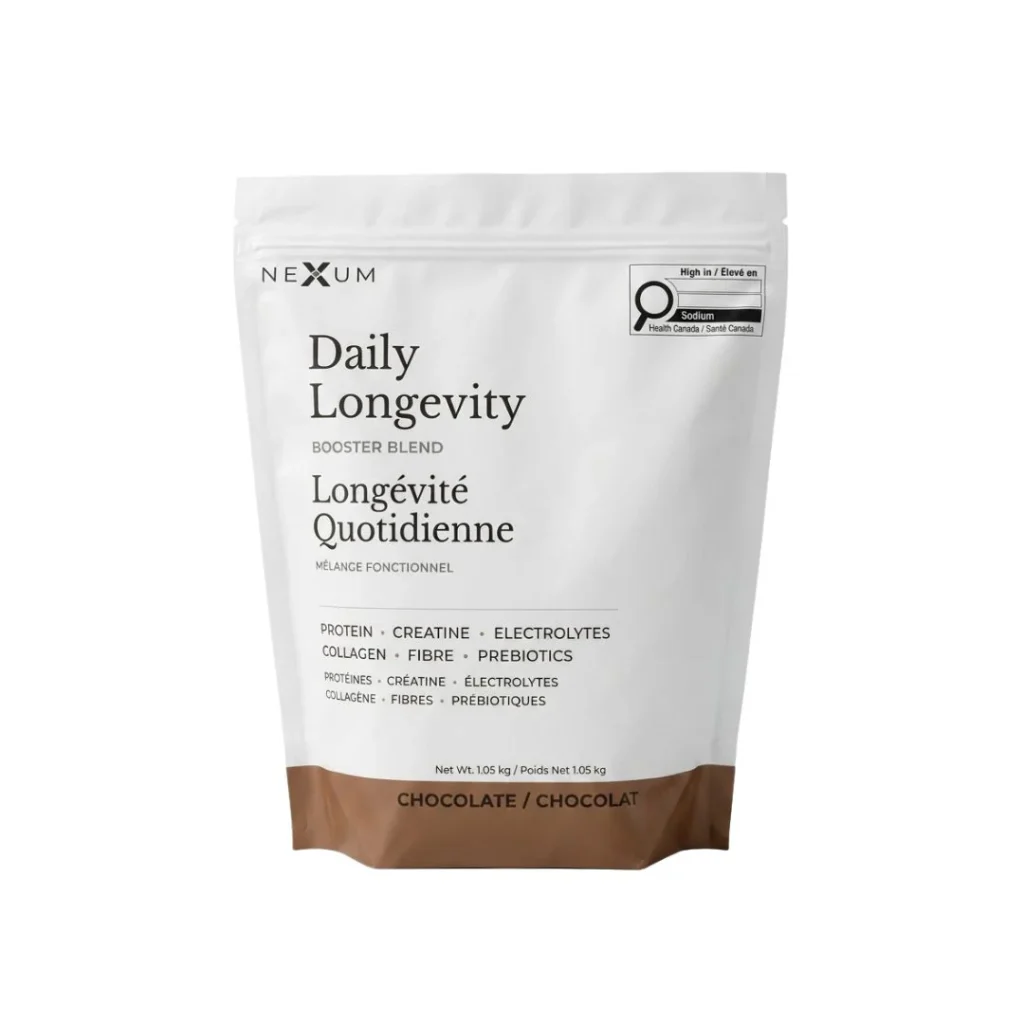
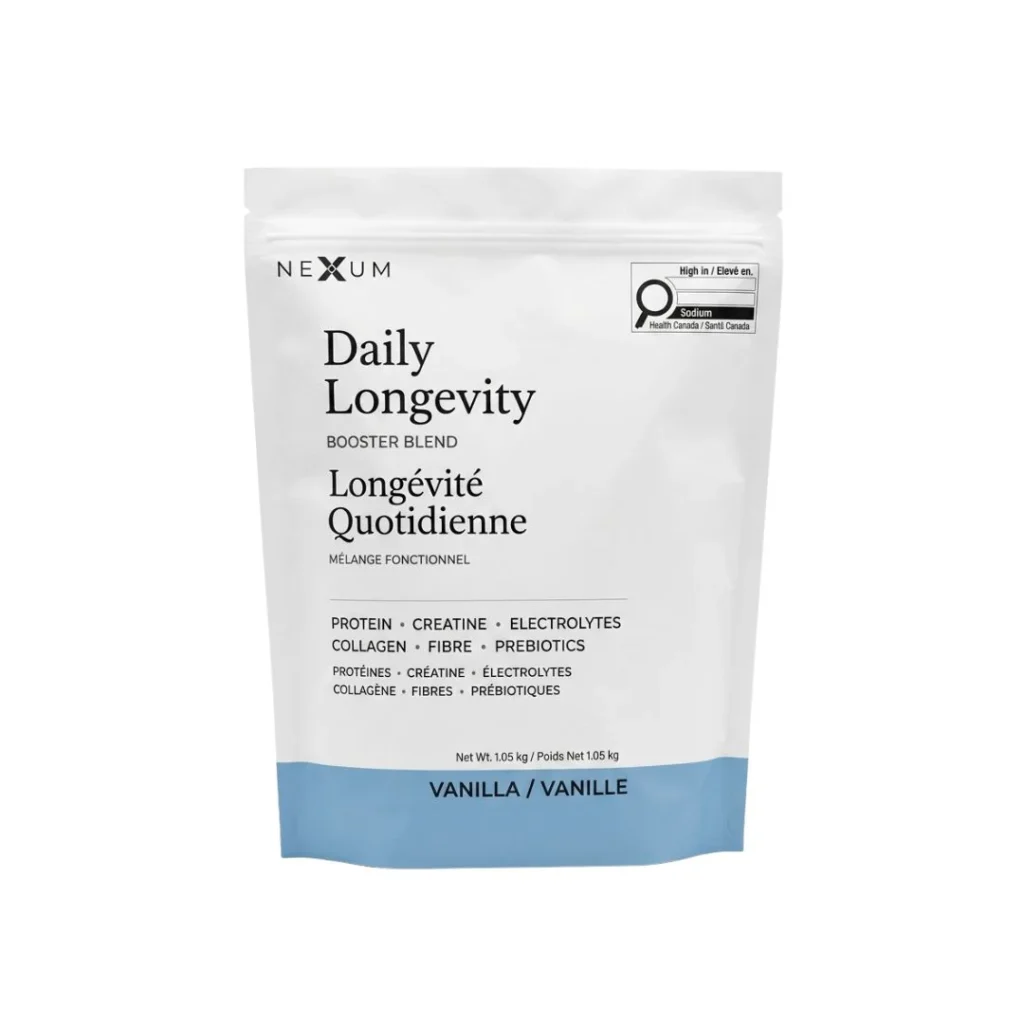
Nexum’s Daily Longevity Booster Blend simplifies what many people currently assemble themselves. Each serving combines more than 30 grams of grass-fed protein alongside collagen, a clinically formulated 5 grams of creatine, electrolytes, organic fiber, and prebiotics, all in one scoop. It’s available in Chocolate and Vanilla, the blend mixes easily into daily routines of smoothies, glasses of milk, or added to water.
Why Ingredient Quality Still Matters
Simplicity only works when what’s left is worth keeping. Removing ten supplements means the one replacing them has to carry far more responsibility. That’s why ingredient quality becomes even more important, not less.
People assume simpler automatically means compromised, but convenience and quality don’t have to exist on opposite sides of the equation. Nexum deliberately challenges that assumption through their sourcing decisions. Premium sourcing runs throughout the formulation. Grass-fed protein instead of conventional alternatives, and organic fiber reflects a broader philosophy that convenience shouldn’t require lowering standards.
The Future of Wellness May Be Invisible
Some of the biggest innovations don’t appear revolutionary. Electricity became transformative because people eventually stopped thinking about it. Smartphones became indispensable because they quietly disappeared into everyday life. The best health habits often follow the same pattern. Eventually, they stop feeling like effort.
Longevity is heading toward making healthy decisions almost invisible. The easier healthy behavior becomes, the more likely it survives ordinary life.
Education Before Optimization
Another aspect separating Nexum from many supplement brands is its emphasis on education. James Brophy’s work extends beyond product formulation. Through his corporate wellness initiative, Unique Perspectives, and his research into inflammation and chronic disease, his focus has consistently centered on helping people understand foundational health before chasing advanced optimization.
Many consumers jump immediately toward specialized supplements without first addressing the everyday nutritional fundamentals of adequate protein, dietary fiber, hydration, structural support, and gut health. These remain the building blocks upon which more advanced strategies depend.
Perhaps Wellness Doesn’t Need More Products
The supplement industry has spent years convincing consumers that every new challenge requires another purchase, but the industry has been turning a deaf ear to what people actually want. They want fewer decisions, not another supplement.
Health isn’t measured by how many containers fit inside a kitchen cupboard; it’s measured by what consistently happens every ordinary Tuesday morning. Longevity lives inside the routines that are easy enough to repeat day after day, allowing them to survive the chaos of everyday life.
Nexum’s Daily Longevity Booster Blend rethinks the growing administrative burden of staying healthy. The healthiest routine isn’t always the most impressive one. It’s the one that’s still part of someone’s life years from now.