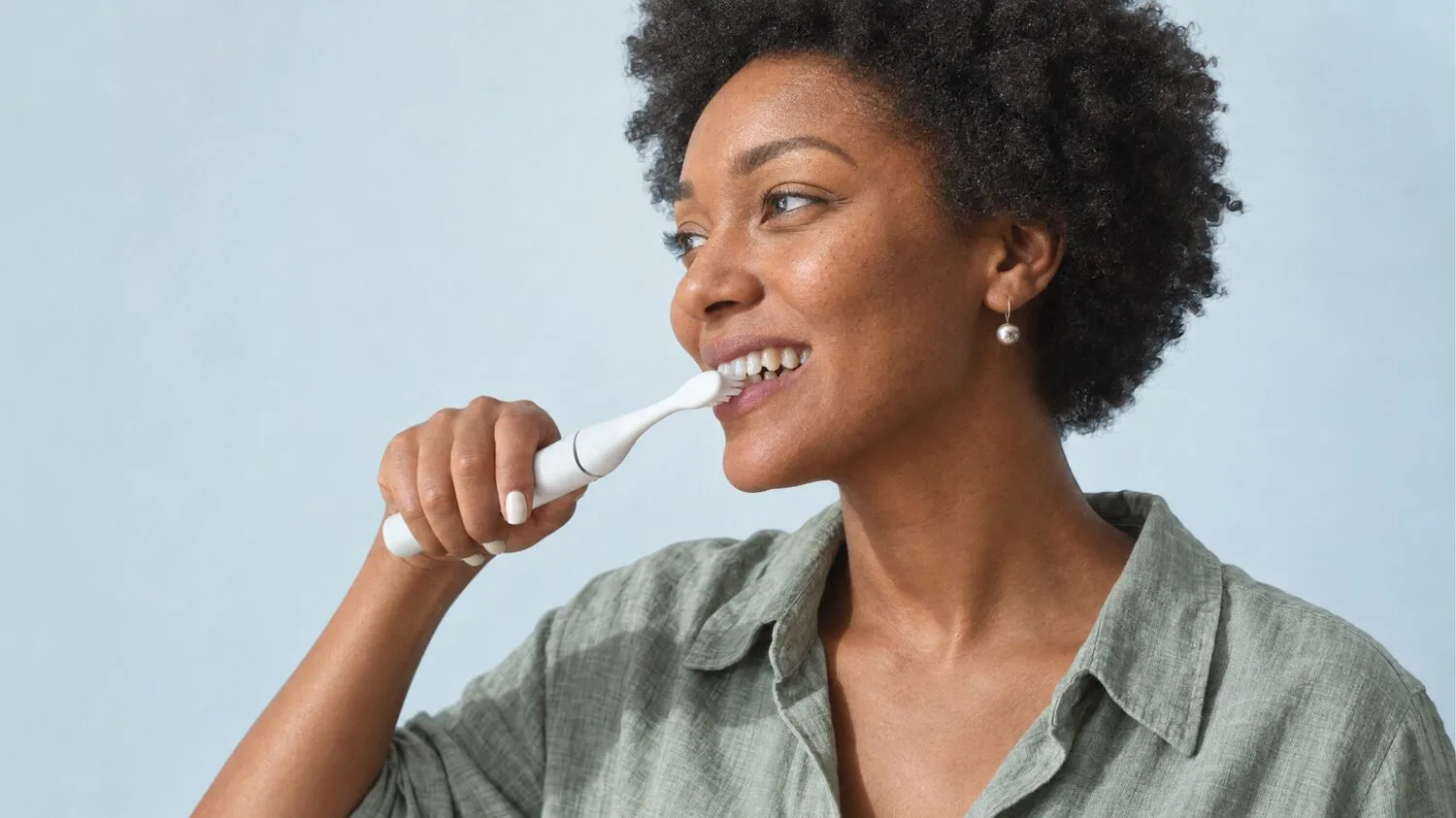


You’re halfway through making breakfast when you suddenly realize you’ve completely forgotten to pack your lunch. The kettle’s boiling, your phone’s been going off with messages, and you still need to be out the door on time if you’re going to beat the traffic. You finish brushing your teeth, grab your usual mouthwash, and move on to the next thing without a second thought.
It’s a routine you’ve done a hundred times over. You brush to keep your teeth clean, you use mouthwash to freshen your breath, and you go to the dentist when it’s time for a check-up. Oral care has its place in the day, but you don’t really spend any time thinking about what’s going on beyond the visible areas of your mouth.

Your Mouth Is More Than Teeth and Gums
When you think about oral health, you probably think of clean, strong teeth, comfortable gums, and fresh breath. All of that is obviously important, but it’s only part of the picture. Your mouth is home to what is effectively an ecosystem known as the oral microbiome. This is the collection of bacteria and other microbes that are present in your mouth that interact with each other and with your body.
Not all bacteria are created equal. Some are beneficial in that they help to maintain the natural environment of the mouth; others can be associated with oral health problems if they are given the conditions in which to thrive. The aim of good oral hygiene is not to get rid of every single microorganism, but to maintain a healthy oral environment to protect your teeth and gums.
This is where the link between oral health and overall wellness becomes really interesting. Your mouth is involved in processes that are connected to other systems in the body through a pathway that produces nitric oxide.
The oral-systemic health link doesn’t mean that any change you see in your mouth is going to be a sign of a problem in some other part of your body, or that any particular oral care product can determine your general health. It simply means that your mouth is part of a much larger biological picture.
The Surprising Role of Nitric Oxide
One of the reasons scientists are so interested in the oral microbiome is its involvement in the body’s nitric oxide pathway. Nitric oxide is a signaling molecule and is involved in a number of physiological processes, most notably the regulation of blood vessel function. Its role in the circulatory system makes it a major area of interest in cardiovascular research.
It all starts with something you probably already have in your kitchen: leafy greens. Spinach, rocket, kale and beetroot all contain dietary nitrate. After you’ve eaten the greens, the nitrate gets into your bloodstream and is then concentrated in your saliva. Certain oral bacteria in your mouth will help convert it to nitrite, which can then go on to contribute to nitric oxide production through subsequent processes in the body.
The process is the enterosalivary nitrate pathway. Sounds complicated, doesn’t it? The principle is actually quite simple: what you eat, the microorganisms living in your mouth, and the body’s natural chemistry are connected.
It’s a rather pertinent reminder that well-being isn’t about one single thing. Your diet, oral hygiene, and all your other daily habits are part of a much bigger picture.
Research into the oral microbiome and nitric oxide is still very much in its infancy. There is research being done into the potential effect of changes in the oral bacteria on nitrate conversion and the related processes. That said, it by no means follows that any particular oral care product can tell you all you need to know about your heart health. It’s a connection worth understanding, rather than a reason to make any health conclusions on the basis of a single product.
A More Thoughtful Approach to Everyday Oral Care
Once you start to get a real appreciation for the complexity of your oral microbiome, you’ll find yourself looking at the collection of products on your bathroom shelf in a completely different light.
Convenience is the usual driver of your decisions. You might pick a mouthwash because it gives you that fresh feeling, or you may just reach for the toothpaste you’re used to without thinking about it at all. There’s nothing strange about that. Most of the things we do on a day-to-day basis become habits because they’re convenient and fit in with the way we go about our days.


Knowing what a product is for is part of the process of making an informed decision. Some antiseptic mouthwashes can temporarily reduce the number of nitrate-reducing bacteria in the mouth, and that is one of the reasons why researchers have looked at their effect on the nitrate-nitrite-nitric oxide pathway. That doesn’t mean that every mouthwash is out of the question, and it certainly doesn’t mean you should walk away from a mouthwash that your dentist has recommended. The formulation, the purpose, and the circumstances of use are all part of making an informed decision.
You don’t need to turn oral care into a complex project. Start with curiosity. Keep your current brushing, flossing, and dental care regimen and take the opportunity to learn more about the science of the products you’re using.
Bringing Oral Wellness Into the Bigger Picture
This broader perspective is where MyFitStrip enters the conversation. It’s about the connection between oral health, the oral microbiome, and the body’s natural nitric oxide pathway. Rather than just being a “cleaning” product, the range looks at ways of supporting the oral environment and, in doing so, makes wellness more interesting and accessible.
The MyFitStrip Nitric Oxide Lozenges, also known as the functional mints, are designed to dissolve slowly in the mouth. They contain prebiotic nutrients, vitamin C, zinc citrate, and a blend of berries which include black currant, bilberry, raspberry, blue honeysuckle berry, and blueberry. The idea is to support the oral microbiome and the body’s natural nitric oxide pathway.

The format is part of the attraction. If you find conventional supplements difficult to take, then a mint-style lozenge is an alternative way of integrating a product into your routine. Rather than swallowing a capsule, you simply let the lozenge dissolve slowly in your mouth, giving you a prolonged period of oral contact.
It’s essential to understand the difference between supporting a biological process and guaranteeing an outcome. The lozenges are dietary supplements and not a substitute for a healthy diet, good oral hygiene, dental care, or medical advice. Their inclusion in a health regime in no way guarantees any improved health outcome.
Your oral care routine can be an opportunity to become more aware of the relationship between the mouth and the wider workings of the body.
Small Habits Begin With Better Awareness
You don’t need to re-think every aspect of your lifestyle to adopt a more considered approach to well-being. The most straightforward and useful first step is often to understand why a particular habit is important and to ask yourself whether the choices you’re making are actually in keeping with your own objectives.

That might be about paying more attention to the food you eat, maintaining a good oral hygiene regimen, or learning about the oral microbiome. It could also be about looking at the ingredients in a supplement and what it’s intended to do before you decide whether it’s one you want to take.
The advantage of this is that it gives you the opportunity to make your choices with a far clearer understanding of the science, limitations, evidence, and the role that each habit plays in your wider routine.
The next time you find yourself rushing through breakfast, answering messages, and brushing your teeth before heading out, your routine may look exactly the same. But you might think about it a little differently. Those two minutes at the bathroom sink are still about caring for your teeth and gums. Now, they can also remind you that oral health is one small, meaningful part of the bigger picture of everyday wellness.