

For thousands of years, our ancestors have used mushrooms as medicine. A powerful anti-inflammatory and tool for cauterizing wounds, the amadou mushroom (Fomes fomentarius) was described by the Greek physician Hippocrates around 450 BCE. Several therapeutic mushrooms, including ling zhi (Ganoderma lucidum) and zhu ling (Dendro Polyporus umbellatus), were documented by the 5th-century alchemist Tao Hongjing. Some of these mushrooms were purportedly used by Shennong many centuries before. To assist him survive in the northern Italian Alps, tzi, the IceMan, who lived around 5300 years ago, carried amadou and a birch polypore tied in a pouch. The Calvatia genus of puffball mushrooms was utilized by the indigenous peoples of North America to treat wounds. Although many societies have long used mushrooms, contemporary science has just lately learned what the ancients already knew: that mushrooms may be rich sources of potent remedies. Although many in the medical community are still confused about mushrooms, this ignorance is quickly fading. The increase in attention is attributable to both the long cultural history of their use as well as new techniques for tissue growth of mycelium and evaluating the activity of individual components and their interactions. G. lucidum is known to include at least 16 000 genes that encode for more than 200 000 different chemicals, 400 of which are considered to be “active constituents.” Currently, more than 150 new enzymes from various mushroom species have been discovered.

Mushrooms are the natural equivalent of tiny pharmaceutical factories, rich in a variety of unique components and ripe for research. It is likely owing to the nature of mushrooms that it has taken so long for contemporary science to investigate their potential as a medicine. Mushrooms are transient; they may only be in our experience field of view for a few days as opposed to the months or years that we may interact with other plants and animals. The fact that some mushrooms may feed you, cure you, kill you, and send you on a spiritual quest testifies to the variety of chemicals they contain. From an evolutionary and survival standpoint, it is safer to stay away from something so potent but poorly understood
Many of the compounds that fungi make to thrive in the wild are also active in people, much like medications derived from botanicals. It’s unlikely that this is a coincidence. The ability of humans to coevolve with our environment and medical technology is a benefit to evolution. Before the advent of pharmaceuticals, only those people could survive the illnesses that afflicted our earth and procreate who could employ plants and fungi as remedies. The literature on how people react to mushrooms shows a range and degree of effects that seem to be far bigger than how people react to plants. According to phylogenetic analysis, mushrooms and animals are more closely related than they are to plants, and it is thought that this link is what gives mushrooms their improved therapeutic properties.
We are discovering a whole new set of active chemicals in the mycelium that interacts with and enhances existing therapy in unanticipated ways. We have begun to produce mushrooms as a result of our growing appreciation for their worth for their therapeutic properties. New sets of active ingredients that were unavailable to our predecessors are being revealed when using solvents other than water. We now understand from modern science that an ecosystem is what we are, what we live in, and what an ecosystem is that gives us life. The cornerstone of the land-based food webs in nature is mycelium. The ability to employ mushrooms and their mycelia in naturopathic medicine in ways that support conventional medical practices comes from understanding the role of mushrooms and their mycelia in ecosystems. Our forefathers would be pleased.
How Superfoods Contribute to Your Best Health
Superfoods are becoming increasingly popular as more people focus on selecting meals that nourish their bodies, boost immune health, and taste great. On the list of superfoods you should eat every day are mushrooms. That’s fantastic news since mushrooms are tasty and can be included in a wide variety of dishes, including luscious pasta sauces and morning omelets. A key component of leading a healthy lifestyle is to include superfoods in your diet as frequently as feasible. With choices like mushrooms, it’s simple to accomplish. However, do you know which foods fall under that heading?
Superfoods are foods that provide your body with an additional nutritional boost. While superfood rankings appear to change from year to year, mushrooms always make the cut. Superfoods all share a few characteristics. Typically made from plants, they also include entire grains, low-fat dairy, and seafood high in omega-3 fatty acids. All of the items on the lists share the characteristics of being nutrient-dense and offering a variety of health advantages, such as anti-inflammatory or antibacterial elements. More than 400 kinds of mushrooms have been recognized as having therapeutic capabilities, and they all share several characteristics that make them real superfoods. Fungi have a long history in Chinese medicine because of their antiviral, antibacterial, and anti-inflammatory characteristics that improve general health.

Along with the B vitamins niacin and riboflavin, mushrooms are also a great source of the three important antioxidants glutathione, ergothioneine, and selenium. They are also a fantastic source of potassium and vitamin D. B vitamins support the body in many ways, including turning food into energy that is sent to cells, regulating the neurological system, and maintaining the general health of cells. In addition to promoting bone health, the vitamin D found in mushrooms controls the body’s ability to produce the proteins required to fight viral and bacterial infections. Together, the antioxidants glutathione and ergothioneine can lessen the consequences of physiological stress-related aging. The effect of mushrooms on aging-related cognitive deterioration is yet another advantage. According to a study by Singaporean researchers, seniors who consume two servings of mushrooms per week or more may cut their risk of minor cognitive problems by half. Furthermore, it is believed that the antioxidants glutathione and ergothioneine can stave against the illnesses of Parkinson’s and Alzheimer’s. Due to their anti-inflammatory qualities, mushrooms are also employed as a companion in the treatment of breast cancer. As you can see, mushrooms are advantageous to your general well-being and ought to be consumed in several ways.
Nummies and Why They’re So Yummy
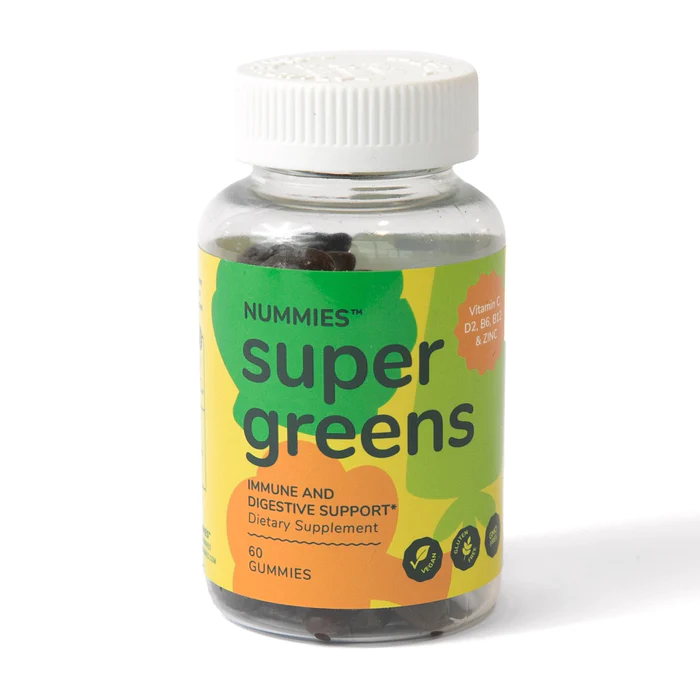

It might be hard to have a healthy lifestyle in the modern environment. We frequently feel exhausted, run-down, and stressed as a result of our hectic schedules, processed foods, and high-tech lifestyles. In our drive for achievement, it may be all too simple to put our health on the back burner. The goal of Nummies is to accompany you every day while you make progress in your well-being. From children to mothers, nummies are for everyone. For individuals who don’t have much time to create juices every morning, for finicky eaters who have trouble eating their fruits and vegetables, and for those who want immediate help to be energized and/or focused. They are delectable and simple to consume with breakfast every morning. Practical for use while on the road or whether you travel for work or pleasure to avoid disrupting your routine. To provide nutrient-dense supplements that help balance your body and mind for a better and happier existence, Nummies uses the power of real food as inspiration.
Nummies: Functional Mushroom Gummie
s
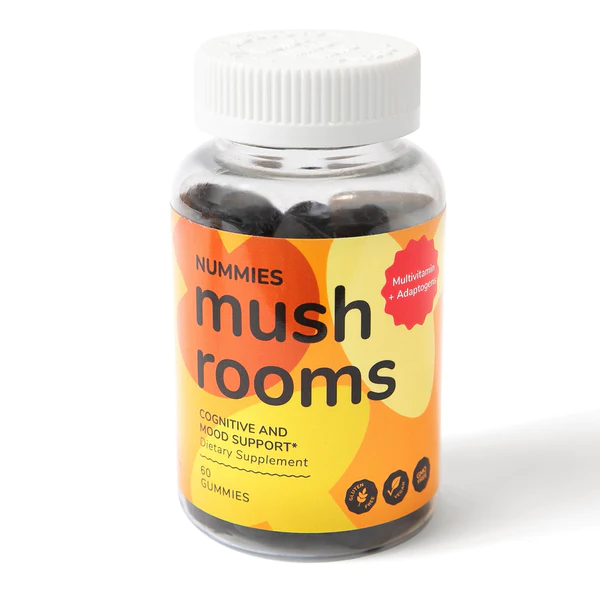
Reishi, Cordyceps, Chaga, and Lion’s Mane are among the ten organic functional mushrooms that are packed inside these at 2500 mg each to boost the health of your brain. You only need two gummies every day to get started.
This mixture encourages the creation of new brain cells while safeguarding brain neurons. To improve your focus, these nummies also promote glutamate signalling.
This is one of the simplest methods for consuming beta-glucan substances.
These will increase your energy levels while promoting stress and anxiety reduction!
Some Interesting Facts About Mushrooms (Tell Your Friends!)
Recent findings indicate that fungi are more closely linked to animals than to plants, including humans. Unlike plants, which make their sustenance through photosynthesis, they receive nutrients from organic materials. Like vertebrates, fungi contain a fibrous material called chitin in their cell walls. But plants don’t. Fungi require food, water, and oxygen to exist, much like humans. They discharge waste and CO2 while using their hyphae to take up nutrients, water, and oxygen from their environment. As they travel in search of nourishment, fungi’s mycelium may develop and spread miles beneath the surface of the ground. A solitary honey mushroom (Armillaria ostoyae) in the Malheur National Forest in Oregon, USA, is the biggest living thing on the earth. It is around 3.5 miles (5.6 km) in width, covers 2,385 acres (965 hectares), and dates back at least 2,400 years. but could be much older. It also holds the title of being the biggest fungus on the entire planet. Symbiotic relationships exist between host plants and trees and mycorrhizal fungi. The fungus interacts with the roots of the plant and provides them with nutrients in exchange for simple sugars. However, the mycelial network of the fungus also makes it easier for many types of plants and trees to exchange information and nutrients. According to recent research, Japanese farmers have long thought that lightning strikes increased the availability of mushrooms. Mushrooms are full of remarkable qualities. Not to mention..the magic mushrooms.
* In partnership with our friends at Nummies LLC* Photo courtesy of Nummies LLC
* These statements have not been evaluated by the Food and Drug Administration. These products are not intended to diagnose, treat, cure or prevent any disease.
* The information available on ewellnessmag.com, including text, graphics, and other materials is for informational purposes only. Reliance on any information in ewellnessmag.com is at the user’s own risk. Sponsored product placement may appear in the article. The visitor of this website acknowledges that the information available on or through ewellnessmag.com is not and is not intended to be a substitute for professional medical advice. Copyright © 2023 Brawo Press, Inc. All rights reserved.