
The shopping list had one job: remind her why she had come into the parking lot. She looked at it again. Olive oil. Lemons. Coffee. Something for dinner.
The words were perfectly familiar, but for a few seconds they seemed strangely detached from one another, as though someone had written them in a language she almost understood. She read the list from the top, reached the bottom, and started again. Then she noticed how long she had been sitting there.
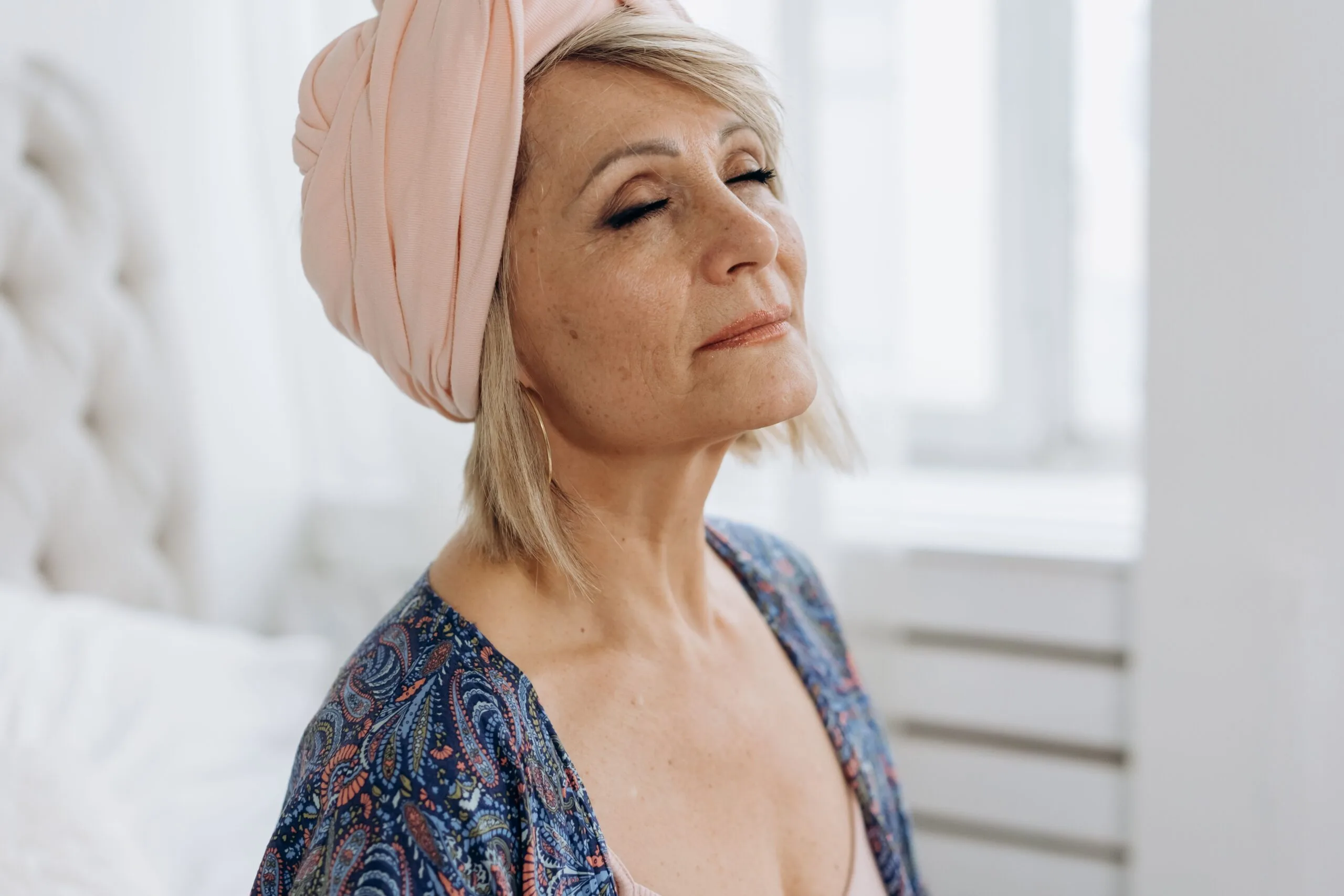
The engine was off. The car was warm. A shopping trolley rattled somewhere across the parking lot, and someone was loading bags into the boot of a car two spaces away. Nothing was wrong, exactly. She simply couldn’t seem to gather herself enough to open the door. When she finally did, a wave of heat moved across her face and neck.
She stood beside the car for a moment, letting the air settle around her. Then she opened the door again and sat back down, this time with the window lowered. The breeze wasn’t particularly cool, but it was enough to make her feel more present.

Understanding Midlife Health Through Better Education
For many years, midlife health transitions were only discussed in private, if they were spoken about at all. Women were often expected to navigate complex physical changes using bits and pieces of advice, internet research, or one-size-fits-all recommendations that treated every body as though it worked in exactly the same way.
A biological transition can bring gradual changes in sleep, metabolism, joint flexibility and the way the body responds to stress. Without enough context, it can be easy to confuse these changes or treat them as separate issues without knowing whether they might be connected to the hormonal transition or whether something else deserves attention.
April Lind, MD, a board-certified physician with more than two decades of clinical experience across primary care, hospital medicine and integrative women’s health, founded the Clarity Education Platform™ (MyClarity™) around a problem she had repeatedly encountered: women were often expected to make decisions about changing bodies without having enough accessible education about the physiology behind those changes.

Consider a professional navigating the demands of a mid-career life who begins to notice that her usual tolerance for stress is changing. Or a runner who finds that her usual post-workout recovery is taking twice as long, despite following the same routine. These experiences are not necessarily signs of personal oversight, nor do they automatically indicate physical decline. They may be physiological changes worth exploring more carefully, particularly when several seemingly unrelated patterns begin to appear at the same time.
A study published in the Journal of Women’s Health found that patient-provider communication around menopause symptoms and treatment can be limited. The researchers also found that women who reviewed a health-literacy-appropriate discussion guide had higher knowledge scores than those who reviewed standard educational material. Journal of Women’s Health study on menopause education and health literacy
The Clarity Education Platform™ takes an educational approach designed to help women understand and recognize their own patterns. Rather than treating every experience as an isolated symptom, it provides evidence-based information that can help women develop more informed questions and make sense of changes as they occur.
Practical Tools for Every Phase
Midlife wellness can involve a complicated mix of physical experiences, making structured and accessible education particularly useful. Understanding how hormonal changes may relate to sleep quality, cardiovascular wellness, bone density and emotional well-being can provide important context for changes that might otherwise seem unrelated.
The platform focuses on dedicated, self-paced learning tailored to different stages of midlife health.
The Perimenopause Learning Path Bundle™ is designed for women experiencing the hormonal changes that can begin in the years leading up to menopause. It explores the physiological changes associated with variable cycles, mood and sleep, while introducing ways to recognize patterns over time. Nutrition, movement and stress regulation form part of the practical material, alongside guidance for preparing questions and conversations with healthcare providers.

The Menopause Learning Path Bundle™ takes a broader view of the years following the final menstrual period, looking beyond individual symptoms to the longer-term changes that can accompany lower estrogen levels. Its material considers the relationship between hormonal change and areas such as bone, cardiovascular, metabolic and cognitive health, while also providing a medically grounded look at different approaches to care, including lifestyle habits and clinical considerations such as hormone therapy. Intimate health is included as part of that picture, with attention to genitourinary and sexual well-being, areas that can sometimes receive less attention in general menopause conversations. Taken together, the material is designed to help women see how these different aspects of health intersect and consider practical, sustainable ways of caring for themselves over time.
Together, the two learning paths bring the information back to everyday life, giving women practical ways to recognize patterns, prepare questions and think more deliberately about their health over time.
Out With the Confusion, In with the Cool Breeze
Midlife health is a period of biological change, and understanding that change can make the experience feel considerably less mysterious.
That understanding does not mean every restless night, forgotten word, aching joint, or difficult afternoon has the same explanation. Persistent, severe or unfamiliar symptoms still warrant individual medical evaluation.
Learning how hormonal changes can relate to sleep, mood, metabolism, bone health, cardiovascular health and other aspects of well-being can give those observations somewhere to go. A symptom can become a question. A pattern can become something worth discussing. A doctor’s appointment can become a more informed conversation.
Back in the car, the shopping list is still sitting on the passenger seat. Olive oil. Lemons. Coffee. Something for dinner. The words haven’t changed. The day hasn’t suddenly become easier, and one moment of understanding does not explain everything the body might do next. But this time, there is less urgency to make the moment mean something is wrong.
The window is still down. A little air moves through the car, across warm skin and an afternoon that has carried on without waiting. The list is folded and placed on the console. Then the door opens, and the shopping can finally begin. Sometimes connecting the dots does not give the body a simple answer. It gives the person living in it a better place from which to start asking questions.