
You have had a long day sitting at your desk in front of the computer. You’re tired. Your shoulders are sore. Your neck is stiff. Your back feels weak. Just as soon as the pain finally begins to settle, you’re back in your chair, where the pain starts creeping in again.
Many office workers, remote professionals, and students have experienced this kind of pain. They start the morning sitting upright only to find themselves leaning toward their screens later in the day. By afternoon, they shift in their chairs, constantly stretching their shoulders and clicking their necks in an attempt to ease their discomfort.
Modern working environments often involve prolonged sitting and repetitive positioning. While a comfortable chair and occasional stretching can help, building better posture habits can benefit you in the long term.
Understanding how posture works and how everyday support tools fit into a balanced routine can help people make thoughtful choices about their physical comfort.

Why Long Hours at a Desk Can Affect Posture
The human body is designed to move through different positions throughout the day. However, desk-based environments often require people to stay in a similar position for extended periods.
When someone spends hours looking at a monitor or scrolling through a phone, their head may slowly move forward while their shoulders round inward. This position can happen often, especially when concentration is prioritized over body awareness.
Some everyday habits may contribute to this positioning. One includes reaching for a keyboard or mouse. This might encourage the shoulders to rotate inward. Another is staying in one position for a long time, which may cause feelings of stiffness or reduced movement. Busy schedules can also make it easier to forget to take movement breaks or change positions.
These habits don’t always affect everyone in the same way, but they highlight why posture awareness is an important part of a comfortable working routine.
What is Good Posture?
Good posture is often misunderstood as simply keeping your back straight while sitting down. However, comfortable posture involves maintaining a balanced position while allowing the body to move naturally.
When sitting, a more neutral position involves keeping the head comfortably aligned over the shoulders, having the shoulders remain relaxed, and supporting the lower back where appropriate. The feet should rest comfortably on the floor, while the elbows stay tucked close to the body when using a keyboard.
While ergonomically designed workstations can be helpful, changing positions regularly and walking around during breaks remain important. Gentle mobility exercises can also be done to help prevent the body from staying in one static position for too long.
The main goal is to develop positional awareness and create opportunities for comfortable movement throughout the day.
What Is a Posture Corrector and How Does It Work?
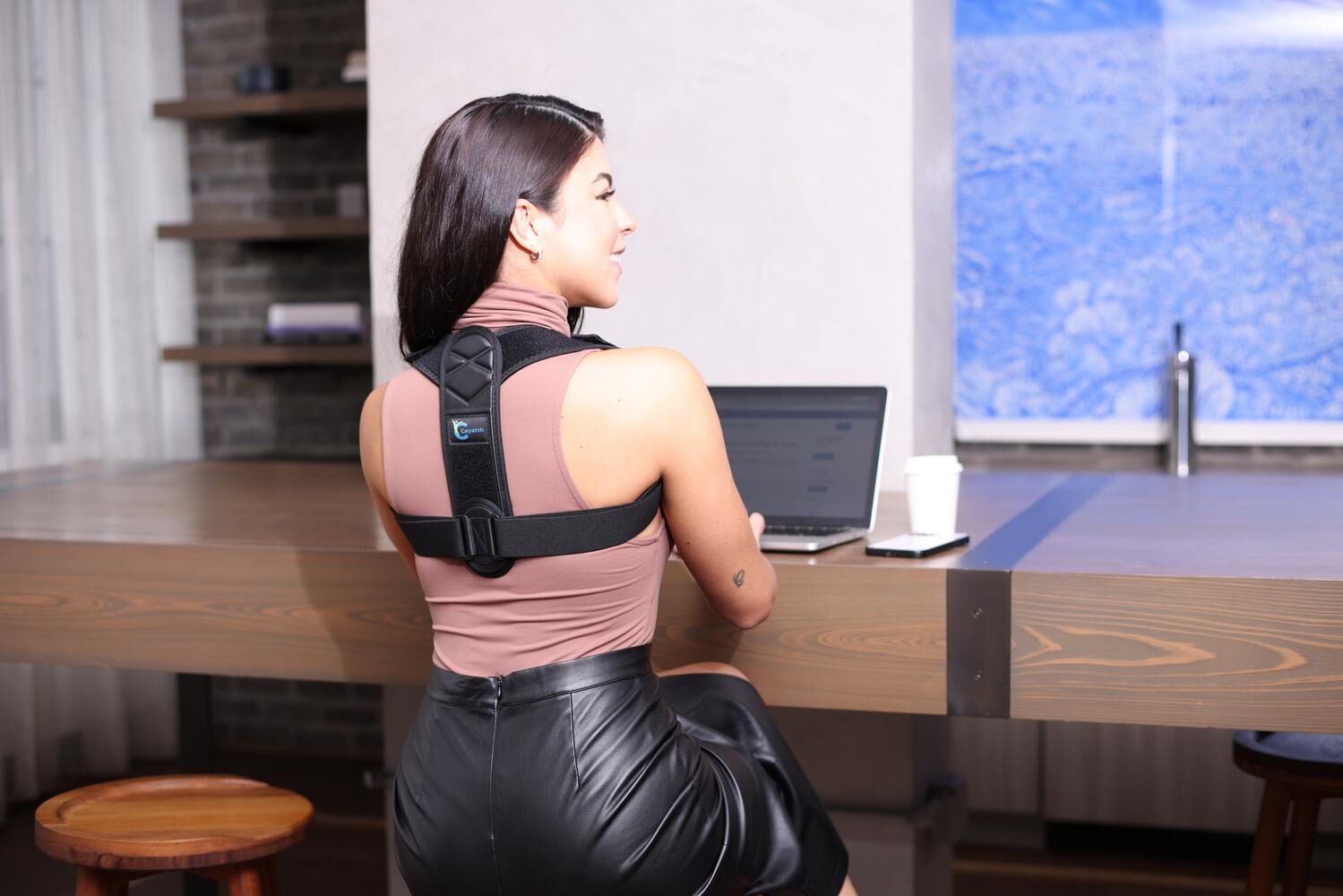
A posture corrector is a wearable support device designed to provide a physical reminder when someone starts to slouch or round their shoulders.
Most designs use adjustable straps that sit around the shoulders and upper back. Depending on their design, some models also include additional back or waist support.
Instead of forcing the body into a fixed position, a posture brace may gently encourage the shoulders to move toward a more natural alignment. This feedback can help wearers become more conscious of their positioning.
For someone who regularly leans toward a screen without noticing, the feeling of the straps might serve as a reminder to reconsider their position from time to time.
Posture Awareness Versus Dependency
One key distinction is the difference between using external support as a reminder and relying on it continuously.
A posture corrector is not a replacement for natural muscle activity, movement, or strengthening exercises. Instead, it is something that can be used for short, intentional sessions that may help individuals notice when their shoulders start rounding forward.
Over time, this awareness can potentially support better everyday habits, particularly when combined with an appropriate workstation and regular physical activity.
What to Look for When Choosing Back Support
Each posture corrector is designed differently. Choosing between designs depends on personal preferences, features, materials, and intended use.
One feature buyers can look at is adjustability. With an adjustable design, wearers can alter strap tension and positioning according to what works best for them. Another feature is breathable materials. Since posture support may be worn for long periods, lightweight materials might be more comfortable during desk work.
Flexibility and comfort are also factors to consider. A posture corrector should provide useful reminders without feeling restrictive or uncomfortable during everyday activities. Cleaning is also important. Wearable support products touch skin and clothing during use, so being able to clean them can make regular maintenance easier.
Understanding these features makes it easier to compare designs according to personal needs and wants.
Understanding Everyday Posture Support Options
Different working environments require different approaches to wearable support. Someone spending eight hours at a computer may prefer a different design than someone who only needs occasional support.
This approach has been used by the company Cayatch Posture Corrector. Based in Illinois, the brand was founded by Mai Luu. Her experience with prolonged desk work shaped its approach to everyday posture support.
Before creating the brand, Mai worked as an accountant. Her workday involved long computer sessions where she often found herself with rounded shoulders and recurring neck, shoulder, and upper-back tension.
She tried multiple wearable correctors; however, the products she used felt too bulky, rigid, or uncomfortable for regular workplace use. That experience inspired her to find a different approach.
She wanted to create something lightweight and breathable that could fit more seamlessly into a working day.

Full Back Coverage for Long Desk Sessions
Cayatch offers two posture support designs. Both are made differently and have their own intended wearing experience.
The first product is the Full Back Support Dual-Adjustment Posture Corrector. This design is tailored to individuals who prefer more extensive coverage while sitting for extended periods.
Its structure includes cushioned shoulder straps for less additional pressure on the shoulders, an adjustable waist strap for personalization, and four flexible support bars along the back. It also uses a lightweight, washable material.
They are available in small, medium, and large sizes, which are based on an under-chest measurement.
For someone looking for a more structured construction for extended desk activities, this design represents a fuller-coverage option within the brand’s range.

Flexible Support for Everyday Use
The second product in the lineup is the Adaptive-Fit Dual-Adjustment Back Brace Posture Corrector.
Its design uses a streamlined approach, where its construction focuses on the shoulders and back, giving wearers the opportunity to alter the fit at two separate points.
The key characteristics of the back brace include its lightweight design, adjustable shoulder and back sections, and the use of breathable, washable materials. As stated by the company, its size range covers body types from approximately 4’11” to 6’2″ and 105 to 220 lbs.
This option might appeal to those who prefer support with a less extensive design that can be used during a range of everyday activities.
Both Cayatch products are described as being free from metal and fiberglass.
Setting Realistic Expectations
An important part of choosing a posture corrector is understanding what it can and cannot do.
A wearable support brace should not be viewed as an overnight solution to posture concerns, nor should it be expected to eliminate discomfort permanently or change someone’s posture without additional effort.
Individual experiences can vary depending on working habits, consistency, body mechanics, and other personal factors. Cayatch recommends beginning with shorter wearing sessions before slowly building up to longer sessions.
It is also suggested that wearers combine brace use with regular movement breaks, workstation repositioning, simple strengthening exercises, and consistent attention to sitting habits and body positioning.

Small Habits to Create Lasting Change
Spending long days at a desk doesn’t mean you have to ignore the changes your body may need. For people who spend hours working in front of screens, developing better posture awareness can be the start of change. Apart from movement breaks, strengthening activities, and attention to positioning, posture correctors may provide an additional reminder, helping wearers recognize when they start slouching.
The most sustainable approach to desk comfort is about creating everyday habits that allow your body to move, rest, and work more comfortably. For those aching after a long day in front of a screen, those small changes might be a meaningful place to begin.