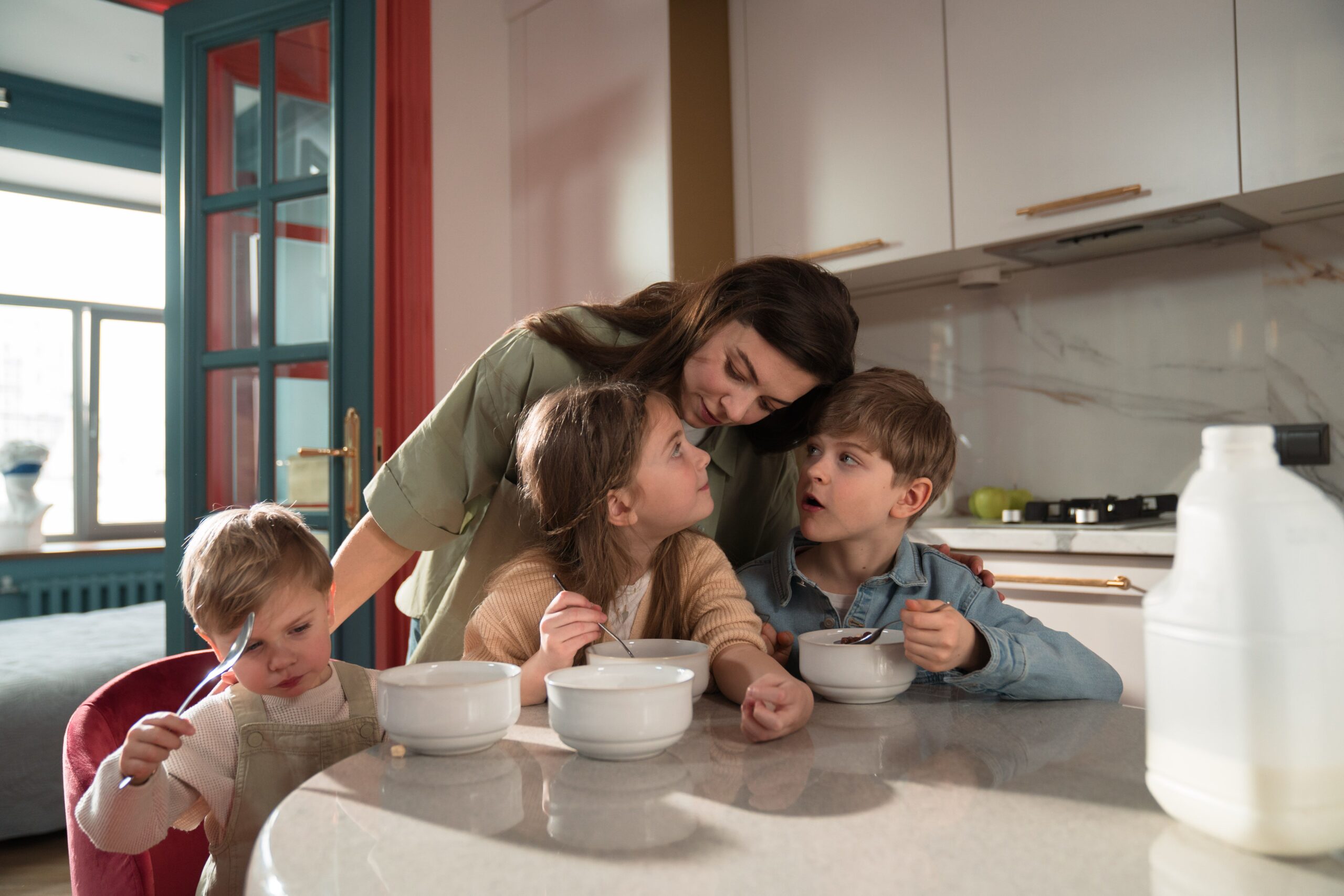


It’s 8:12 on a Tuesday morning, and you’re standing in the kitchen with one shoe on, trying to remember where you put the permission slip that needs to go back to school. Your coffee has gone cold, a work message is waiting for a reply, someone is asking what’s for dinner, and the washing machine is making that familiar sound that means another load needs to be taken out. You haven’t even properly started your day, yet your mind has already worked through a dozen different things.
Sound familiar? Motherhood has a way of filling every conceivable gap in your day, including the quiet moments when you’d quite like to be thinking about something other than everyone else’s needs. Between the kids, work, the house, the myriads of little things that keep the day going, you can quite easily find yourself with no space at all for yourself. It’s as if the to-do list is just endlessly expanding.
But your own well-being matters, too, and acknowledging that doesn’t mean you love your family any less.

The Invisible Mental Load of Motherhood
So much of what you do as a mother is invisible to everyone else. It’s remembering which child needs a pair of new shoes, keeping track of appointments, planning the meals, checking the school messages, anticipating problems, and somehow knowing what comes next. Even when you’re sitting down for a five minute moment of silence, your mind is still going through its mental to-do list.
This invisible mental load will vary from person to person depending on your situation. If you’re a working mother you are likely juggling work deadlines with family responsibilities, with very little time in between. If you are a mom who stays at home with young children your day probably centers around meeting everyone else’s needs, leaving little time for what you need. If you are going through a separation or are a single parent, you may be managing additional emotional and practical responsibilities while trying to navigate the normal day-to-day demands, all in the hope of providing some stability for your family.
As your children grow the demands on you change, too. The newborn nights give way to school runs, extracurriculars, teenage angst, and the sort of conversations that require a completely different kind of attention.
The details may vary, but the mental load can be quite considerable. It’s no surprise that finding time to just focus on yourself can sometimes seem like a completely unattainable goal.
Your Well-Being Deserves a Place on the List
When so much of your attention is being given to other people, your own needs can easily become negotiable. You may put off having a proper lunch, stay up later than you should to get the housework done, or decide that going for a walk can wait until tomorrow. Somehow tomorrow always seems to have another list of things to do.
The problem is that self-care can start to feel like something you have to earn. You tell yourself you’ll rest when the house is tidy, when work settles down, or when the children need you a less. Family life never quite gets to that point where everything is taken care of.
A healthier approach is to realize that your well-being doesn’t have to be the last thing on your list. Restful sleep, nutritious food, staying hydrated, moving your body, and allowing yourself time to recharge are all key components of self-care. So is asking for help, sharing the load of responsibility, and accepting that you don’t have to do it all perfectly.
Making Everyday Wellness More Realistic
The notion of self-care can, at times, sound like another lifestyle project to juggle. You are already doing enough without having to add on to it with a complex morning routine, a complicated exercise regime, and a host of other new habits to keep up with.
Instead, think about what might work in the life you already have. A few quiet minutes before the house wakes up, a short walk during the lunch hour, putting your phone down for a while in the evening. A properly cooked meal, a more regular bedtime, or someone to share the school run with can all make a real difference to how manageable your days are.
These little habits are not about creating a perfectly peaceful life. They’re about creating space for those moments that allow you to step back, breathe, and attend to what you actually need.
It also helps to recognize that you don’t have to manage every challenge independently. Support from family, friends, professionals, and your wider community can be just as important as the personal habits you develop.
Wellness should enhance your life rather than become another benchmark against which you judge yourself.
A Brand That Understands the Reality of Motherhood
This more realistic approach to well-being is central to Calm Mom. The brand is built on the premise that motherhood is different for every woman, yet the need for support is universal.
Rather than suggesting mothers to get organized or find ways to fit even more into their days, Calm Mom recognises the invisible mental load of being a parent. It’s perfectly okay to love your children and still be overwhelmed, still need a break, or to want five minutes of peace where no-one is calling your name.
Through its products, educational content, conversations on social media, and the very real stories of mothers at different points in their lives and in different circumstances, the brand aims to make everyday wellness more accessible.

Peace & Focus: Everyday Support for Focus and Balance
One of Calm Mom’s key offerings is its Peace & Focus supplement, designed to be part of a daily wellness routine. The caffeine-free formulation takes a multi-pronged approach with thirteen carefully selected ingredients from a number of different categories including amino acids, adaptogens, vitamins, minerals and botanicals.
Rather than relying on one trendy ingredient, the formula combines several well-known names in the wellness space. These include ashwagandha, L-theanine, magnesium glycinate, the B vitamins and lion’s mane.
Each ingredient has its own individual nutritional or research context. Ashwagandha is an adaptogenic herb which has been researched for its potential effect on the body’s stress response. L-theanine is an amino acid found in tea and has been the subject of research for its potential effects on relaxation and attention. Magnesium is a mineral which is required for many body processes and B vitamins are required for normal energy metabolism and normal function of the nervous system. Lion’s mane is an ingredient which is currently the subject of research for its potential effect on cognitive health.

The blend is part of Calm Mom’s wider aim of providing a formula that will support everyday focus, clarity and balance. It should be stressed that individual ingredient research is not the same as clinical evidence of the effect of the finished product. Peace & Focus is not intended to treat anxiety, chronic stress or any other condition.
Practicality is another factor. The product comes in a 60-capsule bottle which will last you 30 days at the recommended daily serving of two capsules. The formulation is vegan, non-GMO, third-party tested and made in the USA. The fact that it’s caffeine-free also means it’s not formulated around another source of caffeine to get you through the day.
As with any supplement it’s worth checking the ingredients and speaking to your GP if you’re pregnant or breastfeeding, on medication or have any existing health condition.
Importantly Peace & Focus is not positioned as a substitute for proper sleep, good nutrition, movement or other forms of personal care. It’s intended to complement the everyday habits that help support your overall well-being.

You Deserve Support, Too
Motherhood will inevitably involve a certain amount of juggling. There will be school forms to sign, meals to cook, messages to reply to and days when your carefully laid plans are completely shattered by lunchtime. You won’t always be patient, you won’t always be in control, and you won’t always be focused. That’s just part of being human.
What matters is that your own needs don’t just vanish because you’re the one responsible for everyone else’s. Allowing space for your own well-being is not selfish, and it doesn’t mean you have to get everything right. It just means you recognize that you are entitled to the same level of care and attention as you give to the people you love.
So, the next time you’re standing in the kitchen with a cold cup of coffee, wondering how the day has already become so busy, remember that you belong on your own priority list, too. You don’t always have to try harder. Sometimes, you just need a little support.