

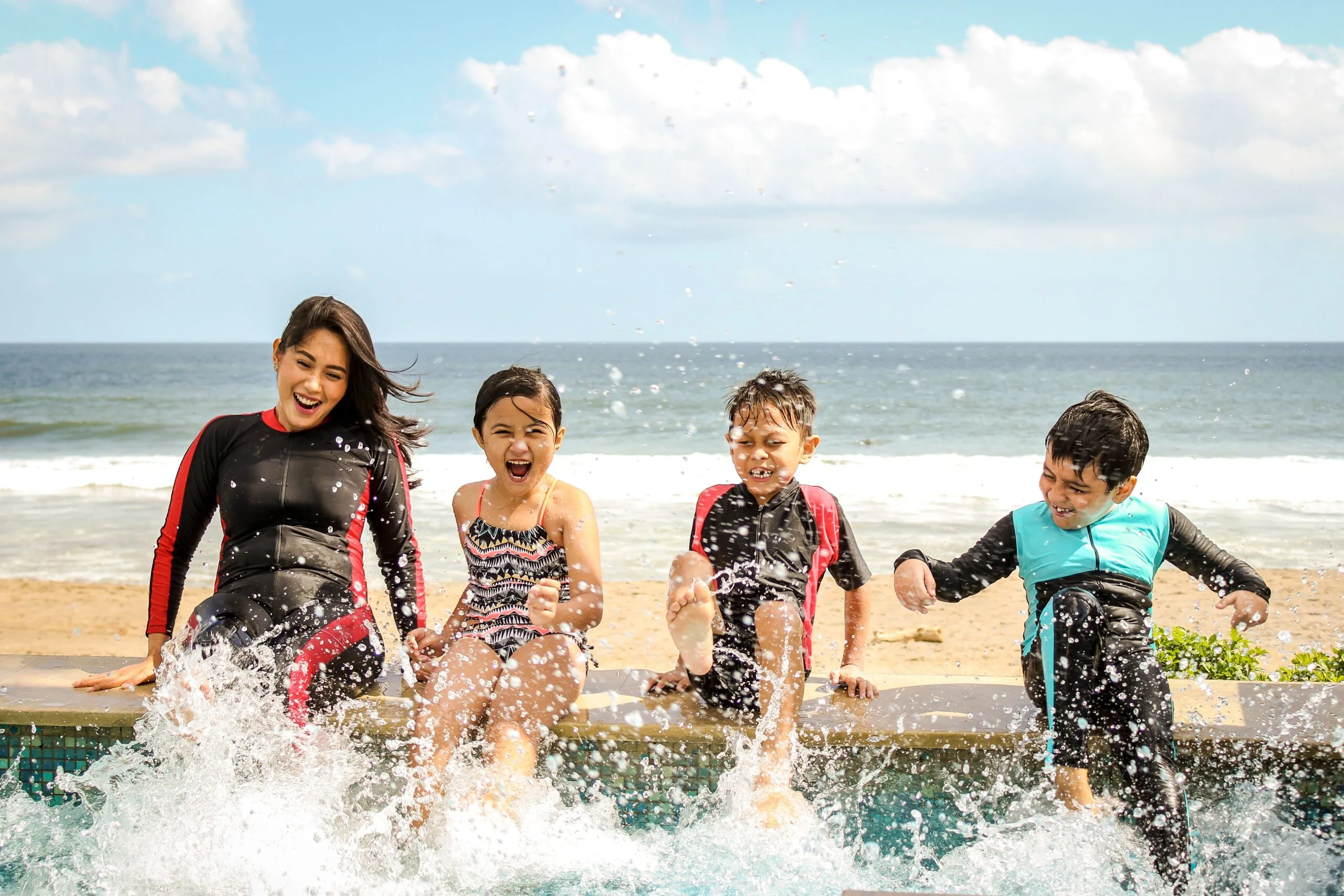
Shrieks of laughter ring through the air as the children scramble to rebuild their collapsed sandcastle.
One child is rebuilding the moat with both hands, scooping wet sand into a plastic bucket while another crouches beside him, carefully pressing a shell into the side of the tower. A few feet away, the water keeps winning. Every time a wave rolls in, they run toward it, belly laughing when it reaches their knees, then race back up the beach before turning around to do it again.
Their towels are abandoned in the sand.
Wet footprints everywhere. A bucket has been left upside down near the waterline. Someone has lost a pair of goggles and has not noticed yet.
For the parents sitting nearby, this is the part of a beach day that makes all the packing worthwhile. The children are absorbed in something that does not involve a screen, a schedule or being told what to do next. They are digging, splashing, carrying water, arguing over whose sandcastle is bigger, then forgetting the argument thirty seconds later.
The only thing interrupting the fun is the occasional reminder to come back for sunscreen.
Children do not spend hours outdoors in neat little stretches, sitting where you put them. They move constantly: from sand to water, from shade to sun, from building castles to chasing waves.
Keeping them protected has to work around all that movement.

The Clothing They Actually Want to Wear
A child can have the most sensible sun shirt in the world, but if it feels uncomfortable, looks boring to them or becomes something they associate with being told what to do, it may spend more time on the floor than on their back.
Salt + Shine describes itself as being created by two moms, with sun-safe swimwear designed around children’s enthusiasm for adventure. Its product range combines practical sun protection features with artwork intended to make children excited about putting the clothing on in the first place.
That philosophy is particularly visible in two very different designs: Rainbow Unicorn Dreams and Duck Around.
They are not trying to make children’s swimwear look like scaled down adult activewear. They lean into the fact that children have their own visual language. Unicorns. Ducks. Bright colors. Big personalities.
That might sound like a small design choice, but it can matter when a child is the one who has to wear it. The easier it is for a child to accept a piece of protective clothing as something they want to wear, the less likely the parent is to have to turn getting dressed into a negotiation.
A Unicorn for the Child Who Has Somewhere to Be
The Rainbow Unicorn Dreams Kids Rash Guard is designed for girls in sizes 2T through 7, with a long sleeve construction and UPF 50+ sun protection. The company describes it as a lightweight, quick-drying swim shirt with four-way stretch and a soft fit intended for all day wear.
A beach morning does not stay a beach morning. There may be a walk before swimming, a snack afterward, or several hours of children moving between wet and dry activities. A rash guard that is intended only for sitting neatly beside the pool would miss the reality of how children actually spend summer days.

The four-way stretch is particularly relevant to that reality. Children climb, bend, reach and twist without thinking about whether their clothing is cooperating. Salt + Shine describes the shirt’s athletic fit as one that stays in place while children play, while advising parents to size up when between sizes.
Comfort is not an aesthetic extra.
If protective clothing restricts movement or constantly needs adjusting, it creates friction for both child and parent. If it moves comfortably with the child, it can quietly become part of the day’s background.
Ducking Around
The Duck Around Kids Rash Guard approaches the same problem from a different angle. It combines UPF 50+ protection with what the company describes as a high visibility color and original artwork, available in children’s sizes 2T through 7.
The high visibility element is particularly interesting because it connects sun protection with something parents are often thinking about without necessarily naming it: keeping track of a child outdoors.
At a crowded pool, beach, splash pad or waterfront, children can disappear visually with astonishing speed. One moment they are beside you; the next, they are moving toward something interesting ten feet away.
Bright, distinctive clothing does not replace supervision, of course. It does, however, make the child easier to visually distinguish from the surrounding crowd.
The clothing is doing something practical while still leaving room for the fact that childhood is supposed to be colorful, slightly ridiculous and full of creatures that probably have no business appearing on swimwear.

The Better Sun Safety Routine Is Usually the Boring One
For parents, the wellness culture of adding products, steps and precautions can become exhausting. It is often more useful to make the habits that already matter easier to repeat.
A UPF 50+ rash guard can provide coverage for much of the torso and arms, while sunscreen can still be applied to exposed skin, particularly areas not covered by clothing. A hat and shade can add further protection, particularly during periods when ultraviolet radiation is strongest.
UPF also deserves a little clarity because it is sometimes treated as interchangeable with SPF.
It is not.
SPF is used to describe sunscreen’s protection against UVB, while UPF refers to the amount of ultraviolet radiation that passes through fabric. UPF 50+ clothing therefore tells you something about the fabric’s ultraviolet protection rather than providing a numerical replacement for sunscreen.
A rash guard is one practical layer in a larger routine, and because it is a piece of clothing rather than another bottle that needs to be remembered, it can make that routine feel less cumbersome.
Why Salt + Shine Feels Different
The most interesting thing about Salt + Shine is the decision to build the brand around the tension that parents want their children protected, but they also want them to enjoy being outside.
The company describes its swimwear as being designed by two moms and loved by children who refuse to take it off.
There is also something worth noticing about the brand’s custom artwork offering. Salt + Shine says parents can submit photographs, choose an adventure theme and have artists create a custom illustration for a one-of-a-kind swimwear piece.
The Small Win Nobody Puts on the Packing List
By late afternoon, the sandcastle will probably be gone.
The moat will have filled in, the carefully pressed shells will have disappeared beneath footprints, and the children will have moved on to one final race into the water before someone announces that it is time to leave.
That is the nature of a beach day.
Maybe that is why the best kind of sun protection is the kind that can keep up. A rash guard can cover skin while a child digs, runs, climbs and splashes, without asking them to stop being absorbed in what they are doing. It becomes part of the swimwear, part of the morning, part of the slightly chaotic collection of towels and buckets and wet clothes that comes home in the beach bag.
The sunscreen still matters. So does shade, a hat and paying attention to how much time children spend in the sun, but protection does not have to be the thing everyone remembers most about the day.
Ideally, the children remember the castle or the wave that was bigger than expected.
The more useful measure of a family wellness habit is how quietly it allows everyone to get on with the life happening around it.