
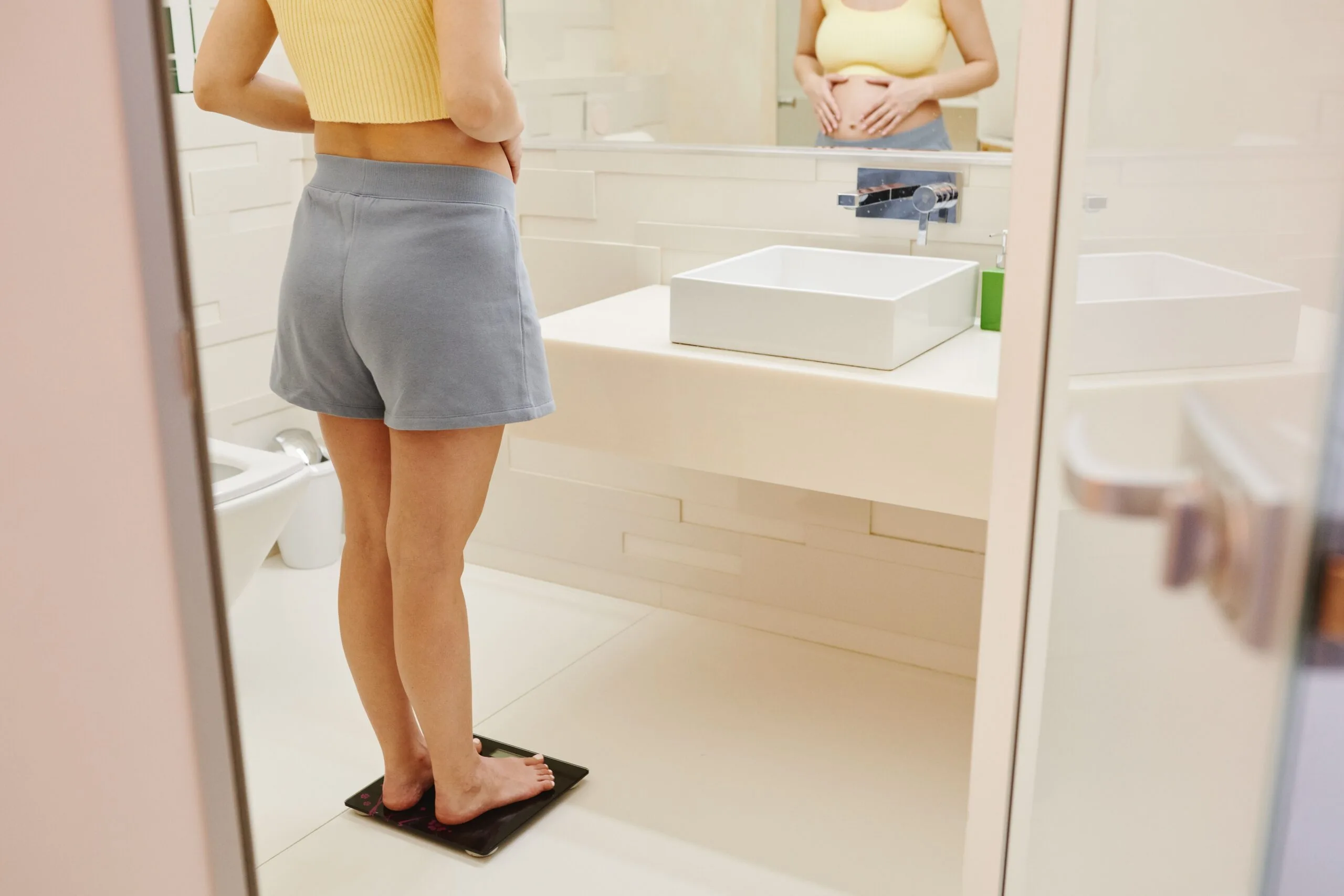
She tried to ignore the bathroom scale as she stepped into the shower. It was still there beside the bathmat, exactly where she had left it. For years, stepping onto it had been part of a morning ritual she never particularly looked forward to. As the water began to run, she let herself forget about it for a few minutes.
If you have ever felt as though your weight was an impossible problem to solve, you will understand that moment after the bathroom scale has delivered its verdict. You step off, look down, and do the calculation almost automatically. A few pounds less. Maybe enough to feel encouraged or enough to decide that whatever you are doing must finally be working.
Then you get dressed and go about your morning.
The scale, however, has no idea how you feel walking up the stairs. It does not know whether you are getting stronger, eating enough protein, drinking enough water, sleeping well, moving your body, or gradually building habits that could still make sense six months from now.
It only knows your weight.

A Number Can’t Describe a Changing Body
For years, weight loss has been about a number. It is easy to understand why. Numbers provide something measurable in a process that can otherwise feel frustratingly unpredictable. A pound lost feels concrete, five feels like progress, and ten is a milestone.
The human body is more complicated than the bathroom scale suggests. When body weight changes, that change can involve different components of the body, including fat and lean mass. If you’re using GLP-1 medication for weight loss as part of a weight management plan, watching the scale may not tell you what exactly is changing.
Are you losing predominantly fat? What is happening to lean mass and muscle mass? Are you eating in a way that supports your changing appetite? Are you maintaining movement and strength? Are side effects making it harder to stay consistent?
HumeCare grew out of Hume Health’s work in body composition technology, at a time when the popularity of GLP-1 medications was accelerating. The team began seeing a pattern: people were losing weight, but there was not always enough visibility into what they were losing or enough support surrounding the medication itself.
Medication could be one part of a weight-management plan, but it could not address every part of the experience. The company built its model around that broader picture.
If you are navigating GLP-1 weight loss, that distinction can become particularly important.

From Prescription to Protocol
A prescription is tangible, but alone it does not tell you what to do when your appetite changes, how to think about nutrition when eating less becomes easier, how to stay engaged with movement, or what your changing body composition might mean.
HumeCare’s physician-led Weight Loss Protocol combines personalized GLP-1 medication with body-composition tracking, clinician support, nutrition and medication tracking, and personalized supportive therapies. The idea is to connect medical treatment to everyday life.
The company’s Hume Pod and body-composition technology are designed to track changes in areas such as fat and lean mass, giving the individual and their care team more information than the scale can provide. The website describes regular body scans as a way to see what is changing.
The Quieter Side of Weight Loss
There is another part of weight loss that is usually not considered: the meal that suddenly feels different because appetite has changed, or the realization that maintaining strength matters just as much as watching the number fall.
The company incorporates nutrition and hydration guidance alongside medication management, while its app allows you to track progress, log medication and food, and communicate with your care team. The brand also describes supportive therapies including glycine, vitamin B12 and vitamin B6 as part of its protocol when appropriate.
A change in appetite can change how someone eats. That can affect nutrition, energy and how easy it feels to maintain familiar movement and strength routines. And none of it happens in isolation; it happens alongside work, family, travel, weekends and the ordinary unpredictability of life.
A useful wellness system has to leave room for all of that.
Health is Not a Smaller Version of Yourself
There is nothing inherently wrong with wanting to lose weight. For many people, it can be an important health goal, but size is not the only measure of health. HumeCare puts body composition at the center of its model.
The company describes its program as combining physician-prescribed GLP-1 medication, body-composition scans, personalized supportive therapies, ongoing physician optimization and a connected app.

Making the Process Feel Less Like a Solo Project
Anyone who has tried to change a long-standing habit knows how hard it can be. The first week can feel exciting. The third week can feel ordinary. A month later, life happens. That is when support becomes more than a nice addition.
HumeCare places clinicians inside the process rather than at the starting line. The company’s model includes clinician access, personalized protocols and ongoing monitoring, with the intention of adjusting treatment as the person’s body and results change.
It recognizes that two people can begin with similar goals and have completely different experiences.

A Different Definition of Progress
The most useful question to take away from HumeCare has nothing to do with medication at all. It is this: What does progress mean? Maybe it means the scale is moving or having enough information to make a better decision instead of guessing. Perhaps, eventually, it means reaching a point where health is no longer something being pursued exclusively through a number.
That is the thinking behind HumeCare’s Weight Loss Protocol. The company has built a broader framework around medication that brings together medical oversight, body-composition data, nutrition, movement, tracking and behavioral support. The medication may be an important input, but the person remains the bigger picture, and that brings us back to the scale, sitting quietly on the bathroom floor.
Tomorrow morning, someone may step onto it and see a different number.
The more meaningful question is no longer whether that number went down, but whether the person standing on the scale is becoming stronger, more informed and better supported along the way. Sustainable weight loss and wellness have never really been about becoming a smaller version of yourself. It is about becoming a healthier version of the person who is already there.