
Today, convenience is key, but so is good health. The thing about “convenient” food is that you don’t always get what you bargained for. Disappointment often slips in quietly, somewhere between the first bite and the moment your body realizes it was promised nourishment but delivered something else entirely.
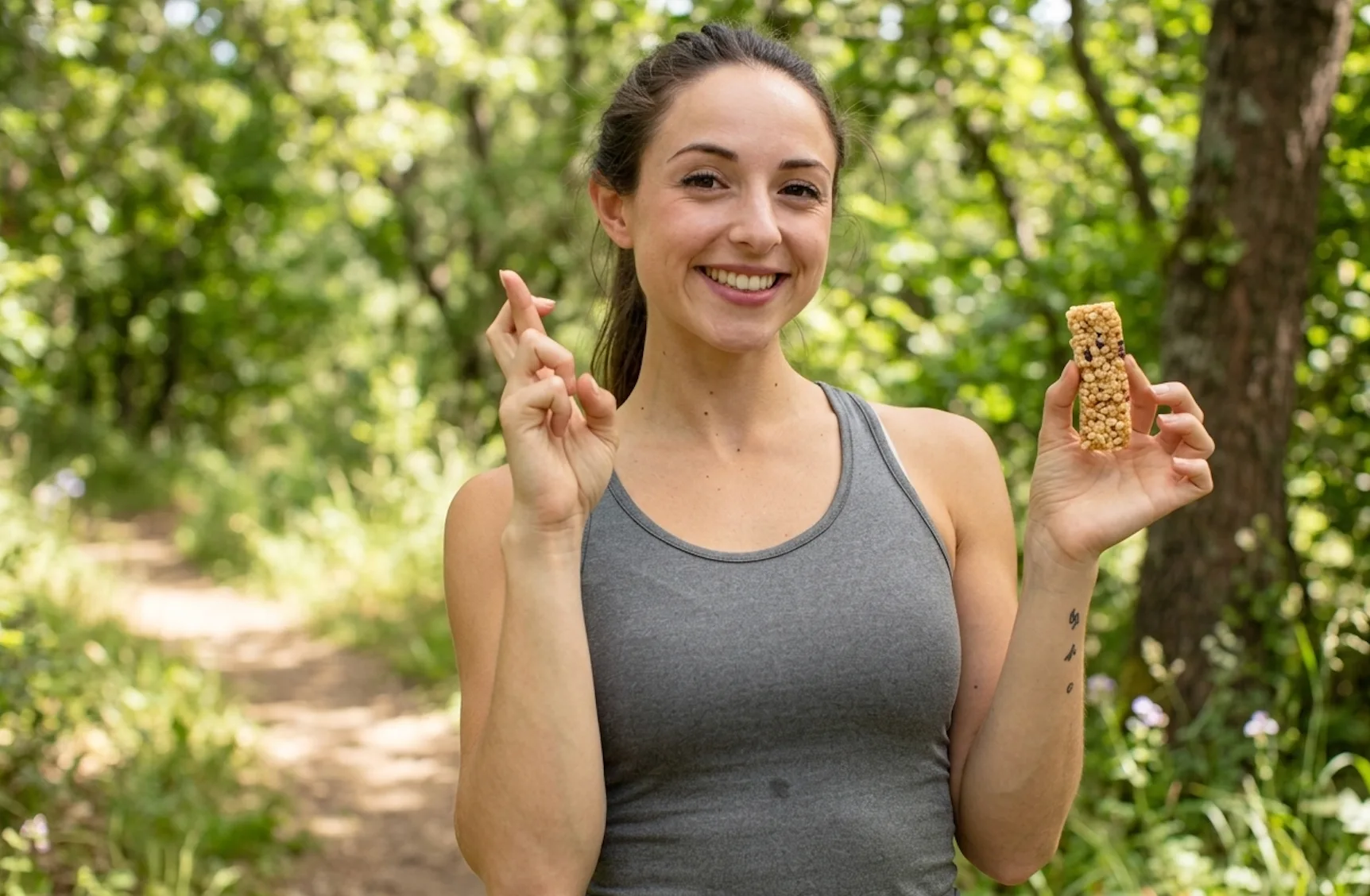
Life is busy, you become preoccupied with the endless list of tasks to complete and almost without thinking, your hand reaches for what looks right: a protein bar wrapped in clean design, stamped with words like “clean fuel,” “high protein,” “sustained energy,” or “guilt-free.” The choice feels like the safe option in the moment. You open the wrapper, expecting it to deliver nourishment.
The first bite always speaks a million words. There’s sweetness, but not the kind that comes from food. It tastes engineered to register as pleasure, but never quite delivers satisfaction. The texture doesn’t quite hold together. It is difficult to chew and somewhere between the promise on the wrapper and the reality in your mouth, there’s a disconnect you can’t quite name at first.
Then it lands! The fatigue that arrives sooner than it should. A spike, a dip, a lingering heaviness disguised as convenience. You finish it anyway, because that’s what busy people do. But something about it stays with you, the sense that what you just ate was close to food, but not quite food in the way your body understands it.
For many people, that moment has become strangely ordinary. A compromise disguised as routine. Over time, those compromises start to add up, not just in how we feel, but in what we’re willing to accept as “good enough.”
It’s in that growing gap between expectation and reality that the story of Uncommon State quietly begins. In something far more familiar: a shared frustration between a mother and daughter who stopped asking, “Is this popular?” and started asking something simpler, and more difficult to satisfy, “Why does “healthy” so often feel like a letdown?”

When “Healthy” Stops Feeling Honest
For a long time, the modern protein bar industry has marketed itself as a solution: clean energy, convenient nutrition, and on-the-go balance, yet behind the wellness language, many products still rely on ultra-processed protein blends, hidden sugars, artificial flavor systems, and fillers designed more for shelf life than human health.
For the founders, this contradiction became impossible to ignore.
As an active mother-and-daughter team, their lives didn’t allow for passive wellness. They were constantly in motion, hiking mountain trails, training in martial arts, balancing careers, and keeping up with the relentless rhythm of family life. Food wasn’t a luxury; it was operational fuel. Something quick, yes, but also something trustworthy.
The problem was that every “healthy” bar they tried seemed to come with a compromise. Too sweet. Too artificial. Too processed. Too unpredictable in how it made them feel afterward. The pattern was always the same: a brief lift, followed by a crash.
At some point, the question shifted from “Which bar should we try next?” to something more fundamental, “Why doesn’t a bar like this actually exist? And if it doesn’t, why not make it?”
The Decision to Build What Didn’t Exist
That question became the foundation of the brand.
The brand was born not from an ambition to enter a crowded category, but from refusal to settle within it. The mission: create a protein bar that could be eaten daily without hesitation. Something you could give your child, pack in your bag, or rely on after training, without having to decode an ingredient list or second-guess the consequences.
The philosophy was not about reinventing food. It was about returning it to something recognizable.
- Whole ingredients
- Transparent labeling
- Real nourishment
Food that behaves like food is supposed to.
A Different Kind of Ingredient Standard
At the heart, the formulation approach is a commitment to whole-food integrity. Every ingredient is chosen not only for its nutritional role, but for its recognizability. If you can’t easily understand what it is, it doesn’t belong in the bar.
That means building energy through ingredients like nuts, seeds, fruits, and carefully selected plant-based proteins rather than synthetic fillers or engineered sweeteners.
Almond flour and almond protein powder provide a steady base of plant protein and sustained energy release. Nut butters and coconut deliver healthy fats that support satiety and satisfaction. Organic maple syrup offers gentle natural sweetness without the volatility of refined sugar spikes. Real fruit and dark chocolate bring both flavor and antioxidant value rather than artificial mimicry.
Nothing is added for decoration. Nothing exists to disguise the truth of what’s inside.

Even something as simple as the Apple Pie bar reflects this philosophy clearly. Its ingredient list reads more like a pantry than a lab: organic almonds, almond protein powder, dried apples, pumpkin seeds, coconut chips, coconut oil, maple syrup, cinnamon, and sea salt.
It’s familiar, and that, increasingly, is what makes it feel unusual.
The Meaning Behind “Uncommon State”
The name reflects a quiet contradiction in modern wellness culture.
We live in a time when information about health is more accessible than ever. Yet genuinely trustworthy food has become harder to find, not easier. The “uncommon state” is the gap between what should be normal, and what has become rare.
Real nourishment shouldn’t feel like a niche product category. It should feel like the baseline. But in today’s marketplace, simplicity has become premium.
The brand’s playful internal motto, “Bite Me”, carries that same spirit of defiance. It’s not aggression for its own sake. It’s rejection of the idea that consumers must accept highly-processed, artificially engineered alternatives simply because it’s convenient or widely available.
Two Flavors, Two Emotional Experiences
While the philosophy behind the brand is grounded in nutrition science and ingredient integrity, the experience of the bars is something more sensory and emotional.
Take the Apple Pie bar. It’s warm, familiar, almost nostalgic in its flavor profile. Cinnamon leads the way, softened by dried apple sweetness and rounded by nutty depth. It feels like something you might have grown up eating in a kitchen where baking was done slowly, intentionally, without shortcuts.
It’s comfort food, re-engineered for performance.
Then there is Chocolate Hazelnut. Deeper, richer, more indulgent in character. It carries the familiar comfort of dessert while still behaving like functional fuel. Dark chocolate provides intensity, hazelnuts bring earthiness, and the overall texture remains soft, layered, and satisfying rather than dense or chalky.

Both flavors share the same design principle: they must taste like something you would genuinely want to eat, not something you tolerate because it is “healthy.”
This is where Uncommon State quietly challenges the category. It refuses the idea that nutrition must come at the expense of pleasure.
Built for Real Life, Not Idealized Routines
The reality of modern wellness is that most people are not operating on perfect schedules.
They are commuting, parenting, training, traveling, working long hours, and trying to stay physically and mentally balanced in between.
Uncommon State bars are designed for that reality, not an idealized version of it.
They are pre-workout fuel when there is no time for a full meal. They are post-workout recovery when the body needs replenishment without heaviness. They are mid-afternoon stability when energy starts to dip but the day is far from over. They are travel companions, emergency snacks, and quiet anchors during chaotic schedules.
What makes them different is not just convenience, it’s consistency. The kind of energy that doesn’t spike and crash, but holds steady enough to support movement, focus, and endurance.
In a world of overstimulation and nutritional uncertainty, that steadiness matters.
A Small Brand with a Larger Intention
As a women-led, small-batch brand, Uncommon State does not operate at industrial scale, and that is part of its identity.
Production is intentionally thoughtful. Quality is prioritized over volume. Ingredient sourcing is guided by transparency rather than cost optimization. Each bar reflects the same standard the founders apply to their own families.
That intimacy is not a marketing angle. It is a structural choice.
And it creates something increasingly rare in modern food systems: accountability you can actually feel.
Customers who discover the brand often describe a similar realization, not that the bars are revolutionary in the loud, disruptive sense, but that they are quietly reliable in a way they didn’t realize they were missing.
- For athletes, it’s performance without digestive discomfort
- For parents, it’s peace of mind in lunchboxes and backpacks
- For busy professionals, it’s stability without compromise.
Not transformation through extremes, but improvement through consistency.

Redefining What “Better Fuel” Can Taste Like
At its core, the company is not trying to convince people to rethink everything they know about nutrition. It is simply offering a different reference point.
- One where protein bars are not synthetic snacks disguised as health food
- One where energy doesn’t require chemical engineering
- One where flavor and function are not in competition
Instead of asking consumers to choose between taste and nutrition, it quietly removes the need for that trade-off altogether.
And perhaps that is its most important contribution.
Just a return to something that should have always been normal: food that feels honest, performs reliably, and tastes like something you actually want to eat.
In an industry full of noise, this brand is making a case for something simpler. Better doesn’t need to be complicated.