Age-related skin problems like wrinkles, fine lines, and pigmentation are unavoidable. While we prefer to blame becoming another year older, the biggest offender is photoaging, or skin damage brought on by exposure to UV and sunshine. Photoaging, which is directly caused by the lifetime accumulation of sun damage, accounts for 90% of the apparent changes in the skin. Light exposure causes premature aging of the skin, according to Melanie Palm, MD, Medical Director of Art of Skin MD in Solana Beach, California. In addition to ultraviolet (UV) and infrared light, this can also comprise other light spectrum components. Your skin can be damaged by the sun’s rays, which could result in a painful sunburn in the near term. Even if you don’t notice a burn, there may still be hidden long-term effects under the skin. Photoaging, which occurs when the sun prematurely ages the skin, can result in skin cancer. Dermatologists use a variety of terms to describe the harm the sun does to the skin, including photoaging, photodamage, solar damage, and sun damage. When skin without sunscreen protection is exposed to ultraviolet (UV) radiation, DNA alterations occur at the cellular level. It may take years before photodamage manifests itself as visible damage because it occurs in the dermis, the lowest layer of the skin. Since light is always present, healthy skin should be concerned year-round about sun damage. Although chronological skin aging cannot be stopped (it is difficult to stop time), photoaging quickens the process. The good news is that it can be entirely avoided.
The Light Barrier Broken Down
The epidermis, or top layer, the dermis, or middle layer, and the subcutis, or bottom layer, make up the three layers of skin. Collagen, elastin, and other fibers that support the structure of the skin are found in the dermis. These components give skin its smooth, young appearance, yet they are also the ones that are harmed by UV radiation. Two distinct wave types, UVA and UVB, make up the UV radiation that harms the skin. The DNA of the skin is harmed by UV radiation, which causes cells in the dermis to rush to make melanin in the epidermis to stop further damage. Your skin is striving to stop the radiation from reaching your skin through this process, which is what causes you to tan. Sunburn is mostly caused by UVB rays, which are shorter than UVA rays. The majority of the harm we identify with photoaging is caused by UVA radiation because of its longer wavelength. UVA rays harm the collagen fibers in the dermis by penetrating deeply. Increased generation of aberrant elastin results from this injury. Metalloproteases are produced as a result of the very high levels of elastin. These enzymes, which repair damaged collagen, frequently act erratically and destroy the collagen, leading to improperly repaired skin. Daily UVA exposure causes this process to recur, resulting in wrongly repaired skin that wrinkles and depleted collagen that gives skin a leathery appearance.
Beyond The Sun
While sunlight is the main contributor to skin aging, HEV and infrared light account for roughly 10% of skin aging. The sun and electronic gadgets like your phone or computer create HEV, or high-energy (blue) visible light, which is visible to the human eye. When the sun sets, this light continues to shine. As with a microwave, infrared light is not visible to the human eye and is instead perceived as heat. Fortunately, neither of these has been connected to skin cancer, although it has been demonstrated that they reduce skin flexibility and collagen. Recent studies have concentrated on the potential extra impacts that these other light types may have on the skin. Research published in the journal Photodermatology, Photoimmunology & Photomedicine in 2014 found that non-UV solar radiation has a substantial impact on photoaging and should be considered when developing a skin-protective routine.
Signs and Symptoms of Photoaged Skin
Photoaging occurs when UV radiation from the sun and/or tanning beds permanently damages the structure of the skin, as opposed to regular, chronological ageing, which is governed by age and genetics. Compare the skin on your face with skin on a part of your body that is not exposed to the sun to observe the difference between photoaging and chronological aging.
Photodamage starts to show symptoms in your teens or early twenties. Wrinkling, pigmentation changes including liver spots (solar lentigines), age spots, and freckles, loss of skin tone (decreased elasticity), rough, uneven skin texture, broken capillaries (spider veins), typically around the nose and chest, and redness and blotchiness are among some of the symptoms.
[restrict]
Why You Should Never Neglect Your Skin
Beyond merely looking attractive, taking proper care of your skin is crucial. Your skin is vital to your overall health since it is the biggest organ you have. It may assist in taking care of you if you take care of it. This is why having a well-planned skincare routine is so crucial. Daily skin care is worth your time and effort.
Prevention is preferable to treatment when it comes to skincare. Future invasive procedures can be avoided by taking steps like wearing sunscreen, cleaning your face every day, and using a decent moisturizer. Numerous avoidable issues might arise as a result of neglect. The main line of defense between the outer world and your important organs is your skin. As a result, it prevents bacteria, diseases, and other hazardous substances from harming your body. You are better equipped to protect yourself from elements that may otherwise make you ill if you have healthy skin.
Solicur: Those In The Sun Need Solicur!
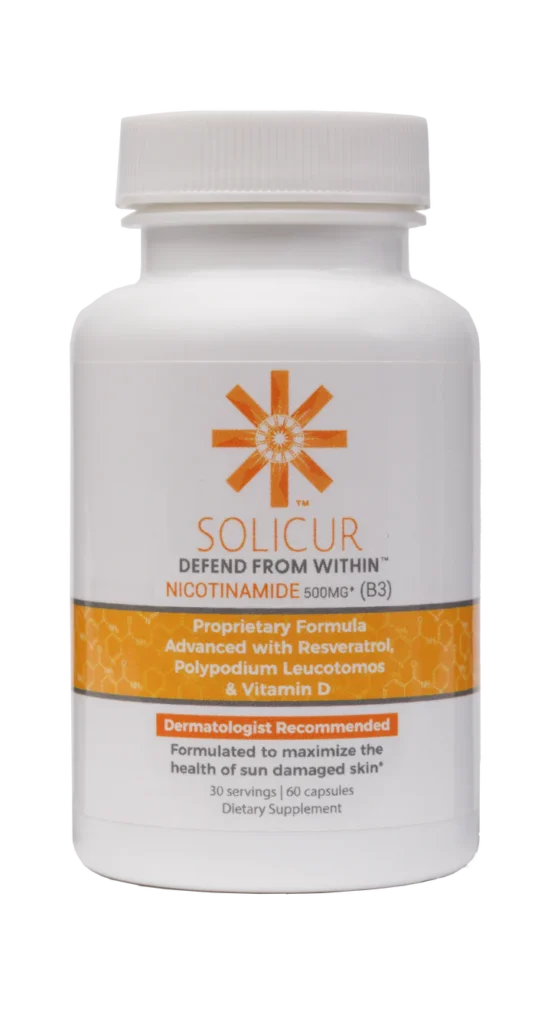
Actinic keratosis and non-melanoma skin malignancies are on the decline thanks to the innovative nutraceutical supplement Solicur, which offers a strong defense against the sun’s damaging effects. Solicur is your go-to buddy for keeping healthy, bright skin thanks to its exclusive combination of essential components. The following essential components and their combination is what sets Solicur apart.
Nicotinamide (500 mg): This powerful vitamin B3 form has been shown in studies to increase the skin’s defense systems and improve DNA repair. Nicotinamide aids in preventing actinic keratosis and lowers the incidence of non-melanoma skin malignancies brought on by sun exposure by fostering healthy cell activity.
Resveratrol, a potent antioxidant found in red grape skin, is 100 mg strong and offers outstanding defense against free radicals brought on by UV radiation. Resveratrol lessens the possibility of skin damage and delays the onset of premature aging by neutralizing these damaging chemicals.
The natural fern extract Polypodium Leucotomos, 240 mg, is well known for its photoprotective qualities. Actinic keratosis, non-melanoma skin malignancies, and sunburn are all risks that are diminished by Polypodium Leucotomos’ assistance in protecting the skin from damaging UVA and UVB radiation. Its special anti-inflammatory and antioxidant capabilities help the skin’s resiliency and general health.
This product was created especially for individuals with sun-damaged skin and those who have a history of non-melanoma skin cancer in order to meet their nutritional demands. Solicur comes in bottles of 60 capsules, giving you a month’s worth of this extraordinary vitamin. It is advised to take it once daily. You can be sure you get the right quantity of these crucial substances to strengthen your skin’s defense against sun damage by using this practical and simple-to-follow dosage regimen.
The Meeting Place of Skin Health and Longevity
It might be difficult to know where to begin when trying to increase your longevity. In actuality, there are several strategies, some of which are more successful than others. Whatever stage of your health journey you are in, the most important thing is that you are prepared to take charge of your future, beginning with the greatest organ in your body. Your skin is essential. The human body is thought to have 10 trillion cells, of which more than 1.6 trillion makeup skin cells, making the skin our largest organ. The majority of the 1.6 trillion cells in the body are immunological, fibroblast, keratinocyte, and melanocyte cells. Together, these cells create the skin’s three main layers. It is understandable that our skin needs additional TLC in the form of SPF and sleep, to name a few, given the ongoing stress of pollutants and UV radiation from the sun. Your skin starts to deteriorate when it doesn’t receive this additional care along with the external stress of aging. Numerous things, none of which you want, are implied by having weak skin. It implies that you are more prone to illness and may even have diminished water retention, which hastens skin aging. Scientists have found that we may use the skin as a tool to better understand several elements of our health that are not apparent to the naked eye, such as your heart health and risk of disease, as it is one of the few visible organs. In this manner, scientists are using the skin’s visibility as a mirror to reflect interior health. Researchers discovered that a person’s blood pressure and risk of cardiovascular disease (CVD) may be predicted just by the look of their skin in research involving more than 500 men and women. The average blood pressure and CVD risk were both lower in people with stronger skin and fewer wrinkles.
You should hopefully have a new understanding between you and your skin after reading this. You increase your life when you increase your care for your skin. Why not live longer?
With our eyes constantly glued to our smartphones, for many of us, the number one source of news is your With our eyes constantly glued to our smartphones, for many of us, the number one source of news.
With our eyes constantly glued to our smartphones, for many of us, the number one source of news is your With our eyes constantly glued to our smartphones, for many of us, the number one source of news.
With our eyes constantly glued to our smartphones, for many of us, the number one source of news is your With our eyes constantly glued to our smartphones, for many of us, the number one source of news.
With our eyes constantly glued to our smartphones, for many of us, the number one source of news is your With our eyes constantly glued to our smartphones, for many of us, the number one source of news.
With our eyes constantly glued to our smartphones, for many of us, the number one source of news is your With our eyes constantly glued to our smartphones, for many of us, the number one source of news.