

The most prevalent protein in the body is collagen. Connective tissue is created using its structure, which resembles fibers. This type of tissue, which as its name suggests connects other tissues, is a crucial part of bone, skin, muscles, tendons, and cartilage. It aids in building supple, robust tissues that can endure stretching. In diet, collagen is only naturally present in connective tissue-containing animal flesh, such as meat and fish. Yet, a range of foods, both animal and plant-based, contain components for our systems to make collagen.
One term that frequently comes up when discussing how our skin ages naturally is “collagen”. But what is it exactly? All animals, including humans, naturally contain the protein collagen. It makes up around a third of the body’s entire supply of protein, making it the most prevalent kind in the body. Yet, collagen serves more purposes than merely giving skin a tighter appearance and feel. Additionally, it serves a plethora of other crucial functions all across the body. From your tendons to your gums, collagen protein makes up the majority of the hard and soft tissues in your body. In addition to blood vessels, corneas, and teeth, it is also present in bones, skin, and ligaments. The cartilage in our bones starts to deteriorate when our collagen levels drop, making this more obvious in the skin but also in other ways. After the age of 20, your skin produces 1% less collagen per year. As a result, your skin gets thinner and is more likely to wrinkle going forward.

How Does Collagen Work?
Scientists speculate that collagen’s ability to prevent wrinkles may be due to the fact that it breaks down into short chains of amino acids and peptides, albeit the precise molecular mechanisms are yet unknown. Amino acid and peptide fragments from collagen breakdown in the digestive tract are absorbed into the bloodstream. This then starts the body’s normal process of producing collagen for the skin. Your skin uses collagen as a kind of flexible scaffold to keep itself together, give it shape, and recover from damage. Moreover, it contributes to the health of the scalp, promoting thick, strong hair growth and preventing breaking and peeling of the nails. Chemically, collagen is composed of strong chains of amino acids that are tightly bonded to form a rope-like structure. The strength and plumpness of young, healthy skin are a result of these sturdy chains. As they develop, babies, kids, and teenagers create collagen at a rapid rate. Their skin is smooth and wrinkle-free in part due to this. Our bodies gradually stop producing collagen as we grow older, which is seen in symptoms like wrinkles, sagging skin, thinning hair, and weak, brittle nails.
Benefits of Taking Collagen
Growing medical research suggests that collagen may help prevent wrinkles from showing up. According to a 2014 study that was published in Clinical Interventions in Aging, after 60 days, 15% of people who took a liquid collagen beauty supplement with vitamins and minerals added had less face wrinkles and crow’s feet. The study also indicated that 32% experienced improvements in photo-ageing – ageing caused by sun exposure – and for 39%, skin dryness decreased too. German researchers discovered that people who took supplements containing hydrolyzed collagen saw improvements in skin elasticity and had a “statistically significant” impact on skin moisture and humidity levels. After using collagen supplements for 8 weeks, eye wrinkles were shown to be reduced by 20%, according to another study published in Skin Pharmacology and Physiology. After 12 weeks of ingesting oral collagen, more current research from 2019 that was published in Skin Pharmacology and Physiology demonstrated considerable increases in skin hydration, suppleness, and density. Collagen is a component of cartilage, which is why it starts to deteriorate as we get older. Cartilage is the tissue that protects our joints. As a result, as we get older, we may be more susceptible to joint conditions like osteoarthritis. Collagen supplements have been shown in studies to encourage the body’s tissues to produce more cartilage. Also, a research by the Current Medical Research and Opinion discovered that 73 athletes had less joint pain when walking and resting after consuming 10g of collagen per day for 24 weeks.
It is believed that collagen can aid in boosting muscular mass and power. Collagen is a protein that makes approximately 1–10% of the muscle tissue in the human body. Collagen keeps muscles robust and functioning properly. Moreover, collagen supplements may promote the production of muscle proteins like creatine and may aid in muscle growth, according to studies published in the British Journal of Nutrition. If you want to gain muscular mass, collagen supplements might be helpful. But they shouldn’t be used in place of dietary protein (like meat, eggs, dairy products, nuts, and soya). A healthy, balanced diet should always come first because it will give you more energy. Collagen, which gives our bones their structure and keeps them strong, makes up the majority of their composition. Our bodies produce less collagen as we age, which results in reduced bone mass. Research compiled by Seminars in Arthritis & Rheumatism indicated that collagen supplements, as opposed to collagen before and after, may assist maintain a healthy bone mass. Collagen supplementation is thought to be able to help with the symptoms of arthritis and has also been demonstrated to be helpful in situations of joint pain and weakness. One of the many advantages of collagen for women is that it has been discovered to support healthy bone mineral density in older women. Although less well-known, collagen has equally amazing effects on hair and nails. One American study from 2014 suggested that oral collagen may have considerable advantages for hair and nails. 54 women between the ages of 26 and 68 received a daily oral supplement that contained collagen along with hyaluronic acid, peptides, and lipids. After 8 weeks, the results demonstrated a statistically significant improvement in hair dullness, hair dryness, and nail softness, as well as a reduction in nail breaking and brittleness by about 80%. In a larger study that lasted 60 weeks, it was discovered that, compared to taking collagen before and after, 100% of individuals experienced improvement in their nail peeling, dry hair, and dull hair after just 9 months.
[restrict]
Brightcore Nutrition Revive Multi Collagen Protein Powder with Vitamin C and Hyaluronic Acid
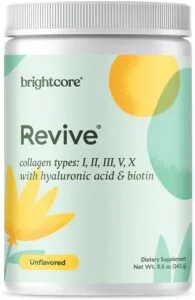
They obtain the highest grade collagen types from which to make their multi-collagen protein powder. These primarily come from wild-caught cod, free-range hens, and grass-fed cows. Their multi collagen powder, which is filled with hyaluronic acid and vitamin C, works to lubricate your joints and strengthen your bones. With their multi collagen protein powder, achieve that young glow! It preserves the hydration and suppleness of your skin by combining vitamins and collagen protein. It also strengthens your hair and nails. Their multi collagen powder is simple to include in your everyday diet. With their unflavored pure collagen powder, you may add more nutrition to your favorite beverage or food! They are dedicated to giving you hydrolyzed collagen powder that is created entirely from organic components. Their product line is free of preservatives, is non-GMO, and is gluten-free.
Benefits of Wheatgrass
Wheatgrass is a very effective health food with the ability to improve your health, skin, and physique quickly. I believe it to be the best “all-in-one” natural dietary supplement for achieving your health objectives for 2023 because it offers so many advantages at several levels. Wheatgrass first appeared in the early 1900s and is currently experiencing a surge in popularity as more people become aware of the link between our “gut health” and our “overall health”. Wheatgrass has a ton of vitamins, amino acids, liver enzymes, and chlorophyll in only one tiny 2 oz shot. It is richer in vitamin E, B, and K, and has more vitamin A and C than carrots or oranges. It is quite beneficial to your diet to include wheatgrass juice if you want to get better skin. You might wonder why. Well, flavonoids and natural phytochemicals like vitamins are both present in wheat grass. These flavonoids are abundant in antioxidants. As free radicals in our bodies cause oxidative stress and premature aging, antioxidants are known to slow down the aging process. Wheatgrass contains chlorophyll, which has antimicrobial capabilities in addition to anti-aging ones. These qualities aid in acne prevention and can be used to treat psoriasis, eczema, and acne.
Wheatgrass has the added benefit of shielding your skin from the sun. The main causes of aging are recognized to be UVA and UVB radiation. Although it feels fantastic, the sun actually makes wrinkles, fine lines, and sun spots worse. Wheatgrass has a high vitamin E content and helps protect your skin from UV rays. It is even believed to aid in the averting and preventing of solar damage. With pandemic constraints, so many of us gained weight and looked for new strategies to lose the weight. Getting rid of toxic toxins from our bodies is a fantastic first step to weight loss. Regularly drinking wheatgrass juice in the morning is like giving your colon and digestive system a spring cleaning. Wheatgrass boosts our immune system, which also makes us more energetic. We feel more energised when our body isn’t working so hard. We are more inclined to include more fitness into our everyday routines when we have more energy, which helps us burn more calories. Antioxidants are what we need to safeguard against illnesses like cancer, arthritis, and neurological diseases. Antioxidants like vitamin C, vitamin E, and glutathione are abundant in wheatgrass. In the body, antioxidants reduce oxidative stress by scavenging free radicals. Also rich in iron, calcium, magnesium, and amino acids is wheat grass. Eight of the 17 amino acids included in wheatgrass are regarded as essential, which means that your body cannot create them and you must get them from food sources.
Brightcore Nutrition Sweet Wheat
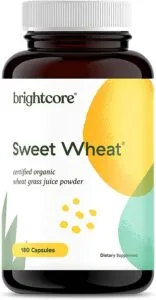
Their wheat grass capsules, which are manufactured from juice powder and are bursting with phytonutrients, living enzymes, and chlorophyll, work to strengthen your immune system and increase your resistance to illness. For better digestive health, it also addresses problems with stomach acid! Do you really need to detox? Its vitamin, mineral, and amino acid- and antioxidant-rich wheatgrass capsules effectively cleanse and detoxify your body. With their wheat grass powder capsules, you can feel energized without the need for coffee. Use these wheatgrass pills daily for a more secure, efficient, and organic energy boost. Get a youthful glow with their easy-to-digest wheatgrass powder capsules! It moisturizes and makes your skin soft because it is brimming with nourishing qualities. It also makes your hair and nails stronger!
Conclusion
Chlorophyll, a plant pigment with potent anti-inflammatory qualities, is abundant in wheatgrass, as was already noted, and it is known to lessen inflammation in our cells. Inflammation is our immune system’s response to protect our body against injury and infection, but inflammation has a detrimental impact on our health since it is considered to contribute to ailments including cancer, heart disease and autoimmune disorders. Wheat grass strengthens our immune system also and it helps to ward off infection and sickness. Our rate of recuperation is also accelerated by a healthy immune system. Because wheatgrass’s detoxifying properties clear our intestines, we could feel less bloated, gassy, and uncomfortable in the abdomen. Also, according to some studies, it might help with digestive problems like constipation and irritable bowel syndrome.
[/restrict]