
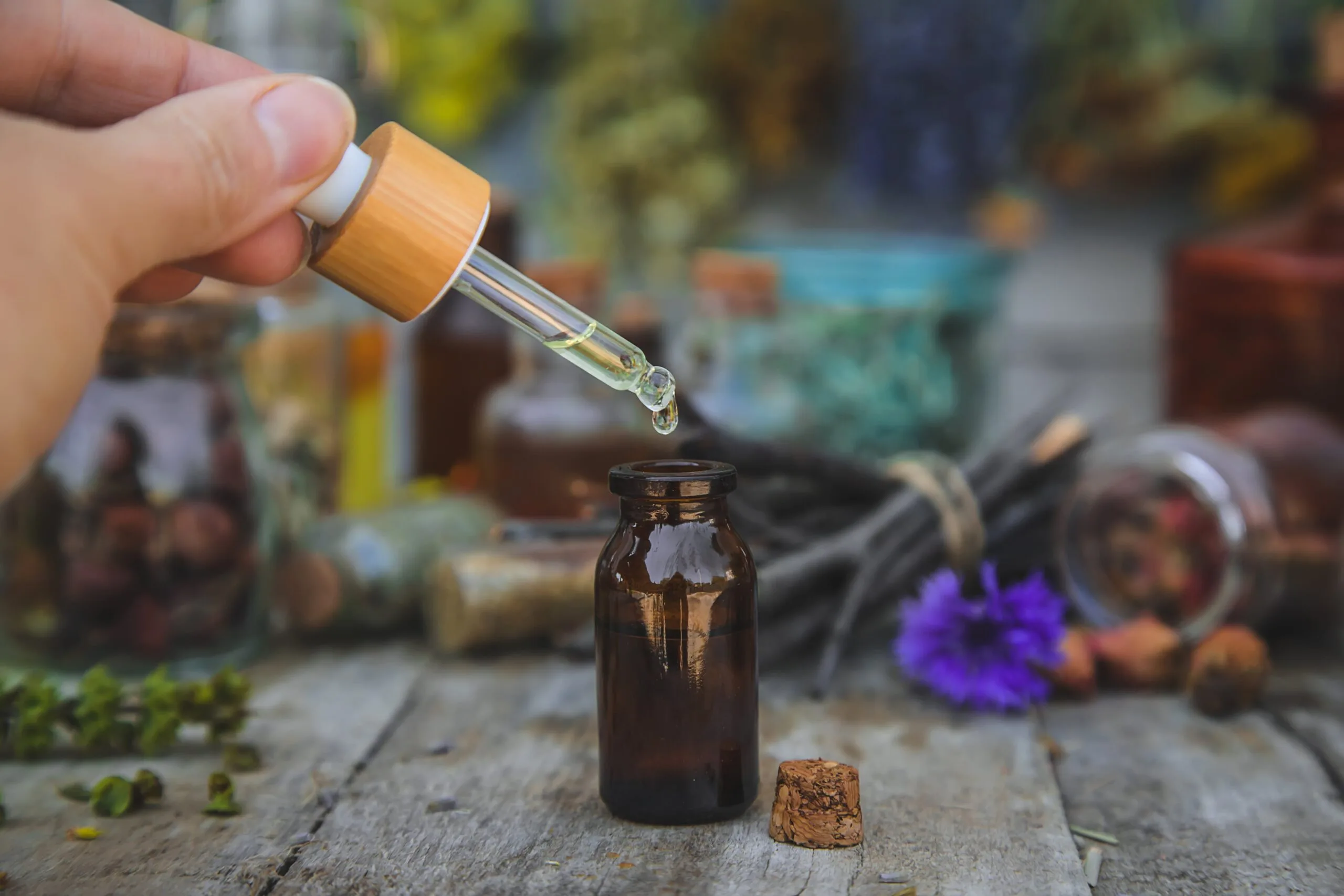
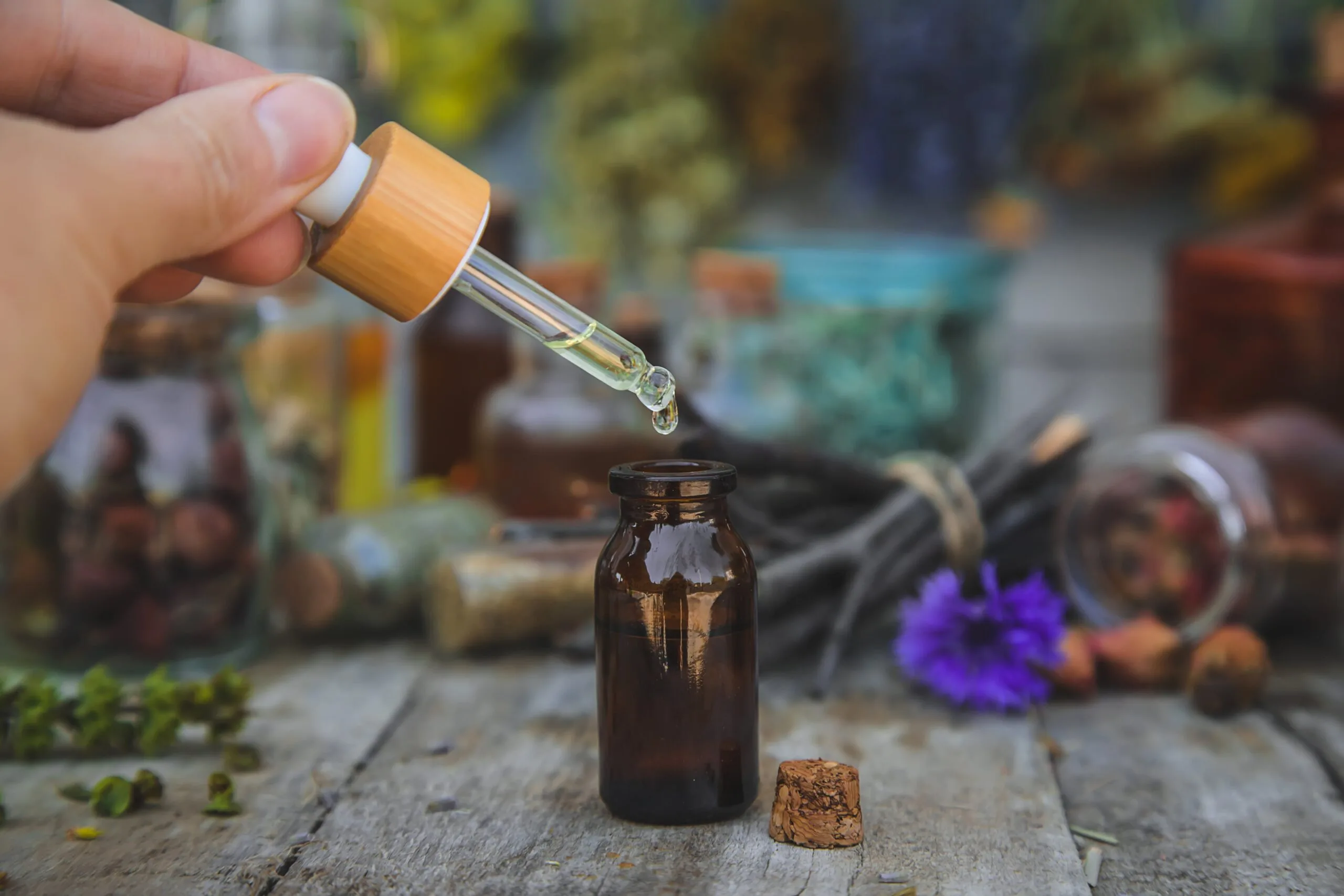
Due to their potent medicinal properties, herbal tinctures are considered as the foundation of traditional herbal therapy. Tinctures are made by steeping herbs in a liquid and have been used for millennia to treat a wide range of diseases and symptoms. Herbal tinctures are potent liquid extracts of fresh or dried herbs, flowers, roots, leaves, berries, or bark from one or more plants that are made by soaking the plant parts in a solvent and water solution. The active ingredients and therapeutic qualities of the plant material are extracted using a liquid known as the menstruum. The plant parts are removed from the infused liquid, and any leftover plant parts are filtered out. The liquid that remains after the plants are often composted is now referred to as a herbal tincture. Many mental and physical health conditions, such as anxiety, depression, stress, indigestion, osteoarthritis, insomnia, and the common cold, are treated using herbal tinctures. Certain tinctures, including those of calendula, chamomile, and peppermint leaf, can have health advantages as soon as the next day, although they usually take one to two weeks to become more pronounced. This is especially true for herbal tinctures that promote adaptation, such as those made from Rhodiola rosea, Ashwagandha, Cordyceps, and Ginseng, which also improve a number of bodily functions. Tincture is ingested to treat a variety of health problems or as a preventative measure to boost particular aspects of one’s well-being.
For a number of conditions, including aches and pains, bruises, spider veins, varicose veins, and various skin conditions like eczema or fungal or bacterial infections, tincture may also be applied directly to the skin or included in lotions. Moreover, tincture can be diluted and used as a mouthwash to freshen breath and treat oral infections.
The History Of Herbal Tinctures
In order to make tinctures and cordials—tinctures typically produced with less alcohol—the ancient Egyptians routinely soaked plants in alcohol. Avicenna, a physician and philosopher, authored the Al-Qanoon fi al Tibb, a collection of five works, in 1025. (The Canon of Medicine). This medical encyclopedia included every condition known at the time, along with its etiology, pathology, and treatment regimens, which included herbal tinctures. The original book, which was based on Islamic medical knowledge, had been inspired by a number of earlier traditions, including Greek and Roman, Persian, Chinese, and Indian medicinal practices. From the 12th through the 17th century, it served as the cornerstone of medical education in the West and was created to make sure that Western medicine included traditional herbal medicinal applications. Avicenna’s theory of the four cosmic elements of Earth, Water, Air, and Fire served as the foundation for the Canon. This described how we are bonded to the Earth, how our bodies are extensions of the Earth, and how our health is inextricably linked to our relationship with Nature. It took until the 14th century for distillation and tincturing to gain widespread popularity in Europe. Early adopters of distillation and tincturing were the Irish and Scotch peoples, and by the Victorian era, herbal tinctures were widespread in Anglocentric societies. Up until the 1970s, laudanum, an opium tincture with codeine and morphine, was sold without a prescription in Canada and the United States. Laudanum was once used to treat a number of medical conditions, but its main use were as a pain reliever and cough suppressor, even for young children. Up to the 1920s, cannabis tincture could be purchased at a typical pharmacy. There were several cordials and tinctures among the elixirs and other medications that were frequently marketed. The use of herbal tinctures didn’t start to drop significantly until pharmacology began to emphasize pills. Many of our elderly people may remember the times when their own grandparents used natural remedies on a regular basis. Herbal medicine and tinctures are regaining popularity as mankind is waking and people are learning more about natural healing.

Methods Used To Create Herbal Tinctures
There are two ways to make tincture: the traditional approach and the folk method. The easiest approach for making herbal tincture is the folk method. According to its name, it’s what “folks” among the ordinary population would use. Due to the lack of complicated math, measurement, or equipment requirements, the folk technique is simple and easy to use. It simply needs cheesecloth, solvent, herbs, and a wide-mouthed mason glass jar with a tight-fitting cover. The folk technique naturally generates inconsistent findings in terms of ratios and strength because no measurements are utilized. The biggest disadvantage is this fluctuation, which prevents the herbalist from knowing the tincture’s potency. Because the precise dosage is unclear, there is frequently a lack of consistency in the tincture as well as ambiguity in dosing. This approach can produce a tincture strength that is either too low or too high for the novice herbalist, which either results in insufficient plant medicine extraction or excessive, unneeded alcohol usage in a tincture. It’s a common misconception that folk technique is inferior because it’s too simple, yet this is untrue. Due to its simplicity and the knowledge needed to use it safely and successfully, the folk approach is preferred by some of the most renowned and recognized herbalists. The folk method of tincturing is generally used by extremely seasoned herbalists or by home herbalists who use herbs that are safe to consume in any quantity. The standard approach, which is significantly more intricate yet exact, is also known as the ratio method, calculation method, or measuring method. Because the herbalist may make accurate measurements using mathematical formulae, measuring devices, and extraction equipment, the standard technique is considered to be a more “scientific” method of making tincture. This methodical technique increases the likelihood that the quality of the herbal items will remain constant throughout time. This procedure is preferred by many herbalists because it eliminates the element of guessing in tincturing and makes dosage for the customer safer and simpler.
How Are Herbal Tinctures Made?
The main procedure is the same regardless of how the herbal tincture is made. “Maceration” is the name of this procedure. An airtight container, such as a wide-mouth mason glass jar, is used to immerse the chopped or ground-up herb in a liquid solvent during maceration, an extractive process carried out at room temperature. The liquid solvent is referred to as the “menstruum” in herbalism. The active plant components, including alkaloids, vitamins, and minerals, are extracted from the menstruum. The medication from plants may be extracted using a variety of menstruums to make tinctures. Each of the following substances—alcohol, water, glycerine, vinegar, oil, or honey/syrup—has benefits and drawbacks. Herbs that have been macerated are filtered out, crushed, and thrown away as compost after soaking. The tincture, or concentrated liquid infusion, is now prepared for use as a medicine.
[restrict]The Difference Between Herbal Teas and Tinctures
When compared to herbal teas, which must be prepared separately from roots, barks, and berries due to their structure, herbal tinctures are significantly more concentrated and potent forms of plant medicine. With herbal tinctures, ALL parts of the plants can be combined and tinctured at the same time. The most significant differences between herbal tinctures and herbal teas are the types of liquids used to extract the plant material.
Woodard’s Farm: Adapt Exlixir

Ayurveda ashwagandha extract is a relaxing herb that has been used for centuries to enhance energy and vitality and to encourage a balanced reaction to stress. The herb Withania somnifera is the source of ashwagandha extract. The root is delicately shade-dried to preserve its full color and aroma after being carefully picked at its height of ripeness. It is then completely removed. It is quickly absorbed into the bloodstream and may be added to water or other liquids to provide flavor.
Woodard’s Farm: From The Tree

Vermont Tree Medicine comes from the Tree. This tincture is made in small quantities and incredibly strong thanks to the warm water, alcohol, and honey extraction process! This strong tincture was responsibly collected as usual. Reishi, Chaga, Lion’s Mane, cane spirit, raw honey, and spring water are the components.
Why Herbal Tinctures Can Be Great Remedies
With good reason, tinctures are among the most traditional and popular types of plant medicine. Tinctures are a fantastic option for people who have trouble swallowing capsules because they are 100% liquid. Tinctures are frequently consumed in a shot glass with water. Fearful of the flavor? To disguise bitter flavors, try mixing tinctures with a little amount of juice. Grapefruit juice fully masks the taste of bitter tinctures. You cannot divide capsules. It is simpler to adjust the dose because of the liquid form and dropper container. With tinctures, you can customize the dosage for each member of your family and have total control over how much you take, down to the last drop. The high bioavailability of tinctures is where they really excel. When compared to teas and pills, tinctures make it simpler for your body to absorb the therapeutic components of the plant. Unlike capsules and teas, tinctures don’t require the digestive system to function. Due to the alcohol in tinctures, therapeutic plant components are immediately absorbed into the circulation. Tinctures function more quickly and effectively because they avoid digestion. Alcohol-free tinctures made of glycerin are a possibility. Glycerin isn’t as good at extracting the active ingredients from medicinal plants, though. In comparison to tinctures made with alcohol, you might need to take bigger amounts. Tinctures are unquestionably the greatest format option if you have problems with intestinal absorption. Alcohol is an incredible plant preservative, as ancient humans long ago recognized. Fresh herbs can be promptly steeped in alcohol after being collected to maintain their full therapeutic potency. Some herbs work better dried than fresh. Before beginning their journey as tinctures, these herbs are meticulously dried to preserve potency. To keep the tincture from being exposed to light, which might cause the therapeutic plant components to deteriorate, dark glass bottles are utilized.
Certain components of medicinal plants must be broken down by water (water-soluble), whereas others require fat (fat-soluble). Tinctures are the most effective method of gaining access to and absorbing these nutrients since alcohol breaks down components that are fat-soluble. Various therapeutic characteristics can be found in various plant sections. For instance, we utilize licorice roots, mint leaves, and lavender blossoms. Because the barks and roots are woody and stiff, it is challenging to extract their therapeutic components. In order to uncover the potent plant medicine inside, alcohol more efficiently dissolves these stiff plant tissues than a tea brew. Tinctures may be used for their chemical composition, nutrients such as vitamins and minerals, and for the maintenance and restoration of overall health as well as for the treatment and prevention of certain medical conditions.
Clinical research now supports the use of liquid herbs to support the body’s organ systems and treat conditions like fluid retention, aid in the removal of waste products and toxins, reduce inflammation, support digestion, and boost immunity, endocrine or hormonal function. This helps the body self-regulate so that disease is minimized.
[/restrict]