

Various types of food, either in restaurants or stores, have been heavily advertised for years. Many foods are promoted for health reasons, while others are pushed as a great-tasting entity. However, people often need to remember the individuals behind the scenes who make this food possible. In the case of store food, the people with the companies helped put the food together for purchase. On the other hand, food at restaurants is carefully prepared by professional cooks. Outside of the culinary field, most people need to be made aware of the strenuous daily practices that chefs and cooking staff perform. In addition to the practices of professional cooks worldwide being taken for granted, it is also forgotten that cooks can do more for the world than fix food. Looking closely, you will find that confident cooks also show concern about the welfare of many underprivileged people worldwide.

Importance of Cooks
As mentioned, a vast segment of society often overlooks restaurant staff and chefs. People usually go to a restaurant and only see what goes on outside the kitchen. Only seeing what goes on outside the kitchen is optional for the pleasurable dining experience; it leaves people naive about what is happening behind the restaurant curtain. The cooks in the kitchen must adhere to strict guidelines from the top chef when it comes to arranging the food and cooking it for human consumption. For example, different ingredients must be organized to prevent the cooking staff from getting confused and overwhelmed. The onions must stay together, as must the mushrooms. Since the food that is prepared and cooked is going to be consumed by customers, the cooks must be careful how they handle the components of a particular dish during food preparation, leaving the item free of germs and bacteria that might cause the customer to get sick. The chef and the general cooking staff must use gloves and wash their hands frequently. The hard work of the kitchen staff is underappreciated. In addition to the meticulous way they prepare food for people, cooks can give back to the world in more ways than one.
Food Waste
Arguably, another harsh truth about the natural world that is easily overlooked is how much food goes to waste. This pertains to food both at restaurants and at home. Food bought in stores for consumption at home tends to get wasted when individuals don’t eat everything on their plates. The same thing happens at restaurants as dishes get returned to the back half-eaten or sometimes barely consumed at all. Some people don’t even bother to ask for a to-go box. It may not seem like a big deal to people, but it is. It hurts the customer, the cooks, or the production company that puts the food together. The amount of money people spend on food at stores and restaurants is astronomical. What is the point of spending so much money on food if you’re not going to eat it? In the case of chefs and cooking staff in restaurants, wasting food disrespects the amount of precious time spent putting together a dish and ensuring that it is healthy enough for human consumption. Regarding items purchased at grocery stores, the waste of this type of food disrespects the time and care put into preserving items that go through the long and strenuous process of packaging, shipping, and then making them available in stores.
In addition to the inconveniences bestowed upon both customers and food preparers food waste, it’s also important to remember how the disposal of leftover food is a waste of the resources that helped form a dish or readily available food item. For instance, large amounts of water are used to create solid food. When this food is wasted, it’s also a waste of water. Remember that water is essential to our lives and the earth itself. As far as the physical health of humans, water plays a vital role in bringing critical nutrients to cells that enable waste to pass through the body and for joints and organs to remain protected. Also, water consumption assists in the general hydration of the body. Since water plays a vital role in keeping people healthy, why waste it in addition to wasting food? As far as the environment is concerned, water is essential to society’s agricultural and electrical needs. Farmers must preserve large amounts of water to keep their crops growing. Certain power plants rely on massive amounts of water to supply electricity to millions of people. A waste of water, which also occurs with a waste of food, therefore, is an insult to both the health of the human body and the maintenance of farmland and the upkeep of electricity.
The climate change crisis is an ongoing issue in society. As mentioned, when it comes to food prepared for purchase at grocery stores, there is a large workforce that goes into the packaging and transportation of the items. When this manpower is exerted during transportation, trucks, which carry much weight, generate carbon dioxide (CO2) emissions. The more CO2 emitted into the atmosphere, the greater the chances of increasing the greenhouse effect. The greenhouse effect, which involves trapping the sun’s heat from gases In the Earth’s atmosphere, is one of the leading causes of global warming. In addition, wasted food, whether from a restaurant or a store, ends up in landfills. This buildup of excess food in landfills has been associated with the buildup of methane, another contributor to the greenhouse effect.
[restrict]Although one may not generally think of it as being a factor, food waste has also been shown to cause world hunger. The amount of water and ingredients used to create certain wasted dishes means there is not enough left over for some of the most unfortunate people in the world. The poverty-stricken areas of the world have the biggest problems with hunger. This includes many countries in the Middle East and Africa. Some studies have shown that many wealthy countries waste almost as much food, if not more, than the amount produced in many poverty-stricken countries. This is a huge problem. Like how wasting food is a slap in the face to one’s health and the individuals who initially prepared the food, it is also an insult to those who may be less fortunate. For years, most people have not put much thought into the hard work of preparing food. Fortunately, that’s slowly beginning to change as people admire the efforts chefs and restaurant workers put into their craft. Also, certain chefs are being recognized for their beneficial work to the planet itself. Cooks Who Feed is a company that is reshaping the views of cooks and food workers.

Cooks Who Feed
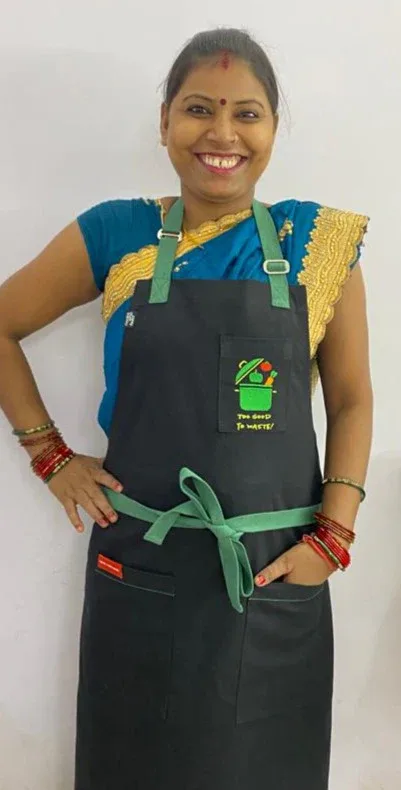
Cooks Who Feed is an official company. However, when it was created, its founder’s goals were not to make a company but rather a movement that would empower foodies everywhere to fight hunger in the most socially responsible way possible. The founder of Cooks Who Feed created the company after witnessing the working scenario of marginalized women at an NGO in India. She realized that these women, despite their circumstances, were actually paid and treated well. After this experience, the realization of the effect of food waste on world hunger hit home with them. It was decided what better way to fight hunger than with an apron, a cook’s uniform. The same NGO in India works with Cooks Who Feed to produce these aprons.
The Christine Cushing Apron
The Christine Cushing Apron from Cooks Who Feed is made of high-quality fabrics that are raw and untreated. It comes in Navy Blue with Turquoise straps. The Christine Cushing Apron has Reinforced Stress Points and One Double Pocket Below the Waist. Help fight world hunger with a comfortable apron that lets you cook at your convenience.

Having something nice and comfortable while preparing food is much more important than one might imagine. Think about it. You generally perform your best work on anything when you’re the most comfortable. Cooking is no different. As detailed and, in some cases, difficult as cooking is, it’s essential to feel at ease. Imagine wearing something comfortable to prepare food with the utmost care, not waste food, and give back to the world.
The Zero Food Waste Apron
With a 100% 9oz Organic Cotton Canvas, The Zero Food Waste Apron from Cooks Who Feed was designed in collaboration with Second Harvest, Canada’s largest food rescue organization. For every apron sold, 100 meals are provided. The Zero Food Waste Apron contains Reinforced Stress Points and Two Pockets Below the Waist.
Give Back to the Cooks in the Kitchen and the World Itself
People who cook and prepare food deserve our respect. The time and energy they put into ensuring the items we consume to nourish our bodies is enough to warrant the utmost admiration of the public. With comfortable aprons from Cooks Who Feed, you help yourself and others by cooking delicious food without waste and giving back to society. The waste of food is an ongoing problem worldwide. It’s up to you to help fight this problem with a simple apron. Let the cooks in the kitchen get the respect they finally deserve!
[/restrict]