
What is a Superfood?
It goes without saying that some foods are healthier than others, yet no one food can fulfill all of our needs. A yogurt parfait is healthier than a hot fudge sundae, a salmon filet is healthier than a platter of fries, and a green salad is healthier than a loaded cheeseburger.
Superfoods aren’t a nutritionally recognized food category, hence there aren’t any prerequisites for a food to qualify as one. However, the moniker is normally only applied to naturally occurring foods that are particularly nutrient-dense and generally low in calories. Superfoods help you stay healthy by boosting your immune system and lowering your risk of contracting or spreading disease.Although each superfood has unique nutritional qualities, they are all linked to heart health, a robust immune system, the prevention of cancer, decreased inflammation, and lower cholesterol.
In a sense, superfoods are precisely what they sound like: a group of extremely healthful foods. However, not all wholesome foods are superfoods.Superfoods are foods that provide significant health advantages above and beyond what you may anticipate from their nutritional profiles.

Superfoods are especially abundant in:
Antioxidants: These organic substances guard your cells against deterioration and may reduce your risk of developing heart disease, cancer, and other illnesses.Minerals:
Your body needs these vital nutrients (such as calcium, potassium, iron, and others) to function at its best.
Vitamins:
It’s preferable to obtain these organic substances from whole foods, such as superfoods, rather than pills.
[restrict]Fiber:
Fiber aids in lowering cholesterol, preventing heart disease, and managing Type 2 diabetes’s blood glucose levels. Plant compounds known as flavonoids—previously known as vitamin P—have anti-inflammatory and anti-carcinogenic qualities.
Healthy fats:
Also known as “healthy fats,” monounsaturated and polyunsaturated fats help decrease cholesterol and guard against heart disease and stroke.
What Makes Mushrooms a Superfood
Mushrooms are neither a fruit or a vegetable, despite the fact that they can be found in the produce area of the grocery store. Since mushrooms are not considered to be plants, they do not formally possess phytonutrients (plant nutrients.) However, mushrooms have a ton of advantages. They are rich in micronutrients and have a lot of nutritional value, so we classify them as SuperFoods.
Mushrooms are high in fiber and low in carbs. They are a good source of iron, selenium, and the B vitamins riboflavin, pantothenic acid, and niacin. Mushrooms naturally contain a lot of potassium and little sodium (a 3 ounce portobello cap has more potassium than a banana). Additionally, they are almost fat- and cholesterol-free. Because of their earthy, rich flavor, mushrooms are a great addition to any dish.

The best thing about mushrooms is ergothioneine, a potent vitamin. Mushrooms contain exceptionally high amounts of the antioxidant and anti-inflammatory ergothioneine. This potent vitamin is really released during cooking by the cells of the mushroom. Mushrooms are more antioxidant-rich than green peppers and zucchini due to their high polyphenol content.
More than 400 species of mushrooms have been recognized as having therapeutic capabilities, and they all share a number of characteristics that make them true superfoods. These fungi have a long history of use in Chinese medicine for their antiviral, antibacterial, and anti-inflammatory activities, which support general health.Along with the B vitamins niacin and riboflavin, mushrooms are also a great source of the three important antioxidants glutathione, ergothioneine, and selenium.They are also a fantastic source of potassium and vitamin D. B vitamins support the body in many ways, including converting food into energy that is sent to cells, regulating the neurological system, and maintaining the general health of cells. In addition to promoting bone health, the vitamin D found in mushrooms controls the body’s ability to produce the proteins required to fight viral and bacterial infections.
Together, the antioxidants glutathione and ergothioneine can lessen the consequences of physiological stress-related aging. A key element of a healthy anti-aging lifestyle may include the advantages of mushrooms in lowering oxidative stress in the body.Although our bodies can’t make selenium, it is an essential vitamin for thyroid and metabolism. This antioxidant should be a part of your regular diet because it helps your body fight the effects of oxidative stress. Selenium levels must be enough for the body to successfully combat viral infections.The effect of mushrooms on aging-related cognitive deterioration is another advantage. According to a study from Singaporean researchers, seniors who consume two servings of mushrooms per week or more may cut their risk of minor cognitive problems by half. Furthermore, it is believed that the antioxidants glutathione and ergothioneine can fend against the diseases Parkinson’s and Alzheimer’s.
Medicinal Mushroom: Traditions from the East
Medicinal mushrooms played a significant part in many cultures, especially traditional Chinese medicine (TCM). They have shown that medicinal mushrooms have a number of health-related benefits, including the ability to treat and prevent a number of ailments and diseases.
A basic human need is for health. People resorted to intuition, convictions, chance, prior experiences, and trial-and-error when dealing with disease. Early people relied on observation for their treatment even though they mostly thought that diseases were caused by evil spirits. For thousands of years, early civilizations gathered medical knowledge, passing it on orally to succeeding generations. Long before there was any written history, that is how traditional medicine began.
For thousands of years, our ancestors have used mushrooms as medicine. A powerful anti-inflammatory and tool for cauterizing wounds, the amadou mushroom (Fomes fomentarius) was described by the Greek physician Hippocrates in 450 BCE. A number of therapeutic mushrooms, including ling zhi (Ganoderma lucidum) and zhu ling (Dendropolyporus umbellatus), were documented by the 5th-century alchemist Tao Hongjing. Some of these mushrooms were purportedly used by Shennong many centuries before. To assist him survive in the northern Italian Alps, tzi, the Ice Man, who lived around to 5300 years ago, carried amadou and a birch polypore tied in a pouch. The Calvatia genus of puffball mushrooms was utilized by the indigenous peoples of North America to treat wounds.Although many societies have long used mushrooms, contemporary science has just lately learned what the ancients already knew: that mushrooms can be rich sources of potent remedies.Although many in the medical community are still confused about mushrooms, this ignorance is quickly fading. The increase in interest is attributable to both the long cultural history of their use as well as new techniques for tissue growth of mycelium and evaluating the activity of individual components and their interactions.
Clearly, mushrooms produce a variety of unique substances that merit further study in medicine. Mushrooms are the natural equivalent of tiny pharmaceutical factories, rich in a variety of unique components and ripe for research.It is likely due to the nature of mushrooms that it has taken so long for contemporary science to investigate their potential as a medicine. Mushrooms are transient; they may only be in our experiential field of view for a few days as opposed to the months or years that we may interact with other plants and animals. The fact that some mushrooms may feed you, heal you, kill you, and send you on a spiritual quest speaks to the variety of chemicals they contain. From an evolutionary and survival standpoint, it is safer to stay away from something so potent but poorly understood.However, Prodigy Nutrition Labs have done their research and got you covered. Keep reading if your interest in medicinal mushrooms has grown.
Prodigy Nutrition Labs
Due to their cutting edge, complete blend mushroom recipes, they are the fastest growing mushroom company. In the office and at the gym, they love to work up a sweat and are avid health and wellness aficionados. Their objective is to provide dependable, morally sound products that will enhance your life for years to come utilizing only the best natural components. Their dietary supplements are proudly made in FDA-registered, cGMP facilities in the United States.
Prodigy Nutrition Labs’ mission is to give its clients outstanding supplements that are made in a certified facility, utilizing only the best organic mushrooms, in a pure and clean manner.
They are dedicated to raising their own quality of life, attaining their wellness objectives, and eventually contributing to a happier and healthier planet. Anyone and everyone can gain from using their items. It doesn’t matter if you are a marathon runner, a tired dad with a little child running around at home, or someone in between! They wish to provide their clients with effective, natural vitamins that will help them achieve their wellness goals.
About Smart Mushrooms
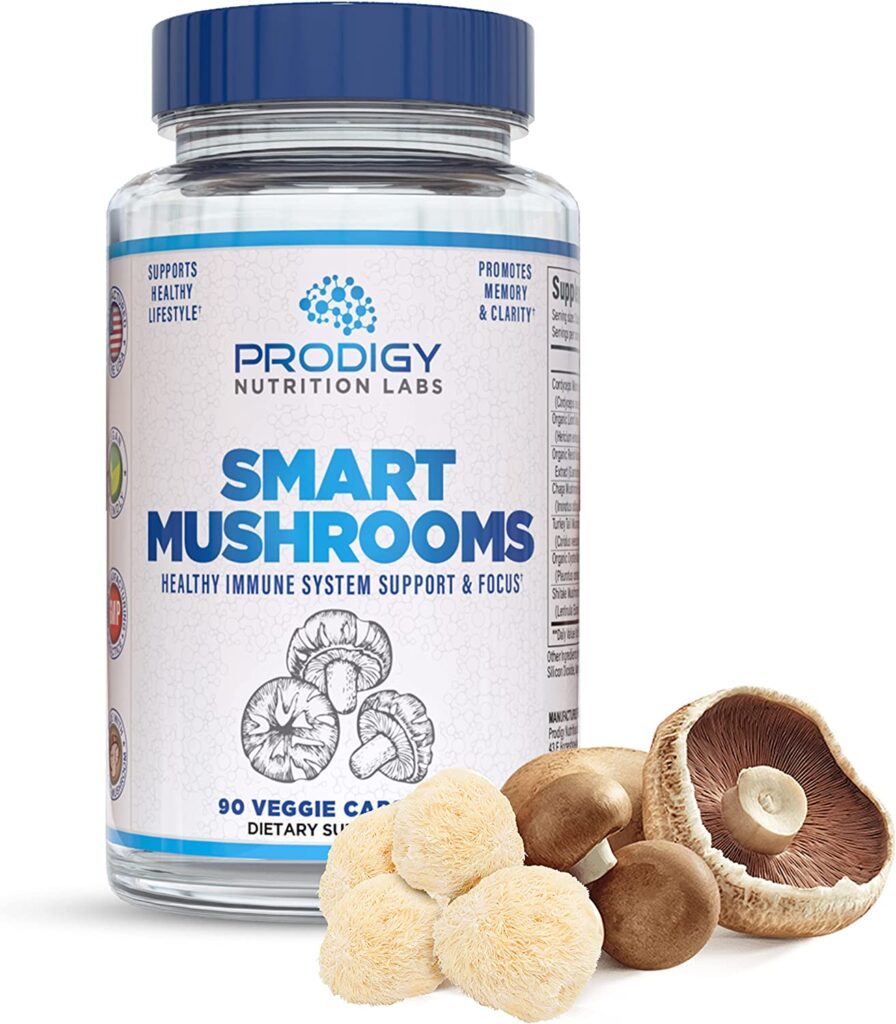
A complete blend of seven organic mushrooms makes up Smart Mushrooms. It is a top-notch supplement created from just organic, naturally occurring substances that provides special health advantages like improved mental clarity, calmer energy, and immune support. They validate their mixes using contemporary technology and old therapeutic techniques to guarantee the highest quality and effectiveness of our vitamins. They use the finest medicinal mushroom extracts possible to create our products, and they use approved testing procedures to confirm their composition and purity. They have the utmost potency possible to optimize their efficacy and advantages.
Pure lion’s mane mushroom extract is used to boost memory, focus, and cognitive function. It is excellent for work, exercise, study, mood enhancement, and general performance.Reishi / Cordyceps mushroom helps improve gut health and support overall healthy wellbeing by boosting your immune system, reducing inflammation, and providing powerful antioxidant benefits.Unparalleled organic wellness recipe. Enhancer of peak brain performance for mental clarity, focus, immunity, memory, productivity, and more.The best mushroom blend for the best results. Shitake, Lion’s Mane, Chage, Cordyceps, Turkey Tail, organic oyster, and organic reishi mushrooms are all organic mushrooms.
Produced and grown in the United States: Premium Smart Mushroom Blend, 90 Veggie Capsules, Non-GMO, Proven to Support Liver, Heart, Detox, Natural Energy, and Overall Wellness/Performance.
Conclusion
Due to their flavor, advantages for the economy and environment, and medicinal qualities, mushrooms have been consumed for a long time. The biological and therapeutic capabilities of mushrooms have been linked to a number of bioactive substances, with the most notable ones being their anti-atherogenic, hepatoprotective, antinociceptive, anti-inflammatory, antidiabetic, and antioxidant actions.
The best-known medicinal mushrooms are oyster, shiitake, and reishi, and the pharmaceutical industry is actively investigating mushroom formulations in pill or powder form that may be readily added to your morning coffee. However, a wide range of cultivars with therapeutic properties are proliferating globally.
We now understand from modern science that an ecosystem is what we are, what we live in, and what an ecosystem is what gives us life. The foundation of the land-based food webs in nature is mycelium. The ability to employ mushrooms and their mycelia in naturopathic medicine in ways that support conventional medical practices comes from understanding the role of mushrooms and their mycelia in ecosystems. Currently, we are fully immersed in a scientific revolution about therapeutic mushrooms that is only beginning. Our forefathers would be pleased.
[/restrict]