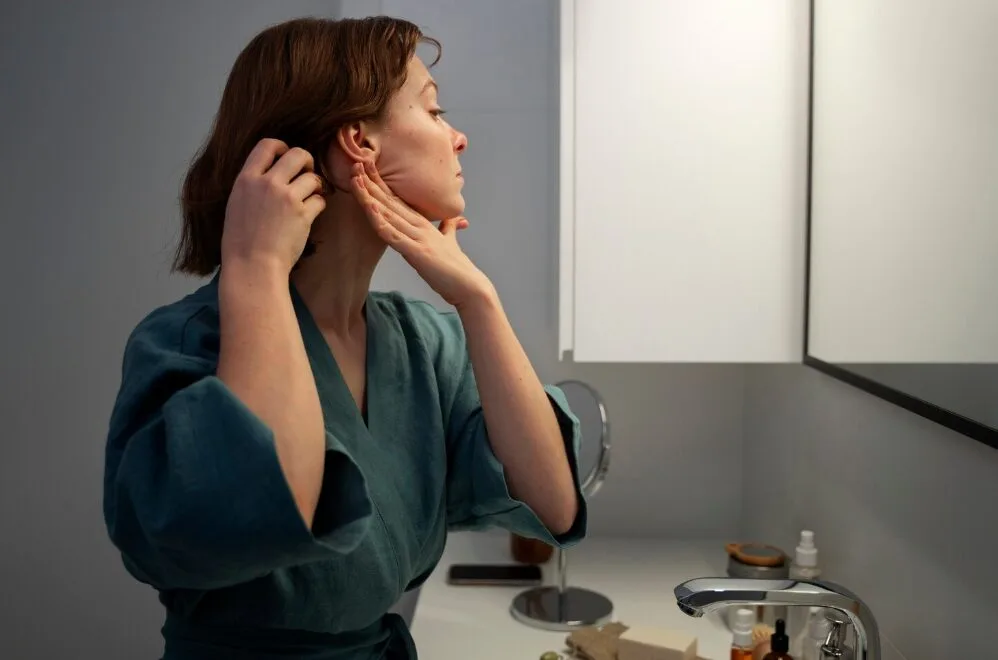


Most people look at their skin several times a day. Few ever stop to listen to it.
For most of human history, skin was not treated like it was a problem to solve; it was a messenger. A dry patch on the cheek meant something. A sudden breakout carried information. Changes in texture, tone, sensitivity, or appearance were viewed as signals from the body. People paid attention because skin was one of the body’s oldest forms of communication.
As time passed, that relationship changed. Today, people know the names of hundreds of skincare ingredients. Many can explain the difference between exfoliating acids. Even more follow beauty trends in real time. They watch product launches unfold on social media and almost everyone scrolls through endless recommendations promising brighter, smoother, younger-looking skin.
Many people have forgotten how to understand the language their skin is speaking.

When More Information Creates More Confusion
Nowadays people have access to more skincare information than any previous generation: every day, new products arrive, trends take center stage, and new ingredients become the latest must-have solution. Instead of the empowerment people should feel, overwhelm is more common.
The internet is a phenomenal tool. It can also be a source of enormous confusion. If a person develops a breakout, they can search for answers online, and within minutes they have a world of information at their fingertips. The problem lies in the conflicting opinions. One expert recommends exfoliation. Another advises against it. One influencer endorses an ingredient, while another explains how it damaged their skin. So many voices speaking at once can leave even the most informed consumer unsure of what to trust.
In many cases, people have forgotten that to find solutions for their skin, they need to observe and listen to their skin.
Skin Is More Than a Surface
One reason Ayurveda has remained relevant for thousands of years is that it recognizes that the skin is not separate from the rest of the body. Skin is viewed as a reflection of internal balance. Rather than focusing exclusively on symptoms, the goal was often to understand patterns. How a person is sleeping, or eating, their stress levels, and any changes in their routines, are all patterns that hold a wealth of valuable information about the skin, and the larger story it becomes a part of.
Technology has transformed skincare; however, the body’s fundamental systems haven’t changed that much at all. The skin is still communicating. Whether people are paying attention or not is the question.
Skin occupies a unique place in human experience. People carry it into every conversation, photograph, meeting, and first impression. When something changes, it often affects far more than appearance alone. Confidence, comfort, and how you perceive yourself change as the skin does. That is why the relationship people have with their skin is rarely superficial, even when the conversation around it becomes focused on appearance.
The Rise of Skincare Outsourcing
In this new era, many people have outsourced their skincare decisions to algorithms, trends, product reviews, and viral recommendations instead of developing a relationship with their own skin.
By now we all know how the cycle goes: a product becomes popular; millions buy it. A week or a month later, a different product takes the lead. The cycle repeats over and over. Skincare needs to be considered in the context of individuals, but today that isn’t the case. If no two faces are the same and everyone’s lifestyle is different, shouldn’t skincare reflect those differences?
Modern skincare has produced extraordinary advancements. The challenge is remembering that expertise should complement self-awareness, it shouldn’t try to replace it.

The Forgotten Value of Consistency
Life is busy, and immediate gratification has become an expected norm. People don’t have patience anymore. Advertisements promise unrealistic changes, and social media showcases overnight results, but people are forgetting that historically, many of the wellness and skincare practices were very ordinary. They involved consistency, daily rituals, simple ingredients, and repeated habits. The key was not complexity; it was repetition.
Why Ancient Wisdom Still Resonates
What makes Ayurvedic skincare appealing is philosophy. People spent centuries documenting how ingredients interacted with the body and skin, they observed patterns, recorded results, and those traditions were handed down through the generations.
That does not mean ancient practices should replace modern science. It suggests there may be value in allowing both perspectives to coexist. One provides historical wisdom; the other provides modern validation. Together, they create opportunities for skincare solutions that feel both grounded and relevant.
A Personal Journey That Became a Brand
As consumers grow weary of increasingly complex routines, many are beginning to search for products that align with a simpler philosophy: one rooted in tradition and purpose.
This philosophy sits at the heart of Ayéura. The company was born through a personal search for answers. Founder Smitha Deepak grew up in India, where Ayurvedic skincare practices were woven into everyday life. As a teenager navigating acne, she discovered firsthand how traditional approaches could support healthier-looking skin.
Years later, after building a successful career as a professional makeup artist and beauty educator in the United States, a new challenge emerged: persistent hyperpigmentation. Despite the many products and professional resources available to her, she found herself frustrated by how complicated skincare had become. The expensive, multi-product, 10-step processes were simply overwhelming.
She returned to her roots. Traveling to India, she collaborated with Ayurvedic experts, clinicians, and research teams to develop a formula inspired by traditional wisdom while meeting modern quality standards.
She went on to do something very unusual in the industry, she tested it on herself. For more than eight months, she publicly documented her skincare journey. As improvements became visible, avid followers repeatedly asked how they could access the product themselves. The interest and excitement eventually evolved into Ayéura.

Skincare That Simplifies
Everything about life today is exhausting, including things that were once so simple, skincare routines. Ayéura represents a different philosophy.
Its flagship product, Ayéura Skin Superfood Face Mask, combines 11 Ayurvedic superfoods into a concentrated formula designed to support healthier-looking skin. Rather than adding another step to an already crowded routine, the product reflects a growing consumer desire for simplicity.
Following its launch in May 2026, Ayéura sold through six months of inventory within its first week. A second shipment arrived days later and sold out almost immediately, fueled in part by returning customers who experienced positive results.

The Future of Beauty May Be More Human
The next major innovation may be a return to something surprisingly simple: attention, observation, connection, and understanding. It is time to recognize that skin is not just something that affects the way you look, it is an ongoing conversation between the body and the world around it.
In an era overflowing with information, perhaps the most valuable skill is learning how to listen again. Healthy skin has never been solely about products. It has always been about the relationship between habits and outcomes, consistency and change, and between the body’s signals and our willingness to hear them. Perhaps that is the language modern wellness is beginning to rediscover, a language our skin has been speaking all along.