

Life is an incredible journey, marked by the passing of seasons and the inevitable march of time. As we traverse the years, we often notice changes in our bodies and minds. One of the most poignant aspects of this journey is the gradual decline in mental capacities that accompanies aging. While it’s a common phenomenon, understanding why this happens is essential. So, let’s embark on a journey of exploration to unravel the mysteries behind the diminishing mental capacities that come with age. As the years roll by, it’s a natural part of the human experience to notice certain changes in our cognitive abilities. One of the most prominent transformations is the gradual decline in mental agility with age. This phenomenon is a complex interplay of biological, psychological, and environmental factors. In this exploration, we’ll embark on a human journey through the intricate landscape of aging minds, shedding light on why mental agility tends to decrease as we grow older.

First and foremost, it’s crucial to recognize that the aging brain is a marvel of complexity. It’s a multifaceted organ with intricate networks, billions of neurons, and an astonishing array of connections. Over the years, it experienced a series of changes that collectively contributed to the decline in mental capacities. As we age, our brain experiences structural changes at the neuronal level. Neurons, the fundamental building blocks of the brain, begin to deteriorate and lose their ability to form connections. This can lead to a slowdown in processing speed and a reduction in the brain’s capacity to transmit information swiftly. The brain naturally shrinks with age. This phenomenon, known as brain atrophy, affects various regions of the brain. The hippocampus, crucial for memory formation, is particularly vulnerable. As it diminishes in size, it can impair our ability to encode and retrieve memories effectively.
Neurotransmitters are the messengers of the brain, facilitating communication between neurons. With age, the balance of these essential chemicals can shift. For example, the decline in dopamine, a neurotransmitter associated with pleasure and reward, can affect motivation and emotional well-being. The brain’s blood supply is critical for its proper functioning. Aging can lead to vascular changes, such as reduced blood flow and the narrowing of blood vessels. These changes can limit the brain’s access to nutrients and oxygen, impacting cognitive abilities.
One hallmark feature of aging brains is the accumulation of abnormal proteins like beta-amyloid plaques and tau tangles. These deposits can interfere with neuronal function and are strongly linked to conditions like Alzheimer’s disease.
Environmental factors, such as exposure to toxins, stress, and lifestyle choices, can significantly impact the aging brain. Chronic stress, for instance, can lead to the overproduction of cortisol, which can be detrimental to cognitive health.
[restrict]Understanding these changes in the aging brain helps shed light on why mental capacities diminish. Here’s how these neurological transformations manifest in our mental faculties:
The decline in the hippocampus and the accumulation of beta-amyloid plaques can affect both short-term and long-term memory. It may become more challenging to recall names, dates, and other information. Slower neural processing can result in a delay in cognitive tasks, such as problem-solving and decision-making. Reduced neurotransmitter levels and changes in brain structure can impact attention and the ability to concentrate for extended periods. Learning new skills or absorbing new information may become more challenging due to structural changes in the brain.
As we age, adaptability and cognitive flexibility can decline, making it harder to switch between tasks or consider multiple perspectives.
The Intricate Journey Of Aging Minds
As the years roll by, it’s a natural part of the human experience to notice certain changes in our cognitive abilities. One of the most prominent transformations is the gradual decline in mental agility with age. This phenomenon is a complex interplay of biological, psychological, and environmental factors. In this exploration, we’ll embark on a human journey through the intricate landscape of aging minds, shedding light on why mental agility tends to decrease as we grow older.
Before we delve into the intricacies of age-related cognitive decline, it’s essential to celebrate the brilliance of the human brain. Our brains are remarkable organs that orchestrate our thoughts, memories, emotions, and behaviours. They consist of billions of neurons, interconnected in a web of neural networks, constantly communicating and processing information.

As we age, it’s crucial to recognize that our brains, like the rest of our bodies, undergo a natural evolution. This evolution is characterized by several key changes, which contribute to the gradual decline in mental agility.
One of the early signs of aging in the brain is a phenomenon called brain atrophy. This refers to the shrinking of brain volume, primarily in regions associated with learning and memory, such as the hippocampus. This reduction in volume can affect the efficiency of neural communication and processing.
With age, the brain tends to process information at a slower pace. This decline in processing speed can impact tasks that require quick thinking, such as problem-solving or decision-making. It’s like the brain’s processing highway experiences a few traffic jams as we get older.
Neurotransmitters are the messengers that enable communication between neurons. As we age, there can be alterations in the levels of certain neurotransmitters, such as dopamine and serotonin. These changes can influence mood, memory, and cognitive function.
Working memory is like the mental notepad where we temporarily store and manipulate information. It plays a crucial role in tasks like mental arithmetic or following multi-step instructions. Aging often brings a decline in working memory capacity, making these tasks more challenging. Neuroplasticity is the brain’s ability to adapt and rewire itself. In youth, the brain is highly plastic, enabling rapid learning and adaptation. However, with age, neuroplasticity tends to decrease, making it more challenging for the brain to form new connections and learn new skills. Over the years, the brain accumulates a degree of “noise” in the form of irrelevant information, making it harder to focus on essential tasks. Think of it as a mental clutter that accumulates with time.
While these biological changes are intrinsic to aging, environmental and lifestyle factors can significantly influence the rate and extent of cognitive decline. Factors such as diet, physical activity, social engagement, and intellectual stimulation can either accelerate or decelerate the aging process of the brain.
Get Right Health
After leaving the military, the CEO and creator of Get Right Health wanted to be in good physical and mental health. While in the Army, he made it a point to exercise regularly, keep a healthy weight, and have sharp cognitive abilities. As he became older, achieving his best for himself and his family needed more time and effort due to a less active profession, family responsibilities, and a slowed metabolism. Get Right Health searches for all-natural vitamins that assist our bodies in performing their optimum functions. Every product, whether it is for digestion, exercise recovery, or bone strength, is chosen to help you stay stronger and healthier for a longer amount of time.
Get Right Health: Brain Health And Focus Support
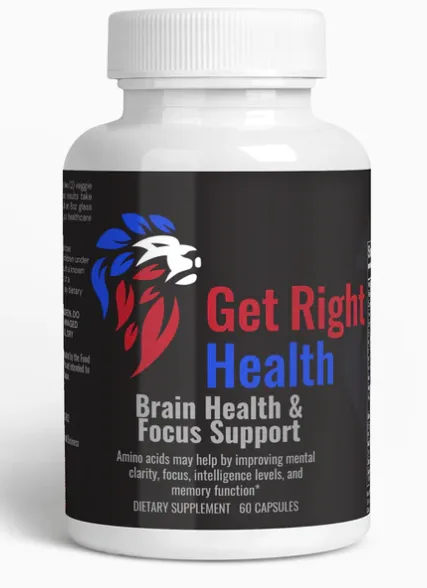
Our brains start to get less sharp as we become older. Learning new things, remembering names and facts, and problem-solving take longer as we age. The neurotransmitter systems in our brains that control our cognition and mood slow down as a result of aging. Amino acids in your diet enhance brain function in addition to a balanced diet. With the vitamins and amino acids needed to maintain mental acuity, Get Right Health’s Brain Health and Focus is the ideal addition to a healthy lifestyle.
Get Right Health: Super Fat Burner With MTC

A healthy weight is vital for longevity, performance, and preventing a variety of health problems. While there is no substitute for nutrition and exercise, there are certain things we can do to help our bodies natural mechanisms optimize the impact of our diets. Get Right Health’s Super Fat Burner with MCTs helps your body burn calories quicker, manage cravings, and imitate fat loss.
Why Mental Agility Matters
Understanding why mental agility decreases with age is essential, but it’s equally crucial to appreciate the significance of maintaining cognitive vitality throughout our lives. Mental agility encompasses a wide range of cognitive functions, including problem-solving, creativity, adaptability, and memory. These abilities aren’t just vital for personal accomplishment; they are essential for maintaining our connections with the world and the people around us. Imagine a world where your ability to learn new technologies, adapt to changing circumstances, or connect with loved ones gradually diminishes. It’s a poignant thought that underscores the importance of preserving and nurturing our mental agility. While the aging process inevitably brings changes to our cognitive abilities, there is a silver lining. Research suggests that there are numerous strategies individuals can employ to preserve and even enhance their mental agility as they age. These strategies extend beyond the realm of genetics and biology, emphasizing the role of lifestyle, environment, and mindset.
The journey of aging minds is a complex and deeply human experience. It involves an intricate interplay of biological changes, lifestyle choices, and environmental factors. While the decline in mental agility is a natural part of this journey, it need not be a one-way street. Understanding why mental agility decreases with age is the first step toward taking control of your cognitive destiny. By adopting a proactive approach that incorporates a brain-healthy lifestyle, lifelong learning, and social engagement, you can not only preserve but enhance your mental agility. It’s a journey that reminds us that our minds, like our bodies, are ever-evolving, capable of growth, and filled with boundless potential. The gradual decline in mental capacities with age is a testament to the intricate tapestry of human existence. While it’s a natural facet of the aging process, it need not herald a surrender of mental vitality. By understanding the factors at play and embracing healthy lifestyle choices, we navigate the journey of aging with resilience. Our mental capacities, while subject to change, remain responsive to our care and attention. The evolving landscape of our cognitive journey is a testament to our adaptability as human beings. With each passing year, we gain not only wisdom but also the capacity to nurture our mental well-being.
Mental agility is like the North Star guiding us through the winding paths of life. It’s the secret sauce that helps us tackle life’s curveballs with elegance, seize opportunities with a confident stride, and savor the tapestry of our experiences with all their richness. This remarkable trait grants us the superpower of resilience, arming us to confront stress head-on, and the wisdom to cherish moments of pure delight. With mental agility as our trusted companion, we’re equipped to craft a life that’s deeply satisfying and profoundly meaningful. But mental agility is more than just a skill; it’s a life-enriching gift that empowers us to adapt, learn, grow, and forge connections with the world and the people around us. It’s a treasure that transcends age, occupation, and cultural boundaries, a universal gem. Think of it as the compass that never fails to point us in the right direction, the protective armor that shields us from life’s challenges, and the master key that unlocks our limitless human potential, especially in our ever-evolving world.