

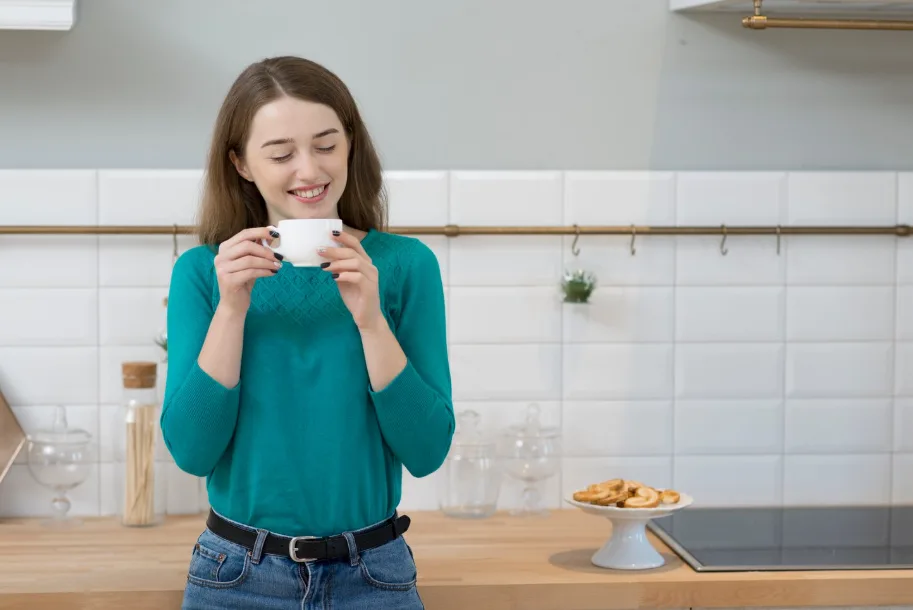
I used to think slowing down was something you scheduled, like a dentist’s appointment or a haircut. You’d carve out a Sunday, light a candle, maybe put your phone in another room, and call it self-care. Then Monday would hit, and the whole ritual would evaporate like it never happened. For years I chased this idea that rest had to be a whole production, a retreat, a bath with salts imported from somewhere I couldn’t pronounce. Turns out most of us are just waiting for permission to pause for five minutes, not five days.

The Exhaustion of Never Fully Arriving
Some exhaustion doesn’t come from doing too much physically; it comes from never fully arriving anywhere. You’re at dinner but thinking about the email you didn’t send. You’re watching a show but scrolling through three other things at once. Your body is in one place, and your attention is scattered across a dozen tabs, literal and mental, and what gets lost in all that splitting is the actual experience of anything. Food stops tasting like much, music becomes background noise, and even a walk outside turns into a task to check off rather than a moment to notice the air changing or the light hitting a building a certain way.
Small Sensory Moments Start to Matter Again
Somewhere in that noise, the smallest sensory moments start to feel like a big deal again. The smell of something warming on the stove. The sound of water starting to bubble. The particular relief of holding a warm mug when your hands are cold, but none of this is groundbreaking, it’s just been buried under everything else demanding our attention, and that’s really what got me thinking about tea, of all things, as this weirdly underrated pause button. Not because it’s trendy or because someone on the internet told me it would fix my life, but because the entire act of making tea forces a kind of slowness that almost nothing else in a day does anymore. You have to wait, you can’t rush water to boil, and you can’t microwave your way out of a steep. For a few minutes, you’re just standing there, and that standing there is doing something to your nervous system whether you notice it or not.
Wellness That Doesn’t Take Itself Too Seriously
This is where a brand like Chatley starts to make a lot of sense, and not because tea itself is some magic cure, but because of how deliberately they’ve built the experience around it. Chatley makes herbal tea and black teas inspired by cocktails, desserts, and the kind of flavors you’d actually crave, not the medicinal, slightly punishing teas that taste like you’re doing something good for yourself against your will. Their whole approach seems to be rooted in the idea that wellness doesn’t have to be boring, and honestly that idea alone feels like it’s swimming against the current of a lot of wellness culture right now.

Why Pear, Elderflower, and Rosemary Make an Unexpected Tea Blend
Take No. 23 Elderflower, Rosemary and Pear. Just reading the ingredient list does something to your imagination before you’ve even smelled it. Pear leading the way, elderflower drifting in underneath, and then rosemary arriving at the finish in a way that feels almost unexpected for a tea, more like something you’d find infused into a cocktail at a restaurant that takes its garnishes very seriously. There’s something about a flavor combination like that which pulls you out of autopilot. You’re not drinking tea because it’s what you always drink. You’re drinking it because your brain is genuinely curious what pear and rosemary are going to do together, and that curiosity is a form of presence in itself. You can’t be half paying attention to a flavor combination that unusual. It demands a little bit of your focus, the way a good song suddenly makes you stop doing something else and actually listen.
Five Minutes Is Enough
That’s the thing about sensory experiences that actually work, they don’t ask for a huge chunk of your day, they just ask for a moment of real attention. A five-minute steep is nothing in the grand scheme of a twenty-four-hour day, but it’s five minutes where your hands are busy with something simple, your nose is picking up on something new, and your mind has an actual reason to slow its scrolling. It’s less about the tea being some wellness miracle and more about what the process of making it quietly requires of you.
Packaging That Makes You Smile First
There’s also something to be said for how the brand frames all of this. Their whole brand philosophy leans into the idea that they take tea seriously but don’t take themselves too seriously, and that shows up in packaging that’s meant to make you smile before you even take a sip. It’s a small detail, but small details are basically the entire argument here. If the goal is presence, if the goal is noticing things again, then packaging that makes you grin for half a second before you even taste anything is doing real work. It’s training your brain, even briefly, to notice something pleasant instead of scrolling past it.
A Low-Stakes Way to Find Your Palate
For anyone who wants to sample the range rather than commit to one blend, there’s the Bestsellers Sampler, which basically hands you a low-stakes way to figure out what your palate actually responds to. This matters more than it sounds like it should. A lot of us go years drinking the same coffee order or the same tea bag because trying something new feels like a hassle or because we’ve decided our taste is fixed. A sampler quietly removes that barrier, as you’re not committing to a whole bag of something you might not love, you’re just seeing what happens when pear meets rosemary or when lime and mint and ginger show up together like they’re recreating a mojito without the rum.

A Mojito Without the Rum
Another standout Chatley tea blend is No. 8: Lime, Mint, Ginger and Honey. It is a great example of what happens when a brand stops thinking of tea as a separate, slightly formal category and starts thinking of it as another vehicle for flavors people already love. Mojitos are popular for a reason, the brightness of lime against the coolness of mint is genuinely refreshing and translating that into a refreshing iced tea means you get that same refreshing quality without needing an occasion or a bar cart. It’s the kind of thing you could make on a random Tuesday afternoon just because the sun is out and you want something cold in your hand that isn’t a can of something processed.
Dessert-Inspired Tea That Actually Feels Like a Treat
One of the most playful Chatley herbal and black teas is No. 10: Marshmallow, Caramel, and Chocolate, which reads less like tea and more like a dessert someone convinced you was healthy enough to have twice. This one especially proves the point about sensory experience mattering more than function. Nobody is reaching for a s’mores-inspired tea because they read a study about antioxidants. They’re reaching for it because they want something that feels a little indulgent, a little nostalgic, maybe something that reminds them of being a kid around a fire without the marshmallow ending up burnt and stuck to a stick. Adding cream or a dairy-free milk and a bit of sweetener turns it into something closer to a treat you sip slowly rather than something you gulp down out of habit.
Why Flavor Can Make Herbal Tea Feel More Enjoyable
What ties all of these blends together aren’t really the ingredients, it’s the intention behind combining them. Chatley leans into ingredients like chamomile, lavender, rooibos, rosemary, and mint, which have this long, almost old-fashioned reputation for being calming or grounding, but instead of treating that reputation with total seriousness, they pair them in combinations that feel more like a chef’s playlist than a medicine cabinet. That balance between function and fun seems to be the actual point. Wellness doesn’t have to announce itself with a stern face, it can show up disguised as something that tastes like a rosemary-garnished pear cocktail or a caramel-drizzled marshmallow.
Tea Was Always About the Pause
There’s also something quietly nice about the fact that part of their profits go toward organizations working against loneliness, because that ties back into why tea has mattered to people for centuries in the first place. It was never really about the leaves themselves, it was about the pause they created the conversation that happened while the water was still steaming, the moment two people sat across from each other with nothing else demanding their attention except the cup in front of them. In a time where most of our interactions happen through a screen, there’s something almost radical about a product built around slowing down enough to actually be present with another person, or honestly just present with yourself for a few minutes.

A Small Door Back into Paying Attention
None of this requires a big lifestyle overhaul. It’s not about becoming a tea person in some identity-defining way. It’s just about noticing that the sensory moments we’ve been skipping past, the smell of something steeping, the warmth of a mug in cold hands, and the surprise of a flavor combination you didn’t expect to like are small doors back into paying attention. Chatley tea makes a pretty convincing case that slowing down doesn’t have to mean changing your whole lifestyle. Sometimes it starts with a mug, a five-minute steep, and a flavor combination that surprises you enough to pay attention again.