

Perhaps the most well-known and least well-understood component of human biology is aging. Each of us learns rapidly about the impacts of aging, first by witnessing what it causes to others and later by personally experiencing them. Most people have some sort of theory about why and how aging occurs. But the majority of these notions are largely, if not entirely, wrong. For an example, there is a pervasive but incorrect propensity to believe that aging is predetermined. As we shall see, there is little proof that such a program exists, and there are strong justifications for its nonexistence.
Thus, one peculiarity of aging science comes from the necessity of starting by challenging significant assumptions about the causes of aging
Aging’s inherent complexity is the second peculiarity. As an organism ages, almost every feature of its phenotype changes. As a result of the complexity of phenomenology, there have been a bewildering number of theories about the exact cellular and molecular mechanisms of aging.
Fortunately, recent developments have resulted in a significant simplification of the theoretical foundations of aging research, and this, along with the significantly increased power of experimental techniques to investigate the phenomenological complexity of the senescent phenotype, has greatly aided in paving the way toward understanding how the aging process functions. However, aging’s inherent complexity continues to be a major obstacle to understanding.
The Building Blocks of Health

Four different types of tissues—epithelial, connective, muscular, and nervous—are made up of groups of cells that are similar in form and function. The majority of glands are made up of epithelial tissues, which also line body cavities and hollow organs and create the coverings of the body’s surfaces. These cells are closely clustered together.
Structures are joined by connective tissue to create a framework for various body sections. Some aid in fat storage or disease protection, while others aid in damage healing. This group includes adipose tissue, cartilage, bone, and blood.
[restrict]Organ systems are created by organs, which are made of tissues. These include the respiratory, muscular, skeletal, reproductive, endocrine, integumentary, immunological, and hematopoietic systems (makes the material in blood). The body is made up of all the systems, which are formed of proteins and lipids and burn carbs for energy.
The Importance of Cellular Heath
Our bodies age as a result of cell decay. The details of what is occurring at the cellular level as our bodies age are indicated in the next section.
Red blood cells, among other cells, lose some of their functionality as we age and become more frail. As a result, anemia, which can make us feel lethargic and weak, may be a possibility for us.
The capacity of our cells to effectively eliminate waste from within the cell walls starts to decline. Cells have a chance to behave erratically when cellular waste builds up.
As our cells age, cell function decreases and aberrant cell signaling occurs. Our immune system may have issues as a result of mixed cellular signaling, which can also have an impact on our general health. We become more vulnerable to illness as a result.
Our cells perform a variety of metabolic regulation tasks, including maintaining optimal levels of glucose and cholesterol. Our body weight, glucose levels, and lipid (fat) metabolism can all be impacted as we get older because of reduced cellular responses to nutrition.
What is NAD+?
Every cell in your body has NAD+, also known as nicotinamide adenine dinucleotide, which is an essential coenzyme involved in numerous metabolic activities. However, NAD+ levels decrease with aging. In the human body, NAD+ participates in two main sets of reactions: it aids in the conversion of foods into energy as a crucial component of metabolism and works as a support molecule for proteins that control other cellular processes. These procedures are quite significant.
You can find information about NAD+, also known as nicotinamide adenine dinucleotide, in any biology textbook. Every cell in your body has this vital coenzyme, which is involved in hundreds of metabolic processes including cellular energy and mitochondrial function. In the cells of people, other mammals, yeast, bacteria, and even plants, NAD+ is hard at work.
Because of its crucial place in biological processes, NAD+ has recently gained recognition as a valuable molecule in scientific research. The scientific world has been studying how NAD+ is related to major advantages in animals, which motivates researchers to apply these discoveries to people. So how precisely does NAD+ contribute to its crucial role? In a nutshell, it’s a coenzyme or “helper” molecule that binds to other enzymes to aid in the chemical basis of reactions.
However, the body’s supply of NAD+ is limited. In actuality, it gets worse as people age. Scientists are now looking at ways to increase and maintain NAD+ levels thanks to the history of NAD+ research and its recent acceptance in the scientific community.
As people age, their bodies’ levels of nicotinamide adenine dinucleotide (NAD+), which are linked to oxidative stress, DNA damage, cognitive decline, and inflammatory diseases, decrease. However, by raising the body’s level of NAD+, NMN, the precursor of NAD+, can slow this process down. Numerous in vivo investigations have shown that NMN supplementation has positive therapeutic effects for a variety of age-induced problems. While a few more human clinical trials are being done, one preclinical investigation and one clinical study have been carried out to look into the safety problems of NMN administration. In order to determine the efficacy and safety of NMN supplementation, proper research is urgently required given the large influx of NMN-based anti-aging treatments on the market.
With this knowledge, this is the perfect time to tell you about Omre’s supplement.

OMRE NMN + Resveratrol Supplement
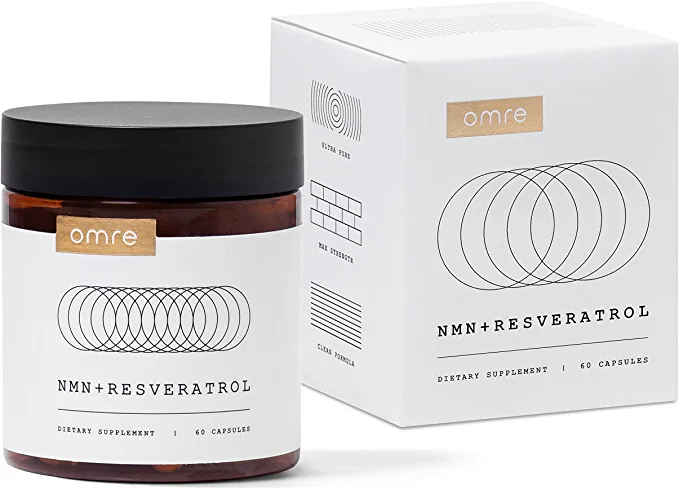
With Omre’s three scientifically-backed active ingredients, you can unlock the secret to cellular energy: Resveratrol, a sirtuin activator that has been shown to 13-fold increase sirtuin activity; Nicotinamide Mononucleotide (NMN), a direct precursor to NAD+; and BioPerine from black pepper extract, a bioavailability enhancer.
98% high purity for best efficacy. With their highly effective Resveratrol and NMN supplement, which is a potent antioxidant supplement that improves general health, well-being, and longevity, you may get the full benefits.
This product will better support your cellular defenses. Guard your body and brain to keep your youthful vitality and energy. The Omre NMN + Resveratrol supplement improves cellular NAD+ levels for healthy aging.
They use 500mg of Resveratrol and 98% pure NMN for optimal effectiveness. All-natural OMRE NMN + Resveratrol has NO fillers. Resveratrol is best absorbed in the presence of fat, so we make the most of every inch of space to give you a product that’s tidy and powerful. Additionally, NAD+ and SIRT-1 activity naturally increase in the morning, thus it is preferable to take your two capsules with breakfast in the morning to align with your body’s natural rhythm.
An Unsung Hero of Celular Health: The Electrolyte
When dissolved in water, chemicals known as electrolytes acquire a natural positive or negative electrical charge. Since the average adult’s body includes 60% water, electrolytes are present in almost all of the body’s fluids and cells. They support a variety of bodily functions, including maintaining the harmony of fluids within and outside of your cells and regulating chemical processes.
Your diet and beverages provide your body with electrolytes or their constituent parts. Extra electrolytes are removed from your body by your kidneys and filtered into your urine. When you sweat, you also lose electrolytes.
What Do Electrolytes Do?
Your muscles contract because your cells employ electrolytes to carry electrical charges. Chemical reactions are also aided by the same electrical charges, particularly when it comes to hydration and the equilibrium of fluids within and outside of cells.
The fundamental idea behind electrolytes is that some chemical components can contain a positive or negative electrical charge by nature. When a liquid contains those elements dissolved in it, the liquid becomes electrically conductible.
Salt water, which readily conducts electricity, is one illustration of this. The positive and negative charges of sodium and chlorine, which make up salt, cancel each other out when mixed. Ions are atoms with an electrical charge (positive ions are called cations, while negative ions are called anions).
Electrolytes are vital components of the body needed for cell signaling and cell function. The primary electrolytes in the human body are: Salt (Na+), Sodium (Na+), Ca2+, or calcium, (Mg2+) Magnesium, Cl (chloride),
hydrogen carbonate (HCO3) and hydrogen phosphate (HPO42).
The positive or negative symbol denotes the substance’s positive or negative charge as a result of dissociation, respectively, and its ionic nature.
Luckily for you, Omre has you covered when it comes to electrolyte supplements.
Omre Electrolytes Powder Hydration Packets
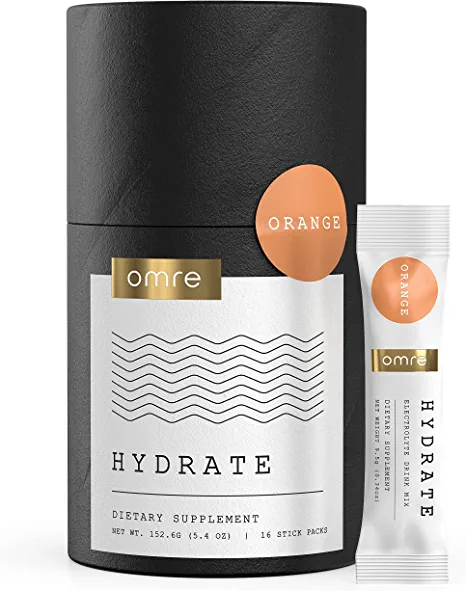
Omre Hydrate is a high quality electrolyte hydration formula that replenishes your body with vital minerals in the right proportions to enable the quick absorption of water into your bloodstream. There isn’t the typical strong flavor found in most electrolyte drinks. Only natural fruit extracts are used by us to create this light but delectably refreshing blend.
Omre Hydrate electrolyte powder provides 210 mg of potassium and 280 mg of sodium, compared to other brands’ 100 mg, as well as magnesium and zinc for normal muscle and nerve function.
Take it anytime, anywhere. Omre Hydrate comes with 16 hydration packets that are ready to be mixed in water whenever and wherever you need them—during a morning jog, a hot yoga class, or a workout at the gym. It comes in an easy-to-carry recyclable tube box.
Do not believe in the no-sugar hoax that is going around! This product is carefully formulated for the best hydration. They have provided the bare minimum of 6g because it is required to activate the sodium glucose transporter. The only ingredients in their hydration powder packets are the natural flavors of actual fruits.
Gluten-free, keto-friendly, as well as non-genetically modified organisms. With top-quality components, Omre Hydrate is produced in the USA. It is dairy-, soy-, and gluten-free.
Conclusion: Importance of Cell Health and Hydration
Since it directly affects how well your body performs, heals itself, develops new body tissue, and much more, cellular health is important. Perhaps more crucially, your risk of developing certain genetic diseases, developing cancer as you age, and experiencing a variety of other health problems and ailments depend on your understanding of cellular health.
One of the best things you can do to possibly improve your general wellness, everyday vitality, and long-term health outcomes is to understand and take action to support your cellular health across the board.
[/restrict]