

There is a moment in the birthing room when everything goes still, when you finally feel safe enough to let out a breath. It’s not an empty silence, but the calm and relief that comes after something really hard. The kind of quiet where you can finally hear your own heartbeat again.
Emily Likins-Ehlers has built her practice around creating that kind of space. She’s the one who picks up on the little things: your shoulders tensing and your jaw tightening when things feel too much. She knows that sometimes, what matters most is just being seen and supported, without any judgment.
She named her practice Trauma-Informed Doula. It’s both a promise and a statement, in a world where birth can sometimes feel like something being done to you, instead of something you’re supported through.
The Weight of The Before
To really understand what Emily offers, you have to first understand what she is pushing back against. Motherhood in America is very tense; it’s spoken of as the highest calling, but at the same time, so many women are left to figure it out all on their own.
A woman can spend nine months growing a baby, go through the crazy intensity of birth, and then be sent home with a pamphlet on postpartum depression and a diaper bag. Then she is expected to somehow handle everything while her body is healing, bleeding, and running on broken sleep.
The loneliness creeps in everywhere. In the living room, when days feel blurred together, or in an apartment when you’re too overwhelmed to even leave home. Even in a hospital room where faces keep changing, and no one really knows you. Birth has become very medical, but not always very human. A lot of times, the postpartum process feels rushed, measured, and even rushed. Somewhere along the line, we have been led to believe that struggling through this process is just part of the deal, and we need to live with it.
Emily spent almost twenty years witnessing this again and again, but instead of just accepting it she chose to step in and become something different.

What Trauma-Informed Actually Means
Emily’s approach is trauma-informed, not because every person who becomes pregnant experiences trauma, but because the process itself is very traumatizing. The constant monitoring and the pressure to make the right choices all the time, the fear-based messages about everything from epidurals to formula feeding, and the absolute loneliness of it all. All this builds up on your body over time. It makes it harder to breathe, harder to trust yourself, and harder to believe that you can handle what’s ahead.
Being trauma-informed means Emily notices things that others miss; it means she gets to know you. She moves slowly when you need slow and remembers that you flinch at sudden movements. She knows that you need information before procedures to feel safe, and that you have a history with medical processes that need extra care. It means she treats you as a whole person with a past that matters, and not just a body going through the stages of labor.
When Distance Disappears: Virtual Doula Support
Not everyone can have a doula with them in person during labor. Location, finances, and life can all get in the way, but Emily believes these things should never be the reason anyone goes without support.
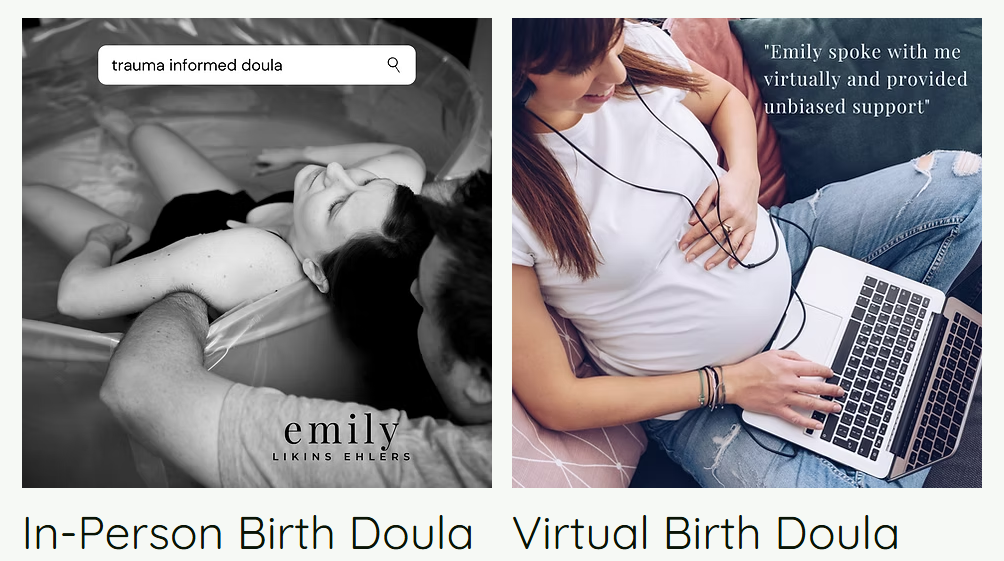
Her Virtual Doula Support makes that connection and support possible, no matter the distance or circumstances. It’s not the second-best option for support; it’s just a different way of being there. Real support isn’t just about one moment; it’s about being there throughout the entire journey.
Emily creates a safe space where becoming a parent feels supported and not overwhelming. This all gets done through video calls, voice messages, and text messages at three in the morning when the baby won’t latch, everyone feels so overwhelmed, and you are convinced you are failing at this parenting thing.
Even through a screen, it becomes personal because of the way she pays attention. She can hear when you’re holding back tears, sense when your silence means something is too much, and remembers the details of your story that matter.
What do you get with virtual support:
- Someone who knows your story.
- Consistent support throughout pregnancy, birth, and postpartum.
- A steady, knowledgeable presence you can reach out to without feeling like you have to have everything figured out.
- Guidance when things don’t go as planned.
- Emotional support alongside practical information.
- Reassurance in the in-between moments, including the late nights when everything can feel overwhelming.
- A space where your concerns are taken seriously and your experiences are validated.
For anyone who has experienced medical trauma, lives with anxiety, or simply wants to feel supported and informed throughout this transition, this kind of ongoing connection can make a real difference.
The Map You Need: Birth Planning Session
The anxiety that creeps in during pregnancy because you feel like you don’t know anything and you’re supposed to, makes the ground feel like it’s sinking beneath you. Everyone seems to have some sort of advice or story to share, and after scrolling through endless checklists and others’ opinions, you are left feeling more overwhelmed than informed.
This is exactly why Emily offers a dedicated Birth Planning Session, a calm and intentional space created exactly for this stage of pregnancy. It’s where her trauma-informed approach really comes to life. Instead of waiting for stressful moments to come up, she helps you build a sense of safety and clarity ahead of time.
For Emily, a birth plan is not a script that you follow or a contract that’s forced on you by a medical team; it’s a thoughtful process. A chance to slow down and really consider what matters to you, and why. It’s about understanding your options so that when the time comes, your choices come from a place of confidence rather than fear.
The session feels like a meaningful conversation that you didn’t know you needed, rather than a formal appointment. Emily asks the kind of questions no one really thinks to ask. What does safety feel like for your body? Where does tension show up in your body when you feel anxious? What beliefs or stories have you always carried with you because of family, culture or past experiences?
What you can expect from a Birth Planning Session:
- Clear and grounded guidance, understanding your options in a way that actually makes sense for you.
- A birth plan that feels like you.
- Awareness of your personal triggers.
- Realistic and personal advocacy tools to help you speak up for yourself (or be supported in doing so) that feel natural and aligned with your personality.
- A deeper understanding of the birth process, because knowledge can ease fear and make you feel more confident.
- A more prepared birth partner.
- Confidence rooted in preparation, not in trying to control every outcome, but in feeling informed, supported, and ready for whatever happens.
The outcome of this document is not just a document, but more like a map of your inner world. It helps you understand what matters to you, what makes you feel safe, and how your caregivers can best support you. If you’ve ever experienced trauma, this kind of preparation really matters. Labor can bring up things you don’t expect, and having this foundation in place can help you feel safer and more supported when it counts most.
Long After Everyone Forgets
What really sets Emily apart is that she doesn’t just disappear once the baby arrives. Because let’s be honest, that’s when things sometimes feel the hardest. There’s so much focus on birth, then suddenly, you are home, exhausted, overwhelmed, and expected to just “figure it out.” No real village, no pause, and no space to process that you’ve also been completely changed forever. This is when Emily stays. For local families, she offers overnight support, helping care for your baby so you can sleep. It’s more than rest, it’s the still relief of not doing it all alone. The relief of being seen in the messy, vulnerable moments, and having someone there who reminds you that you still matter too.

The Kindness of Infrastructure
There is something radical about the way Emily has positioned herself within the healthcare system, both as an insider and a critic. As the Kindbody doula, she navigates the world of employer-provided fertility and family building benefits. She teaches childbirth education at Burr Ridge Birth Center, and she creates simple, meaningful spaces where parents can connect without pressure. It all weaves together. Someone might find her through work benefits, attend a class, and then show up to a park gathering with their newborn, suddenly part of a community they didn’t even know they needed.
The Invitation
What Emily offers isn’t just a service, it’s an experience. A space where you don’t have to have it all together, you can show up exactly as you are, uncertain, emotional, hopeful, overwhelmed, and know someone will meet you there. In a world where so many new parents feel alone, she’s quietly rebuilding what’s missing. One relationship at a time. In the end, that might be the most powerful thing of all. The simple, radical act of showing up, staying present, and refusing to look away from the beautiful, terrifying, utterly human work of becoming a mother.