
A New Era of Keeping Athletes Safe
Sports equipment has always had to find a way to be safe and work well at the same time. Over time, helmets, pads, and cleats have all altered. The athletic mouthguard, on the other hand, didn’t change much for decades. It was simple: boil, bite, and wear to keep the teeth and jaw safe from forceful impacts. But, as terrible things that have happened in sports have proven, safety isn’t just about broken bones or chipped teeth; it’s also about things that aren’t obvious, like getting too hot on the field.
This is when a brand-new, game-changing notion comes into play. This mouthguard is distinct from ordinary gear since it not only protects the teeth, but it also sends messages to the body. It transforms how we think about mouthguards by using cutting-edge impact absorption and heat-detecting technologies.
The story of this technology doesn’t begin in a lab or a boardroom. It starts on a football field, where every time an athlete pushes their limits, their lives, families, and futures are at stake.

What the New Thing Is All About
In 2018, a terrible tragedy happened at the University of Maryland: Jordan McNair, an offensive lineman, died of heatstroke while practicing. His death stunned the sports world and led to urgent talks about how to keep athletes safe and how there aren’t any real-time signals for heat-related injuries.
A dentist from Maryland, Dr. George Garbis was very affected. He was a father of athletes, so he realized how risky it is for them and how much parents worry every time their child plays. He and his coach, Viron Wildy, a licensed speed specialist, began to pose a simple question: Why isn’t there an easier way to identify when an athlete is about to overheat?
[restrict]That question became a goal. They worked with engineers, scientists, and experts in sports safety to come up with a new solution that could keep athletes safe from blows and let people surrounding them know before heatstroke became life-threatening.
Dual Defense: Keeping You Safe and Stopping Problems Before They Start
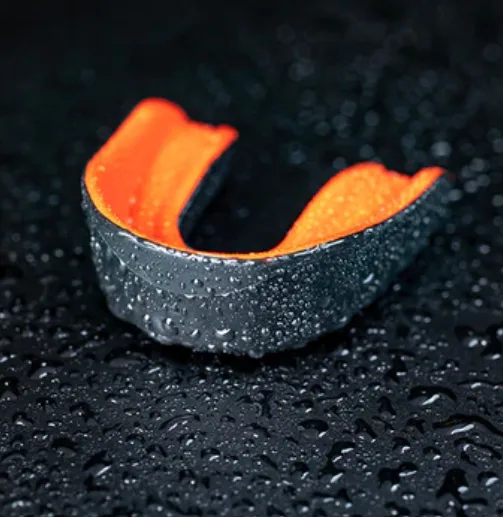
The makers of this mouthguard made it from scratch so that it would work better than conventional mouthguards. D3O®, a new material that absorbs impact, makes up its unique three-layer structure. This material was first made for the U.S. Ski Team and later changed for military use. This material makes the guard able to take up to 60% more force than standard boil-and-bite guards.
But the vision was only partly about keeping people safe from harm. The second layer of protection is its proprietary ThermoTechnology. When the athlete’s oral temperature rises to roughly 102°F, the guard changes color from black to red. This alteration is like a “check engine light” for the body, alerting coaches, trainers, and parents to know that the athlete might be getting too hot.
This is not a medical test; it’s a warning system that lets you know when heat exhaustion is getting worse so you can do something about it.
The Science That Makes the Shield Work
Other individuals have tested it and confirmed that it works. The Kory Stringer Institute at the University of Connecticut, which is known for its groundbreaking research on sudden death in sports, confirmed that the method works. Biokinetics undertook extra experiments, like ballistic testing and impact sciences, to make sure it absorbs impacts better.
This mouthguard has numbers to back up its claims, unlike some other sports gear that only makes promises. It proved in experiments that it
It takes 20–60% more force than the best boil-and-bite guards.
It was 100% accurate at telling when athletes were in the right temperature range (below 102°F).
The easiest technique to check body heat is to look at gastrointestinal (GI) temperature data.
This guard changes the way we think about sporting protection by combining biomechanical safety with physiological awareness.
How Easy to Use, Comfortable and How Well it Fits
Athletes know that they won’t use a piece of gear if it’s uncomfortable, even if it’s brand new. This guard fits perfectly over the upper teeth since it uses the well-known boil-and-bite method. The compact shape prevents it from getting too huge, so athletes can breathe, drink, and converse without any complications.
Football, hockey, lacrosse, and mixed martial arts players have all claimed they like how light and safe it feels. Coaches claimed that athletes complained less about pain with these newer, more flexible models than with older, stiffer ones. Parents loved that the guard didn’t need to be synced, charged, or downloaded. It has a built-in safety feature that was always on and easy to find.
Voices from the Field: Stories from Athletes
“I took a hard-hit last season and bit down,” said Marcus R., a linebacker in high school. The guard took it and didn’t have any chipped teeth or jaw pain. But what truly astonished me was when it became red during practice on a hot day. My coach told me to quit, and I did. I might have kept going without it.
Angela T., a coach for a youth hockey team, remarked, “Kids don’t always say when they feel bad.” This mouthguard gives me another set of eyes. I already had to pull someone off the rink because I observed the hue shift. He was dizzy, but he hadn’t said anything. “This tool makes my job safer.”
A Baltimore, MD parent says, “I can’t stand on the field as a mother, but I can give my son gear that protects him.” This mouthguard helped me feel better. Not only does it preserve teeth, but it’s also affordable and lasts a long time.
Safety Outside of Sports
This innovative technology was designed for sportsmen, but it might be used in otherplaces besides sports fields and arenas. A simple, non-digital heat alert gadget could be helpful for military training, construction labor, and even hard work in hot regions.
As extreme temperatures become more common around the world, a device that lets people know when their bodies are under dangerous stress may be valuable to more than just athletes.
Simple and Inexpensive
High-tech sports gear costs a lot of money; therefore, many families and teams can’t buy it. This item breaks that rule. It costs $29.99, which is approximately the same as ordinary athletic guards, but it has a lot more benefits.
You can get it for yourself or for a whole team, and it is created in the U.S.A. That low price implies that players of all levels, from middle school leagues to professional teams, may gain an added layer of safety without spending too much money.
Answering the Most Important Questions
1. How does the ThermoPact MouthShield keep athletes safe from the risks of heat?
When the oral temperature goes above 102°F, it changes color to let coaches, trainers, or parents know that the symptoms of heatstroke are getting worse.
2. Is the ThermoPact MouthShield better than standard mouthguards for playing sports?
Yes. Independent studies show that it can take up to 60% more impact and has heat-detection technology that no other mouthguard has.
3. Who made the ThermoPact MouthShield, and what sets it apart?
Dr. George Garbis, a dentist in Maryland, and coach Viron Wildy came up with the idea for a guard that protects teeth and keeps an eye on heat risk after Jordan McNair died.
Why It Matters
Injuries to athletes don’t just damage them; they can also hurt their families, cities, and whole teams. One of the most common causes of death among young athletes that can be avoided is heatstroke. Every year, families lose millions of dollars because of dental injuries. This device doesn’t only protect; it provides you strength by combining answers for both.

More Than a Mouthguard
The most important thing about this innovative idea is not just the technology it uses, but also why it was produced. It was made from a tragedy, refined with science, and made for athletes. It shows that sports safety doesn’t have to pick between the old and the new.
It may be small, but it has a big job: to protect teeth, save you from getting hurt, and tell you when something is wrong before it’s too late. That may spell the difference between a fear and a disaster in athletics, where every second and every play counts.
[/restrict]