

Summertime has almost begun for the northern hemisphere! That means that the bugs are out. While we can appreciate bugs for their contributions to nature, there’s no doubt that they can also be an extreme nuisance. The two bugs arguably considered to be the biggest nuisances are ticks and mosquitoes. Mosquitoes emerge when the weather gets warmer and seek a host to suck blood from. One of the many hosts that they find to suck blood from are human beings. While mosquitoes are active during warmer months, ticks can cause problems for people year-round, although they are most active in the spring and summer. Like mosquitoes, ticks drink blood from their hosts. When a mosquito or a tick draws blood from a human being or any animal, they are not only causing this host to lose needed blood; they are also increasing the chances of different diseases being passed down. Due to these factors, people use bug repellents to keep mosquitoes and ticks from hosting themselves on their bodies. While it is essential to do this during the warmer months of the year, many times, the types of repellents people use contain ingredients that contain toxins that can negatively affect one’s health. The challenge is trying to find the kind of repellent that can not only help one keep both ticks and mosquitoes away but also not cause any harm to one’s health. Fortunately, Nantucket Spider offers extremely effective repellents that keep bloodsuckers like mosquitoes and ticks away from the human body and do not contribute to causing damage to one’s physical health. It’s time to love yourself as much as you love being free from parasites.

Mosquitoes
In describing what a mosquito is, one could say that it’s a small fly species. The development of a mosquito involves the cycles of egg, larva, pupa, and adult. Mosquito eggs start hatching not long after the spring season starts, and the year’s freezes have begun to cease. As mentioned, one of the ways mosquitoes feed themselves is by sucking the blood from various hosts. They do drink the blood of many different types of animals. However, since humans spend more time outdoors during warmer weather months, which coincidentally is the same period in which mosquitoes are present, humans are the host of many mosquitoes. Not only is this very irritating for many, but it is also a health hazard, as while mosquitoes spend their time sucking the blood of humans, there is an increased chance of various diseases entering the body.
Diseases Caused by Mosquitos
One of the most widespread diseases caused by mosquito bites is the West Nile virus. Usually, this transmission results from infected mosquitoes sucking on someone’s blood. These mosquitoes become infected by sucking the blood of infected birds. Although studies show that most people contracting West Nile virus don’t display many symptoms, a few do. When they do, they often have a headache. Besides headaches, fever, nausea, sweating, weakness, and fatigue are common West Nile virus symptoms. When a person contracts the West Nile virus and leaves it untreated, it can result in severe illness or even death. Another condition that is perhaps just as widespread as the West Nile virus is the chikungunya virus. The symptoms of this, if they appear, are like those of the West Nile virus. Some of the extended problems resulting from the chikungunya virus include difficulties with one’s joints as they become severely swollen. While the West Nile and chikungunya viruses originated in the 20th century, malaria is said to trace back millions of years. It is arguably the most well-known disease associated with the bite of mosquitos. Like the West Nile and chikungunya viruses, the various symptoms of malaria include headache, nausea, and chills. Untreated malaria raises the possibility of kidney failure, seizures, coma, and even death. Since mosquitoes are so widespread during the year’s warm months, anybody will inevitably encounter them. Considering this factor and the known details about many of the diseases contracted from mosquitos, people need to take action to keep mosquitos away from them as much as possible. Even though most people use repellents to keep mosquitos off their bodies, they often contain chemicals that can negatively interact with one’s body.
Ticks
Unlike mosquitos, which are insects, ticks belong to the arachnid family. This family is the same one that spiders, scorpions, and mites belong to. Ticks are considered parasites that find hosts in the form of various kinds of animals and suck on their blood. Unlike mosquitos, ticks do not fly around but latch onto a host. There are different types of ticks in the world, some of which carry life-threatening diseases. There is always the chance that a tick will latch onto one’s skin without one knowing it. This scenario is especially the case for people that have animals. Whether one has a domesticated dog, cat, or a farm animal of any kind, the more you are around your beloved pets, the better chances a tick will start biting you and maybe transfer some disease. It’s best to protect yourself from the various diseases that ticks can transfer to your body.

Diseases from a Tick Bite
Lyme disease, like malaria for mosquito bites, is one of the more talked about conditions relating to the bite from a tick. This disease is arguably the most common condition related to tick bites in North America, Europe, and Asia. In the same way that West Nile virus results from the bite of a mosquito that has become infected after biting a bird, Lyme disease results from the bite of a tick infected with certain bacteria, usually after hosting on a rodent. Lyme disease symptoms include headaches, fever, fatigue, and joint and muscle pain. Like the conditions that result from mosquito bites, Lyme disease, which comes from ticks, causes severe damage if left untreated. Severe cases include partial paralysis and various effects on one’s brain and neurological system. A more recent virus that tick bites can cause is the Bourbon virus. This virus was discovered in 2014 when a man in Bourbon County, Kansas, died after what was believed to be a result of being bitten by infected ticks. Much of the area of the United States that is at risk for the Bourbon virus is also at risk for the Heartland virus. Another more recent tick-related virus, the Heartland virus, originated in 2009. Since both the Bourbon and Heartland viruses are relatively new phenomena, it is safe to say that there is a good chance of future illnesses and diseases that will result from tick bites.
[restrict]Using Products to Keep the Mosquitos and Ticks Away
As with any method used to prevent pests, various products have been marketed and sold. The problem with many of these items is that they contain unnatural ingredients that are not very friendly to one’s physical health. Many types of toxins reside within these products and negatively affect the earth and the atmosphere. It’s important to find an eco-friendly product that can fight off bugs and not cause harm to one’s health.
Nantucket Spider
Nantucket Spider, founded in 2013 by friends Nancy Jack and Jeffrey Busch, has been a leader in the natural essential oil insect repellent industry. Nancy Jack and Jeffrey Busch are lifelong friends who teamed up to create effective natural alternatives to DEET-based bug repellents for their family and friends. Nantucket Spider prioritizes the quality of ingredients they use for their products and ensures that they produce natural products that are safe to use on adults, children, and even dogs. (It should be noted that the EPA does not allow natural minimum-risk repellent products, including those made by Nantucket Spider, to make any claims about the harmful effects of chemical products such as DEET or the ability of natural repellents to prevent or treat diseases.)
Extra Strength Natural Tick Repellent Spray
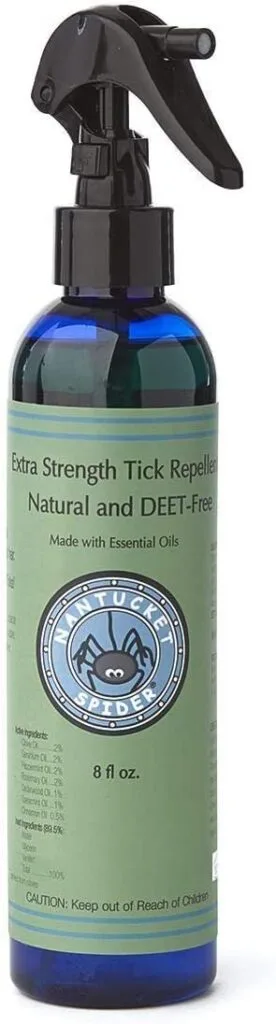

Extra Strength Natural Tick Repellent Spray by Nantucket Spider comprises a unique blend of organic essential oils. It’s an easy-to-use spray that is perfect for families. Laboratory tests showed that 92% of deer ticks were drawn away from the use of Extra Strength Natural Tick Repellent Spray. Next time you are in tick country, you will no longer have to worry about attracting their attention.
Mosquito & Fly Repelling Outdoor Garden Incense Sticks (14 Stick Tube)
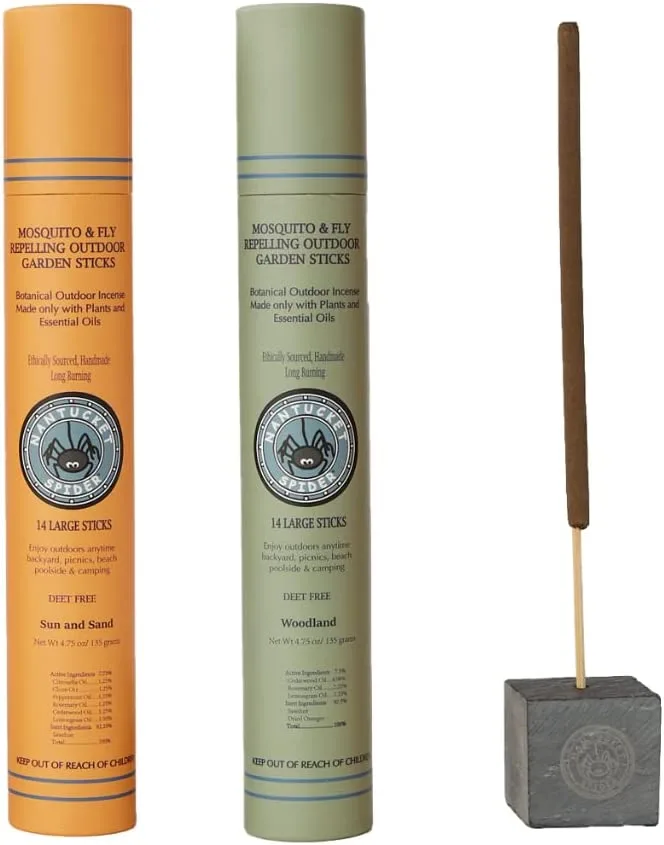
Mosquito & Fly Repelling Outdoor Garden Incense Sticks (14 Stick Tube) from Nantucket Spider provide over 90 minutes of protection from insects, especially mosquitos. They are safe for all ages and contain no pesticides. The individual sticks are easy to light and can be put out and relit for future occasions. Get those mosquitos and bugs off you with Mosquito & Fly Repelling Outdoor Garden Incense Sticks (14 Stick Tube).
Time to Get Rid of Pests the Right Way
Isn’t it time that you kept those annoying, singing mosquitos from making your flesh and blood their dinner? Wouldn’t you like to prevent those nasty blood-sucking ticks from sucking away at your life? Keeping pests like mosquitos and ticks away from you is about convenience and protecting your overall health. When you can guard yourself against pests with the help of bug repellents from Nantucket Spider, you are not only shielding yourself against nasty creatures, but you are also keeping your entire health, and your life for that matter, in good hands. Spray it on and take it on. Prove to the mosquitos and ticks of the world that you’re not only bigger than they are, but you are also much more powerful than they are!
* In partnership with our friends at Nantucket Spider LLC* Photo courtesy of Nantucket Spider LLC
* These statements have not been evaluated by the Food and Drug Administration. These products are not intended to diagnose, treat, cure or prevent any disease.
* The information available on ewellnessmag.com, including text, graphics, and other materials is for informational purposes only. Reliance on any information in ewellnessmag.com is at the user’s own risk. Sponsored product placement may appear in the article. The visitor of this website acknowledges that the information available on or through ewellnessmag.com is not and is not intended to be a substitute for professional medical advice. Copyright © 2023 Brawo Press, Inc. All rights reserved.