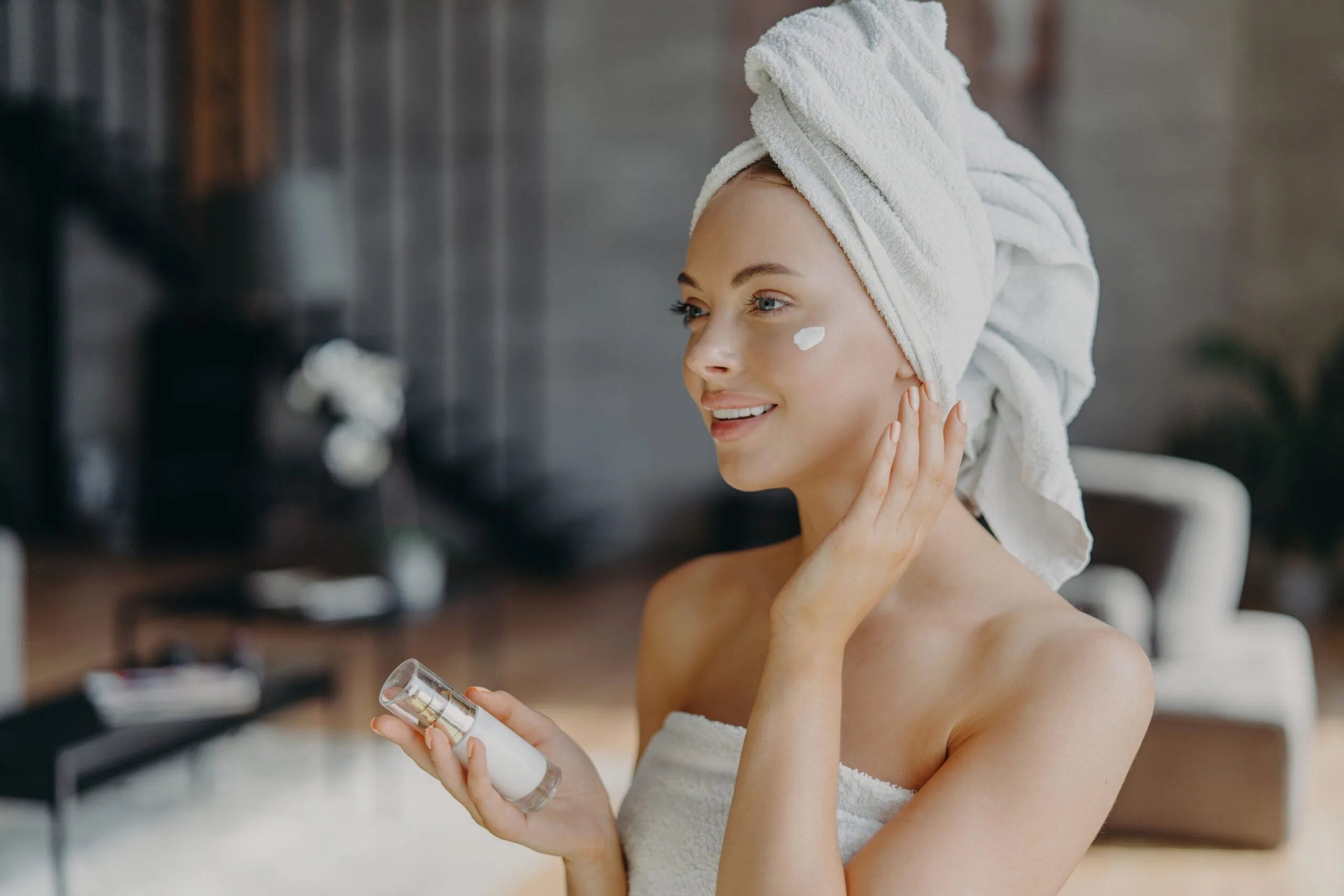


There is a version of you that still exists. Do you remember her? She lives in the faint smile line that appeared after years of laughter. She exists in the skin that stretched through growth, healed after heartbreak, recovered from sleepless nights, survived stressful jobs, long flights, summer sun, winter air, and countless ordinary days that seemed insignificant at the time.
The modern wellness world would have us believe that we are constantly in a battle against the effects of time. Industry messages push the narrative, encouraging us to try to erase any evidence of aging, and to always be in the pursuit of looking young. Every mark on our skin is seen as a flaw that must either be hidden or corrected.
Every day, our skin collects information about how we live. Stress, sleep, nutrition, environmental exposure, emotional well-being, and cellular health all leave their fingerprints behind. The skin remembers what the mind forgets. We photograph our lives constantly, yet the most complete record of where we’ve been may be written on our skin.

What Causes Skin Aging?
We don’t often think about our skin until something changes. We fail to realize that beneath the surface, it is one of the hardest-working organs in the body. It is constantly repairing, defending, regulating, and maintaining structural integrity.
When we’re young, recovery feels automatic. Over time, those systems begin to work less efficiently. As collagen production gradually slows with age, the skin’s ability to maintain firmness and elasticity begins to change. The visible signs start to appear: fine lines, uneven texture, loss of firmness, and dullness. These aren’t surface issues; they are signs of changes occurring within the skin.
How Skin Cells Change Over Time
Scientists have always been interested in how cells function, communicate, heal, and regenerate. Their discoveries have fueled medical advances across fields ranging from wound healing to tissue regeneration. Some of those same principles are now beginning to influence innovations in skin health.
This shift in thinking has created a new generation of skincare companies focused less on masking age and more on supporting the biology behind healthy skin. Among them is Preséa Skincare, a brand founded by nationally recognized cell biologists and clinical researchers Dr. David Wellis and Dr. Robert Tressler. Their backgrounds within the beauty industry are far from the norm. Rather than coming from traditional cosmetic development, they spent decades working in biomedical technologies focused on healing, regeneration, and cellular function.
What Is Cellular Communication in Skin?
When we’re young, skin is remarkably forgiving. It recovers from neglect, shrugs off environmental stress, and repairs itself with little effort. Much of that resilience comes from an invisible network of cellular activity happening beneath the surface.
Skin cells are constantly sharing information, responding to damage, and helping maintain the structure that keeps skin smooth and healthy. As the years pass, that internal coordination becomes less efficient. The first signs often appear quietly, a little less firmness, a little less radiance, a little longer to recover than before.
Preséa’s approach centers on supporting this communication network through its Platelet Healing Complex™ (P.H-C). The formulation is designed to deliver regenerative growth factors alongside antioxidants and hydration-supporting compounds.
Rather than relying on a single headline ingredient, the formulation was designed around the idea that healthy skin functions as a system, with multiple biological processes working together. The formulation incorporates superoxide dismutase (SOD), a powerful antioxidant enzyme known for helping combat oxidative stress, one of the major contributors to visible skin aging.


The Science of Skin Repair During Sleep
At night, the world goes quiet, but the skin becomes more active than it is at any other point in the day. Sleep is not a pause in biology. It is a shift in priority. During these hours, the skin moves away from exposure and defense, and into a different mode entirely: repair.
This is when cellular activity is redirected inward. Energy is allocated toward restoration, structural proteins are replenished, and the systems responsible for repair and regeneration operate with fewer external demands competing for resources. But recovery is not a single event. It is a layered process.
Some processes restore surface-level hydration and texture. Others work deeper, supporting the structural integrity that determines firmness, elasticity, and resilience over time. And beneath that, there is an ongoing process of cellular communication where repair signals coordinate what needs to be rebuilt, and how.
Preséa’s P.H-C Night Serum was developed to align with this restorative window, when the skin is most receptive to rebuilding and renewal. The formulation is designed to support multiple layers of recovery simultaneously, hydration replenishment, antioxidant support, and the biological conditions associated with visible repair.
It focuses more on reconstruction within a protected window of reduced external stress, and less on defending against the environment. The intention is not to force change, but to support the skin’s own recovery architecture as it naturally unfolds.
Nighttime skincare is not about correction in the moment, it is about allowing the deeper work of repair to complete itself so that what emerges in the morning reflects a system that has been able to fully restore, rather than simply recover partially.
Every Sunrise Leaves a Fingerprint
Each morning, your skin steps into a world that is no longer neutral. Light, pollution, temperature shifts, and environmental stressors begin interacting with it immediately. What we experience as “the day” is, for skin, a constant process of exposure. This exposure is not inherently harmful; it is simply continuous, and continuity is what the skin must learn to navigate.
The challenge is not to avoid the day, but to stay steady through the day without feeling overwhelmed by it. That is where defense becomes less about shielding and more about intelligent support.
The skin already has its own protective systems: antioxidant activity, moisture regulation, barrier function, and cellular signaling that respond dynamically to external stress. These systems are constantly working in real time, adjusting to changing conditions without a break. Over time, that responsiveness can become strained.
Preséa’s P.H-C Day Serum was developed around this reality, not to block the environment, but to support how skin maintains continuity through it. The formulation is designed to reinforce the skin’s natural ability to stay balanced under exposure, supporting hydration retention, radiance, and antioxidant activity throughout the day. It doesn’t focus on interrupting environmental interaction, it works within it, helping the skin remain structurally consistent as conditions change.
Alongside its antioxidant network, the formulation also includes Vitamin C, a well-studied ingredient that plays multiple roles in healthy skin function. During daily UV and environmental exposure, Vitamin C helps neutralize free radicals before they contribute to visible skin damage. At the same time, it supports collagen synthesis, helping maintain the structural proteins that influence skin firmness and the appearance of fine lines over time. By pairing antioxidant defense with collagen support, the formulation addresses both the immediate effects of environmental stress and the longer-term processes associated with skin aging.
At its core, this is not about protection in the traditional sense. It is about continuity; the ability of the skin to remain coherent through constant external variation, without losing its equilibrium.
The goal of daytime skincare is not to escape exposure, but to remain intact within it.

The Rise of “Without the Needles” Wellness
For years, people have relied on invasive cosmetic procedures to address concerns about their appearance. Consumers today are more informed than ever before. They understand the science behind many aesthetic treatments and appreciate the results those procedures can produce. At the same time, interest in alternatives that fit naturally into everyday life continues to grow.
Preséa describes its approach as regenerative growth factor technology “without the needles,” reflecting a broader consumer movement toward less invasive forms of aesthetic care.
Rethinking What Youth Actually Means
The word “youth” for many means the absence of age, because that is what we have been led to believe through the years.
Biology suggests something different. Healthy skin is not necessarily skin that looks twenty years old forever. It is skin that continues to repair, adapt, and renew itself. There isn’t a serum around that can stop the clock or the effects of time on the skin, however, science can help us understand how the body responds to it.

A Modern Approach to Healthy Skin Aging
More and more, consumers are seeking products developed by people who understand how the body works. This evolution is widening the space for brands like Preséa Skincare, whose foundation lies in decades of biomedical research.
The company’s focus on skin regeneration represents something that goes beyond skincare. It reflects a growing belief that lasting wellness begins by supporting what the body inherently already knows.
Years from now, another line may appear beside your eyes. It won’t arrive as evidence of something lost. It will arrive as proof that you were here, laughing, grieving, celebrating, enduring, and living. Skin has always been less concerned with perfection than memory.