
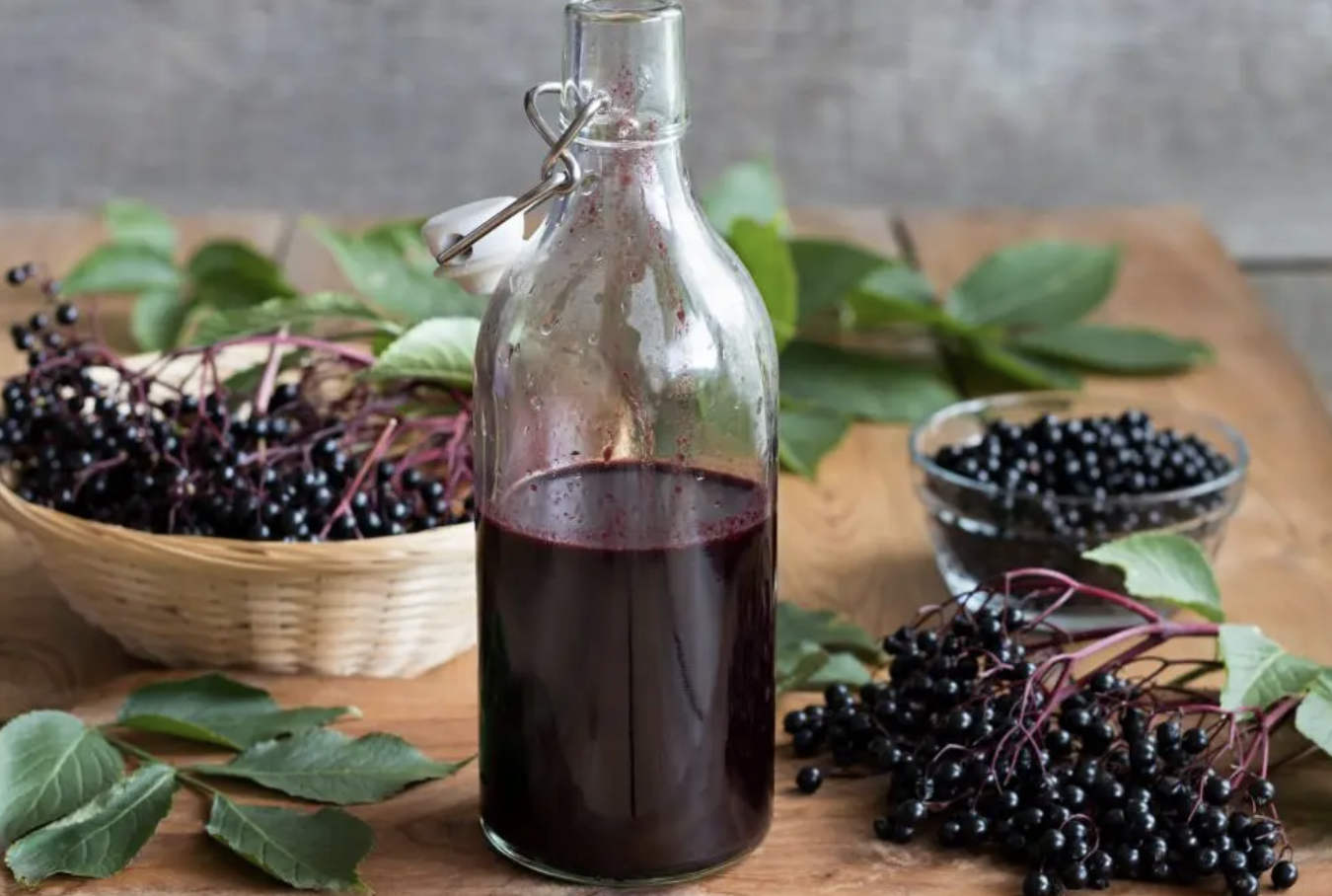
Sambucus nigra (European black elderberry) or Sambucus canadensis (North American elderberry) exhibit the existence of anthocyanins, helpful antioxidant flavonoids that have a good impact on human health. Elderberry has been a hot issue in the press this year as the immune system has received a lot of attention. In cellular lab investigations and a few human clinical trials, science has demonstrated that elderberries have a function to play in human health. Since 2012, 50–80 papers per year have been posted on PubMed, the scientific journal archive run by the National Institutes of Health, demonstrating the molecular effects of this fruit on the immune system. You may get the most recent information on elderberry and human immunity by conducting an internet search.

The Uses of Elderberry In Herbal Tradition
The benefits of elderberries for humans weren’t merely discovered by a scientist a generation ago. No one just took a glance at the elderberry and suggested that we examine how it affects our immune systems. Instead, what we see as a surge in research now is the result of centuries of traditional practices and primitive scientific inquiry, which were cutting edge at the time. Tracing a herb’s history is one of the most enjoyable aspects of the work for a herbalist who enjoys reading historical literature. At the beginning of the Common Era (previously AD), the ancient Greeks included elderberry in their pharmacy.
In the 700s CE, Charlemagne ordered elder to be planted all across his empire as an easily accessible “medicine cabinet.” The elder tree was associated with Judas and Jesus’ crucifixion in folklore. The religious veneration that grew up around the plant prohibited destroying the tree, therefore the elder could not be utilized as fuel. The elder was considered mystical in pre-Christian Europe. It was believed that a nymph by the name of Hylde-Moer (Elder Mother) served as the tree’s guardian.
Folklore of the period said that the nymph would follow the wood into the house and torture the owners if the elder was disturbed or the wood was used to make furniture. This tale gave rise to the custom of asking Hylde-Moer’s approval before removing a tree’s fruit, blossom, or wood. According to 18th-century author Trogillus Arnkiel, the request to the Elder Mother would be as follows: “Lady Ellhorn, give me some of thy wood, and I will give thee some of mine when it grows in the forest.” A hatless head, folded arms, and a bended knee were required while making the request. Hylde-Moer would be deemed to have agreed to the request if she kept silent. When harvesting a portion of the plant for their personal use, medieval peasants and Native Americans were known to leave presents and offerings for the plant.
Elderberry Uses in the 18th Century
The printing press’s invention in the Middle Ages replaced oral traditions, greatly expanding the availability of the most current knowledge on herbal remedies. Even plays and poetry by William Shakespeare and William Langland included the older. The Herball: or Generall Historie of Plants, a 1410-page work by John Gerarde, is one of the oldest complete compendia of herbal knowledge. This book contains information on the anatomy, habitat, cultivation, and use of each plant’s parts for human health and other purposes. The topics in this herbal were meticulously complemented by graphics. After Martin Blochwich died in the early 1600s, the herbal book Anatomia Sambuci, which is specifically about elderberries, was published shortly after. Before the end of the 17th century, it achieved recognition in German and English after its initial Latin publication.
[restrict]Instead of the systematic and microscopic support that is the focus of current research, these early books emphasized symptomatic applications. One technique to guarantee obedience was to provide food. The dried seed from the berry, for instance, was thought to be “good for those who have the dropsies,” and flower or berry wine was “often recommended for excellently removing the displeasing overflow” of catarrhs. These and other practices included mixing elderflower with meat or eggs to calm “the belly” after a heavy meal and recommending flower or berry wine for those who have the dropsies. An outdated term used to describe an accumulation of mucus in the nose and throat is “catarrh.”

John Hill wrote an early account in the middle of the 18th century that would foreshadow the modern emphasis on elderberry: “[T]he juice of the berries, boiled down with a little sugar, or by some wholly without; and this, when it comes to the consistency of honey, is the famous rob of elder, good in colds and sore throats.” William Cook, a physiomedicalism, observed that the berries used to make wine may be “secernent,” or promote secretion, 100 years later.
Modern Uses of The Elderberry
Because of its antioxidant characteristics, which help reduce inflammation and the symptoms of colds and influenza, it is used in folk medicine to treat colds and flu. Additionally, it strengthens immunity and has antiviral and antibacterial qualities. With time and advancements in research, investigations have shown that it also lowers excessive cholesterol and protects against UVB rays, liver, kidney, aids, cancer, and other disorders.
The Elderberry, a little blue blackberry, is produced on trees 99 metres tall and has many small white blossoms called Elder blossoms. Since ancient times, elderberry syrup has been used to treat pain and inflammation due to its well-known therapeutic characteristics. Elderberries have a significant amount of dietary fiber per 100 grams, which lowers blood pressure, improves bowel function, and prevents constipation, cardiovascular disease, and colon cancer. The fruit has a low glycemic index, so it won’t have a big effect on your blood sugar levels. Like other fruits, elderberries are low in protein and very low in fat. Elderberries contain beta-carotene, which is transformed into vitamin A. This vitamin improves eye health and aids in the battle against free radicals, which may hurt your skin, heart, and lungs. Inflammation, which can hinder the efficient operation of cells and muscles, is another issue that vitamin A aids in reducing.
Organic Elderberry Boost (16 Ounces)
Fresh, wild-harvested elderberries are used to make this all-natural elderberry syrup. When elderberry, raw honey, and spices are combined, your immune system works at its peak. The purest elderberry syrup on the market has no additional sugars, making it. Clinical studies have shown that elderberry syrup strengthens the immune system and is particularly effective against colds and the flu. Numerous clinical trials demonstrate the usefulness of elderberry in easing symptoms and shortening the duration of sickness by 2-4 days.
Elderberries have been utilized as a medicinal herb for a range of ailments for countless years. From this point forward, maintaining your family’s productivity at peak levels despite all seasonal difficulties will be simple. Why not boost your immune system and prevent the spread of colds and the flu whether you are visiting a foreign nation or are in a confined space with little access to fresh air (an airplane, or several workplaces)?
Super Reasons Why Elderberry Is A Superfood
Rich in bioactive flavonoids, elderberries may help decrease blood pressure and delay the beginning or progression of heart disease, according to several studies. According to one study, those who took an elderberry supplement for five weeks had a substantial drop in both their total and LDL cholesterol levels. Supplements containing elderberries increase insulin production, which improves blood sugar regulation and lowers the risk of heart and vascular disease. According to several studies, the fruit is also good for blood pressure. Numerous “bioactive” found in elderberries, including tannins and flavonoids, which are anti-inflammatory substances you may have heard of, can protect our bodies’ cells from harm.
Inflammation in the body can be brought on by stress, contaminated air, a bad diet, and drugs like alcohol or cigarettes. This inflammation may result in cellular damage. Chronic conditions like cancer and heart disease can develop as a result of inflammation. Elderberries have anti-inflammatory and free radical-protective properties that come naturally. The phytochemicals in elderberries have been linked to improved mood and memory. Taking a daily elderberry supplement has been shown to help relieve some symptoms of mental/emotional disorders such as anxiety and depression. Elderberries are loaded with anthocyanins, which have been shown to protect the brain and neurons. Studies suggest that elderberry supplements are one of the most reliable ways to decrease the risk of Alzheimer’s. High oxidative stress levels are a significant factor in depression. Elderberries contain antioxidants that defend the central nervous system from oxidative stress and free radical damage. Regular use of an elderberry supplement helps to calm the mind and lower stress.
Elderberries are bursting with immune-stimulating antioxidants, such as vitamins A, B, and C, that support a healthy immune system and aid in the prevention of illnesses caused by common viruses like the flu and colds. A 2020 analysis of five elderberry studies found that taking elderberry supplements within 48 hours of the onset of symptoms may lessen the duration and intensity of cold and flu-related fever, headache, runny nose, and congestion!
* In partnership with our friends at Elderberry Boost, LLC* Photo courtesy of Elderberry Boost, LLC.
* These statements have not been evaluated by the Food and Drug Administration. These products are not intended to diagnose, treat, cure or prevent any disease.
* The information available on ewellnessmag.com, including text, graphics, and other materials is for informational purposes only. Reliance on any information in ewellnessmag.com is at the user’s own risk. Sponsored product placement may appear in the article. The visitor of this website acknowledges that the information available on or through ewellnessmag.com is not and is not intended to be a substitute for professional medical advice. Copyright © 2023 Brawo Press, Inc. All rights reserved.