
The supplement industry is big on selling the idea that wellness is a large mountain you need to conquer through hard work, early mornings, and the unpleasant routine of dry, chalky supplements. It pushes the idea that if you aren’t choking down a liter of water with a distasteful white powder mixed into it, then you must not want it badly enough.
This narrative is emotionally persuasive, but biologically incomplete.
The problem with willpower that is often overlooked is that humans are coded, both neurologically and evolutionarily, to conserve energy. We are designed to find the path of least resistance. Modern life only amplifies this tendency. Workdays are long, families are demanding, and cognitive fatigue accumulates quickly. Even physical recovery or mental stress can drain the reserves needed to maintain disciplined routines.
It’s not that goals are ignored. It’s that the execution cost becomes too high.
This is where most supplementation strategies fail. They assume behavior is stable. In reality, behavior is highly context-dependent.
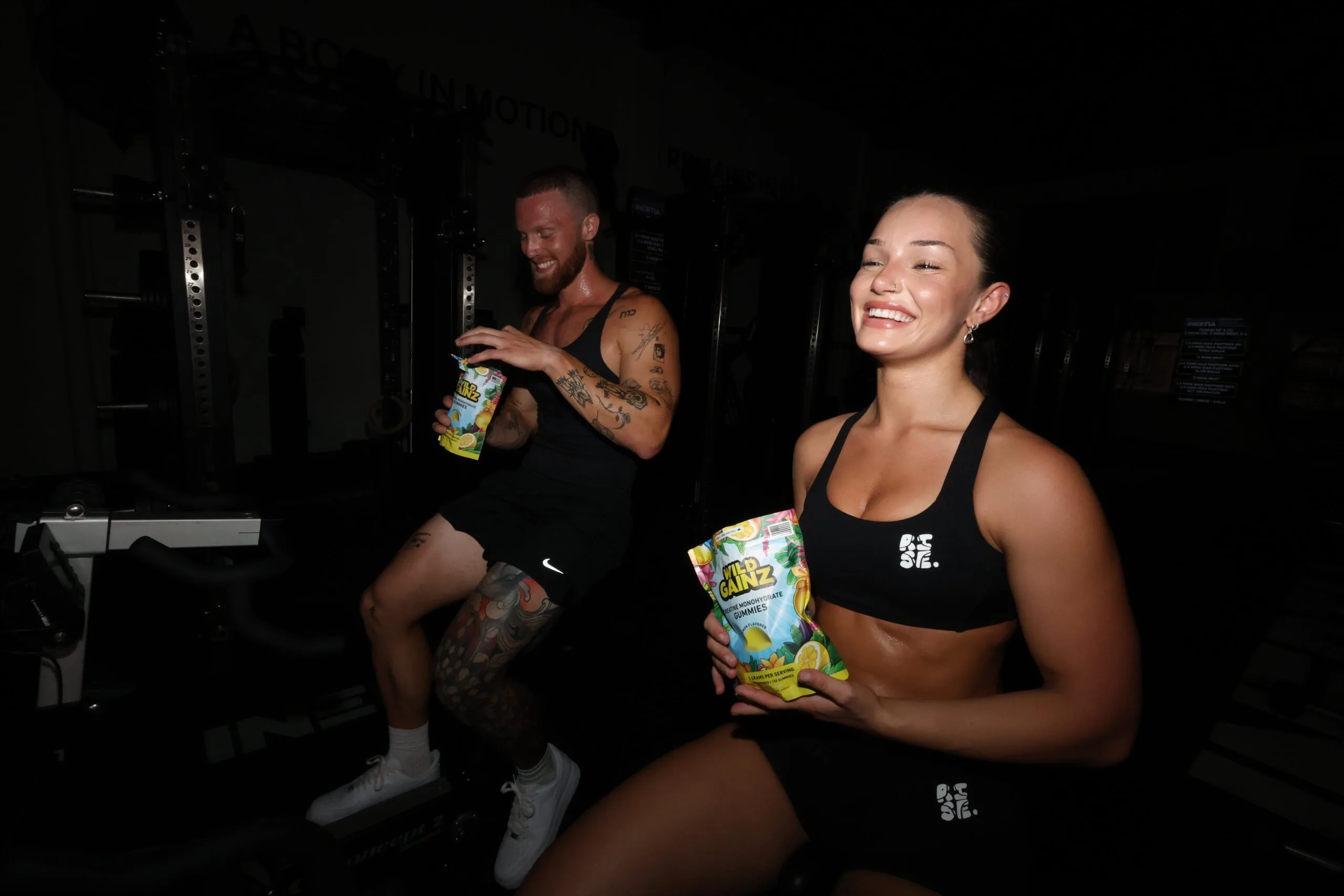
Wild Gainz positions itself directly within this psychological gap. The brand doesn’t attempt to increase discipline; it attempts to remove the need for it entirely. Instead of demanding adherence to rigid routines, it re-engineers one of the most researched compounds in sports and cognitive science into a format that aligns with how people actually behave.
That shift has created something more practical than traditional supplementation: Creatine Monohydrate Gummies designed around habit formation and real-world compliance, merging performance with fitness supplementation convenience.

The Friction of Healing
To understand a brand like this, you need to step away from the gym-floor narrative of supplementation and into something more human: caregiving, recovery, and neurological strain.
While creatine is often associated with muscle building, it has also been studied for its role in broader energy metabolism, including potential support for cognitive performance support and neurological resilience. This places it within a wider conversation that increasingly overlaps with nootropic supplements, even if it is not traditionally categorized that way.
In the founder’s case, the origin was not athletic, it was medical. After a traumatic brain injury affected a close family member, creatine was recommended as part of a daily routine to support recovery. What followed was not a scientific challenge, but a logistical one.
When someone is navigating neurological fatigue, the smallest friction points become barriers. Measuring powders. Cleaning shaker bottles. Managing taste aversion. Remembering multi-step routines. Each of these may seem insignificant in isolation, but together they create what behavioral scientists call “compliance decay.”
Even proven recovery supplements lose effectiveness if they are not consistently taken.
This is the central insight behind the brand: supplementation is not only a biochemical problem, but also a behavioral one. If a person cannot sustain the routine, the compound itself becomes irrelevant.
So instead of asking people to adapt to supplements, the brand asks a different question: what if supplements adapted to people?
Turning Clinical Necessity into a Daily Craving
At the center of this shift is behavioral science.
Wild Gainz draws heavily from habit formation theory, particularly habit stacking and temptation bundling. As James Clear explains in Atomic Habits, habits are far more likely to stick when they are immediately rewarding rather than delayed.
Most supplement routines fail because they rely on delayed reinforcement. You endure an unpleasant experience now in exchange for potential benefits later. That structure is inherently fragile because motivation fluctuates, while discomfort does not.
Wild Gainz disrupts this model.
By transforming creatine into a flavored gummy, the experience is reframed. Instead of a task to complete, it becomes a moment of reward. This is where habit-forming health products diverge from traditional supplements, they are engineered not just for efficacy, but for repeatability.
The act of taking creatine is no longer something you “should do.” It becomes something you naturally want to do.
This behavioral redesign moves supplementation from conscious effort into automatic routine. Over time, repetition does what motivation cannot: it stabilizes the habit loop.
In this way, the company is not simply selling Creatine Monohydrate Gummies. It is selling behavioral reliability disguised as convenience.
Precision in Every Bite
It is easy to dismiss gummies as novelty supplements or candy-adjacent wellness products. That skepticism is understandable, but incomplete.


Wild Gainz approaches formulation with the same rigor as traditional powder-based creatine systems. The transition from powder to chewable is not cosmetic; it is biochemical, structural, and dosage sensitive.
The most common issue in the emerging gummy supplement market is underdosing. Many products fail to deliver the clinically studied range of 3–5 grams per day, which is typically associated with muscle saturation and performance benefits.
The brand addresses this directly.
- The dose: Each serving is engineered to meet the clinically relevant daily intake, ensuring that fitness supplementation convenience does not compromise efficacy.
- The texture: Creatine’s known instability in liquid form is avoided through a stabilized gummy matrix, preserving consistency and taste without medicinal aftereffects.
- Transparency: Each batch undergoes third-party testing for purity and potency, with results made publicly available, an important standard in both recovery supplements and performance nutrition markets.
- Bioavailability and stability: A pectin-based formulation helps maintain structural integrity of creatine monohydrate, ensuring reliable delivery.
- Inclusive formulation: Vegan-friendly, gluten-free, and free from high-fructose corn syrup, aligning with modern dietary expectations.
- Digestive comfort: The pre-dosed chewable format reduces the gastrointestinal discomfort often associated with traditional powders.
- On-the-go usability: Designed for environments where mixing powders is impractical, reinforcing modern fitness supplementation convenience.
What emerges is not a compromise product, but a re-engineered delivery system for consistency.

Seamless Integration into Modern Life
The true value of supplementation is not found in ideal conditions; it is found in chaotic ones.
The brand targets individuals who operate under cognitive load and time scarcity, where routines must be simple enough to survive disruption.
- High-functioning professionals: Individuals balancing mental fatigue, deadlines, and performance demands, where cognitive performance support becomes increasingly relevant.
- Busy parents: Those managing constant schedule fragmentation, where traditional supplement routines often collapse.
- Athletes in recovery: Users relying on recovery supplements who need consistency even when motivation is low or training is inconsistent.
Across these groups, the common denominator is not fitness, it is friction.
It reduces that friction through design. In doing so, it reframes supplementation as a system of sustainability rather than discipline.
This is where it aligns with broader habit-forming health products: products that don’t demand behavioral change but instead embed into existing behavior loops.
Mental Resilience in a Gummy
While creatine is most commonly associated with physical performance, its role extends beyond muscle tissue. The brain is an energy-intensive organ, consuming a significant portion of the body’s ATP supply.
Creatine plays a role in ATP regeneration, which may contribute to cellular energy availability during periods of high cognitive demand. This is why it has increasingly been explored in discussions surrounding cognitive performance support, especially under stress, sleep deprivation, or mental fatigue.
Although not classified strictly as nootropic supplements, creatine’s overlap with cognitive energy pathways places it adjacent to that category in modern supplementation research.

Wild Gainz leverages this dual-domain relevance, physical and cognitive, to create a more complete narrative around supplementation. It is not just about muscle recovery; it is about total-system energy support.
The decision to remove powders and introduce Creatine Monohydrate Gummies is therefore not aesthetic. It is functional. A supplement only works if it is consistently taken, and consistency is fundamentally a behavioral problem.
By replacing friction-heavy routines with a simple chewable format, adherence becomes significantly more realistic.
At the same time, the brand maintains strict standards: no artificial dyes, no high-fructose corn syrup, and full third-party verification. In a market where trust is often fragmented, this transparency matters as much as formulation.

Stop Fighting Your Biology
As the brand and product range evolves, it represents a broader shift in how supplementation is understood. The industry is moving away from brute-force discipline and toward systems that align with human behavior.
This is not about lowering standards; it is about designing for reality.
Wild Gainz is a response to a simple but often ignored truth: people do not fail supplements; supplements fail people.
It began with a son watching his father struggle through recovery. It evolved into a rethinking of how supplementation should function in everyday life.
In the end, the principle is straightforward: when you stop fighting your biology and start designing with it, consistency becomes easier, not harder.
The result is a system of supplementation that integrates into life rather than competing with it, a model built around sustainability, cognitive load reduction, and real-world adherence.
The goal is no longer perfection.
The goal is simple: create a supplement routine people can actually maintain.