


Hair is a very personal thing. You can change the color, cut it short, grow it out, hide it under a headpiece, or spend the entire day trying to get it to do what you want. But when your hair starts looking or feeling just a little different, this experience can hit harder than you expect it to.
An even harsher reality is when you begin to notice more and more strands left behind in the shower. Your ponytail starts feeling smaller, your scalp starts to look more visible than it used to, and hair thinning suddenly becomes something you notice in the mirror rather than a phrase you’ve only heard other people use. None of these moments necessarily explains what is happening, but suddenly, you are paying attention in a way you weren’t before.
This is one reason the hair-care landscape has become so crowded. People are no longer looking for a product that simply makes their hair smell good. People are looking for routines that feel like they take you into consideration. Ones that feel both manageable and connected to the way that you want to care for yourself.

Before There Were Bottles, There Were Botanicals
The founder of Rejjuv truly understands this. He began experiencing hair loss himself and saw just how easy it was for a physical change to become a fully emotional experience. That experience eventually led him toward a different way of thinking about hair and scalp care, one that considered the traditions surrounding botanical ingredients alongside modern expectations.
Losing your hair has a great impact on your confidence and self-perception, especially when the changes are beyond your control. Instead of treating the subject of hair loss as something that should either be accepted or hidden, he decided to ask a very important question: What could traditional botanical hair care teach us about creating more intentional modern-day routines?
This search ultimately led him to traditional approaches to hair and scalp care such as Ayurvedic, Chinese, and Middle Eastern traditions, where plants, herbs, and oils have long been part of natural hair care practices. The goal wasn’t to dismiss what modern science can contribute. He wanted to see whether botanical wisdom could accompany a contemporary understanding of hair care.
Consider someone who notices more hair than usual on the bathroom floor. Their first instinct may be to change everything. But a simple hair care routine for thinning hair does not necessarily mean buying more products. Sometimes it means stepping back, understanding what the routine is actually asking of you, and choosing habits that feel realistic enough to maintain.
Rejjuv isn’t trying to create a routine that consists of multiple different steps. Instead, this brand has created a two-part approach that centers on a lightweight formula that should be used regularly and a rich treatment that should be incorporated once a week.
Hair shouldn’t be yet another thing that you dread keeping up with.
When Two Steps Are Enough
The first part of this routine is the On the Go Hybrid Hair™, a water-based and botanical-oil formula designed to work on both dry and damp hair. Its lightweight, gel-like texture helps shape and style the hair.
Designed to fit easily into a daily hair and scalp care routine, this botanical treatment can be applied to either damp or dry hair and takes around two to five minutes to work through. It is designed to dry in approximately 20 minutes, then can be washed out after about two hours or left in throughout the day. The amount used can be adjusted to suit different hair lengths, thicknesses, and textures, while a blend of botanical ingredients, including rosemary, aloe vera, black cumin seed, amla, green tea, pumpkin seed oil, coconut oil, jojoba oil, and argan oil, brings together familiar plant-based ingredients in one simple routine.


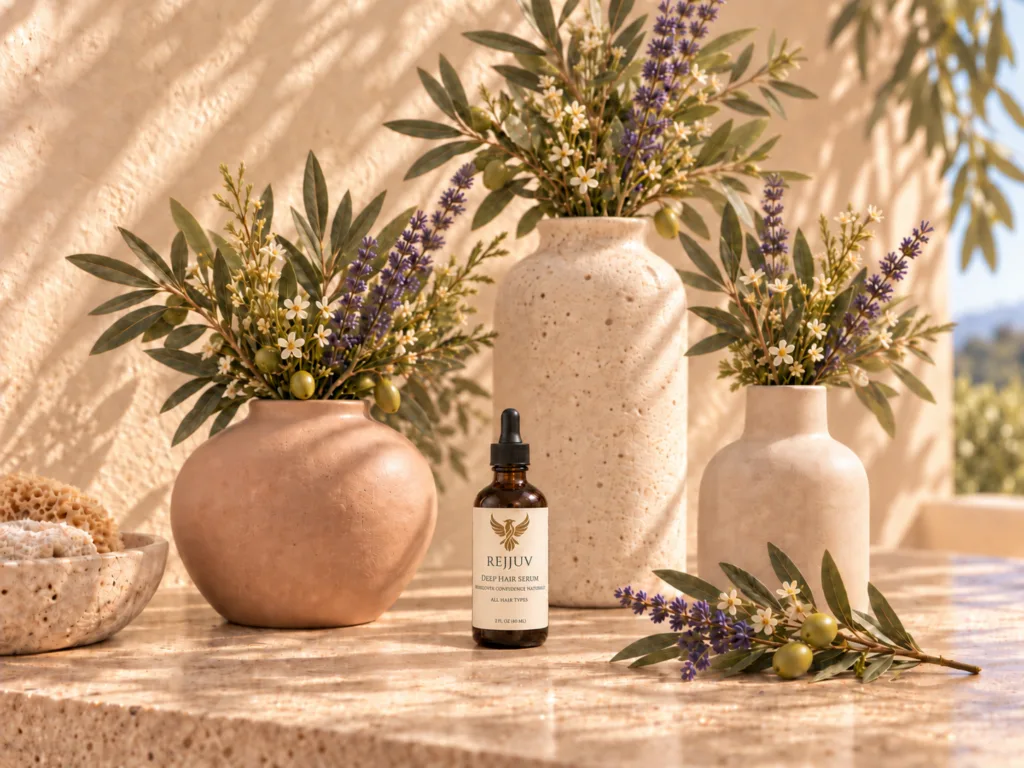
The second part is the Deep Hair Serum™. This serum takes a much richer, oil-based approach, creating a scalp care routine that can be kept for one day each week rather than added to every morning. This is not about demanding that you add yet another step to your routine; instead, this formula is meant to be used once a week on a day when the lighter routine is not being used.
Designed as a weekly hair and scalp ritual, this oil-based treatment offers a richer complement to a lighter daily routine. Intended for use once a week, it brings together a broad botanical blend featuring rosemary, black cumin seed, amla, Bhringraj, aloe vera, pumpkin seed oil, castor oil, coconut oil, argan oil, jojoba oil, and shea butter. The result is a more intentional oiling ritual that can be incorporated into a simple, consistent approach to hair and scalp care.
The formula brings together botanicals with long histories of traditional use. Rosemary and amla have both become familiar terms in conversations around botanical beauty, while oils like coconut, jojoba, argan, and pumpkin seed are more popular in contemporary hair routines.
This doesn’t mean that every ingredient is proven to yield results. This is important to understand, especially because hair-care marketing often moves away from “interesting botanicals” to “this will solve all of your hair concerns.”
The more useful question is whether a product actually makes sense for the individual using it—and whether the routine is realistic enough to maintain consistently.
The Botanicals Are Interesting, The Details Matter
There are a number of botanicals that are used in haircare that have attracted a wide range of scientific interest; however, research on an individual ingredient should not automatically be taken as evidence that a finished cosmetic formula will produce the same results.
For someone exploring a natural hair care routine for thinning hair, that distinction matters. Botanical ingredients can be interesting and may have a long history of traditional use, but a natural label alone does not tell you how effective a particular formula will be.
Let’s look at rosemary oil for hair, one of the botanical ingredients that has attracted particular interest in hair research. A 2015 randomized comparative trial that involved 100 adults compared rosemary oil with 2% minoxidil over six months. The study found no significant difference in hair count between the groups at three or six months, although hair counts increased from baseline in both groups by six months. The findings are interesting, but it does not mean that a rosemary-containing cosmetic is the same as a medication.
Pumpkin seed oil for hair has also attracted scientific interest, although the research needs to be understood in context. There was a 2014 randomized, double-blind, placebo-controlled trial involving 76 men. During this trial they received either pumpkin seed oil or a placebo for 24 weeks. The research suggests that those who received pumpkin seed oil showed a greater increase in hair count. This study utilized an oral pumpkin seed oil at a very specific dose, so the results cannot directly be compared to a typical cosmetic formula.
Hair Has Its Own Timeline
Good hair care is about what you apply, but it is also about the habits surrounding scalp health. Choosing the right shampoo and conditioner is also an important factor in an overall hair-care routine. Alongside heat styling, coloring, chemical processing, aggressive brushing, and tight hairstyles, these factors can all contribute to hair breakage and damage, which is what makes gentle habits worth considering. It is also important for you to understand that hair follows its own biological timeline, and scalp hair grows roughly 1 centimeter per month on average, so true noticeable changes may take time.
A manageable botanical hair care routine can make staying consistent feel that much easier, particularly when it avoids turning hair care into another complicated project. Rejjuv offers a lightweight formula for regular use and a rich serum that should be used weekly. This doesn’t demand adding more complexity to your day.
Thoughtful hair care is about gentle habits, informed choices, realistic expectations, and a routine that you can actually maintain.
The best routine may simply be the one you can stick with.