

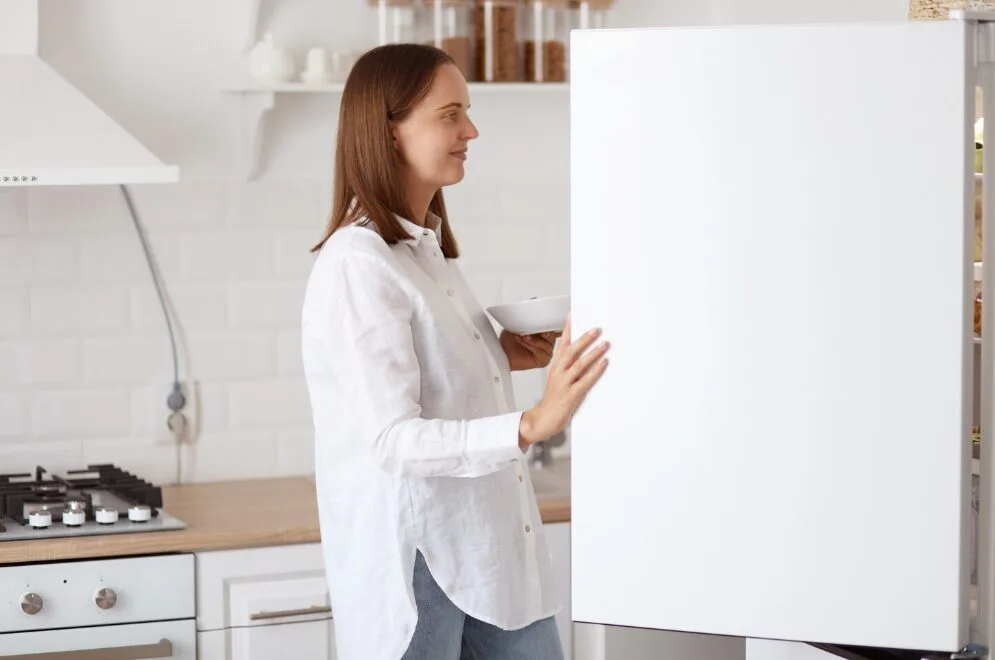
The refrigerator door is open, but there isn’t much to work with: a handful of vegetables, a bottle of ketchup and a few bits and bobs that don’t quite amount to dinner.
Healthy eating always sounds wonderful out loud. It’s as simple as eating more whole foods, adding more veggies, drinking more water, cooking from home, and choosing foods that you recognize. But is it really that simple?
Then one day, you’re tired and hungry, and everyone in the household wants something different, and the idea of washing, chopping, and cleaning sounds like more effort than you’re prepared for. This is where wellness can take a bit of a turn. You know that you need to take better care of yourself, but the effort needed can make nutritious choices feel like another responsibility that you are not prepared for.
Perhaps the answer has nothing to do with finding the perfect diet. And perhaps it’s easier to find simple ways to put real food back into our everyday life.

A More Intentional Table
Lydia Tunstall is a mother who slowly became more intentional about what she was putting on her family’s dinner table. As her children grew and started trying out different foods and drinks, she began analyzing the labels with a little more caution. She was met with unnecessary fillers, added sugars, and heavily processed components that were essentially a part of their everyday eating.
It was time to go back to what she knew.
She began experimenting and making foods and drinks from scratch in her own home. She made everything from dressings to cold-pressed juices to wellness shots. Her Caribbean and Latin roots had already given her an appreciation for preparing food with whole ingredients, so returning to that approach was less about following a passing trend than returning to something familiar.
Her friends and family began asking where they could get the juices Lydia was making. The appeal was in the fact that people were enjoying ingredients that they typically avoided because of the taste, such as beets and leafy greens. In these juices, they seemed less intimidating.
Then came the demand for juices for their children. Many families were on the lookout for foods that could make wholesome eating feel more approachable. Eventually, Lydia was spending hundreds of additional dollars each month to make juices for the people around her.
This eventually turned into a question from her husband: Could this become a business?
Lydia has a bachelor’s degree in science, an MBA, more than 27 years of experience in corporate, and a passion for wellness. She designed a business plan that eventually materialized into Cold Pressed Gwinnett™.
It began with something much smaller: a mother paying closer attention to what was going onto her family’s table.
The Tired Person’s Guide to Eating Well
The human side of changing the way that you eat often gets left out. Imagine someone who is standing in the grocery store at the end of the day, deciding between a bag of spinach in one hand and a frozen pizza. The pizza reflects the person who has been working since eight that morning. It’s not that they do not care about wellness; they might just be tired.
This is why making nutritious food enjoyable matters. When eating healthily feels like a punishment, it can be much more difficult for the choices to become everyday habits.
In a small 2019 randomized controlled feeding study that was published in Cell Metabolism, 20 adults spent two weeks eating an ultra-processed diet and two weeks eating an unprocessed diet. People who consumed the ultra-processed diet ate more calories and gained weight, while the opposite occurred during the unprocessed phase. The researchers also noted that the study was small and short-lived, which means that it doesn’t address all questions regarding long-term eating patterns.
This isn’t an argument for avoiding processed foods altogether. It is an argument for making whole and minimally processed foods easier, more convenient and more enjoyable to reach for.
Cold Pressed Gwinnett™ has been serving its community for around seven years, starting in Duluth, Georgia, before eventually expanding to Buford. They offer a variety of options such as organic cold-pressed juices, smoothies, wellness shots, and food alternatives that all prioritize fresh ingredients. Their approach is as follows: “Always Organic & Never Diluted.” They also avoid using added sugars or diluting their juices with water.

A Fresh Start
For some people, bringing more fresh produce into the day is less about making a dramatic change and more about having something ready when the usual choices feel uninspiring. Cold Pressed Gwinnett™’s Detox Collection offers several ways to approach that idea, depending on how much structure someone actually wants.
Vitality Boost Detox provides a juice-based option for those who want a ready-made way to bring cold-pressed juices into their routine. Revive & Thrive Detox takes a similar approach, offering another juice-focused option within the collection.
For those who prefer a defined timeframe, Clean Slate | Three-Day Detox provides a three-day format built around the brand’s cold-pressed juices. The difference between the options is less about finding a single “right” approach and more about recognizing that routines vary. Some days call for simplicity; others benefit from a little more structure.
That distinction matters because wellness can become unnecessarily complicated when every healthy choice is presented as a commitment. Having fresh juice available doesn’t need to signal a dramatic reset or a set of rigid rules. It can simply be one more accessible way to make fresh ingredients part of the day.

When Juice Simply Won’t Cut It
Juice can be refreshing, but there comes a point when the body, and the day, want something that resembles lunch. This is where Cold Pressed Gwinnett™’s anti-inflammatory food options make the idea of fresh eating feel more substantial, without abandoning the pleasure of an actual meal.
The Oasis Bowl brings together organic quinoa, romaine, grape tomatoes, cucumber, pickled red onion, house-made hummus and vegan tzatziki in a Mediterranean-inspired combination. There is plenty happening in one bowl: the freshness of the vegetables, the creaminess of the hummus and tzatziki, and the contrast of pickled onion against the milder ingredients.
The Mediterranean Salad follows a similarly colorful approach, combining chickpeas with grape tomatoes, cucumber, orange bell pepper, dill, cilantro, shallots and red onion, finished with a house-made vegan dill dressing. It is the kind of combination that makes “eating more vegetables” sound less like advice and more like lunch.

Then there is the Spicy Kale Wrap, which takes kale, sun-dried tomatoes, avocado oil and red onion and brings them together with a house-made sauce made with key lime, dates and cayenne pepper. The sweet, sharp and spicy elements give the greens somewhere to go beyond the usual idea of a virtuous salad.
The common thread isn’t simply that these are foods made with fresh ingredients. It is that they leave room for flavor. Healthy eating becomes considerably easier to return to when it offers color, texture, acidity, spice and satisfaction alongside the nutritional intention.
Because a meal designed to support a healthier routine should still feel like something worth sitting down to eat.
Perhaps that is the point. The refrigerator does not need to be perfectly stocked, and healthy eating does not need to become another set of rules to follow. Sometimes it is simply about having one fresh, satisfying choice when the vegetables are looking lonely, the day has been long, and nobody wants to cook. A little less pressure, perhaps, and something a little more worth eating.