
She came home with the day still on her.
There was the faint smell of outside on her clothes, the heat of the car in her hair, and the familiar collection of small things she had carried from one place to another without thinking about them. She put her bag down by the kitchen door and went straight to the sink.
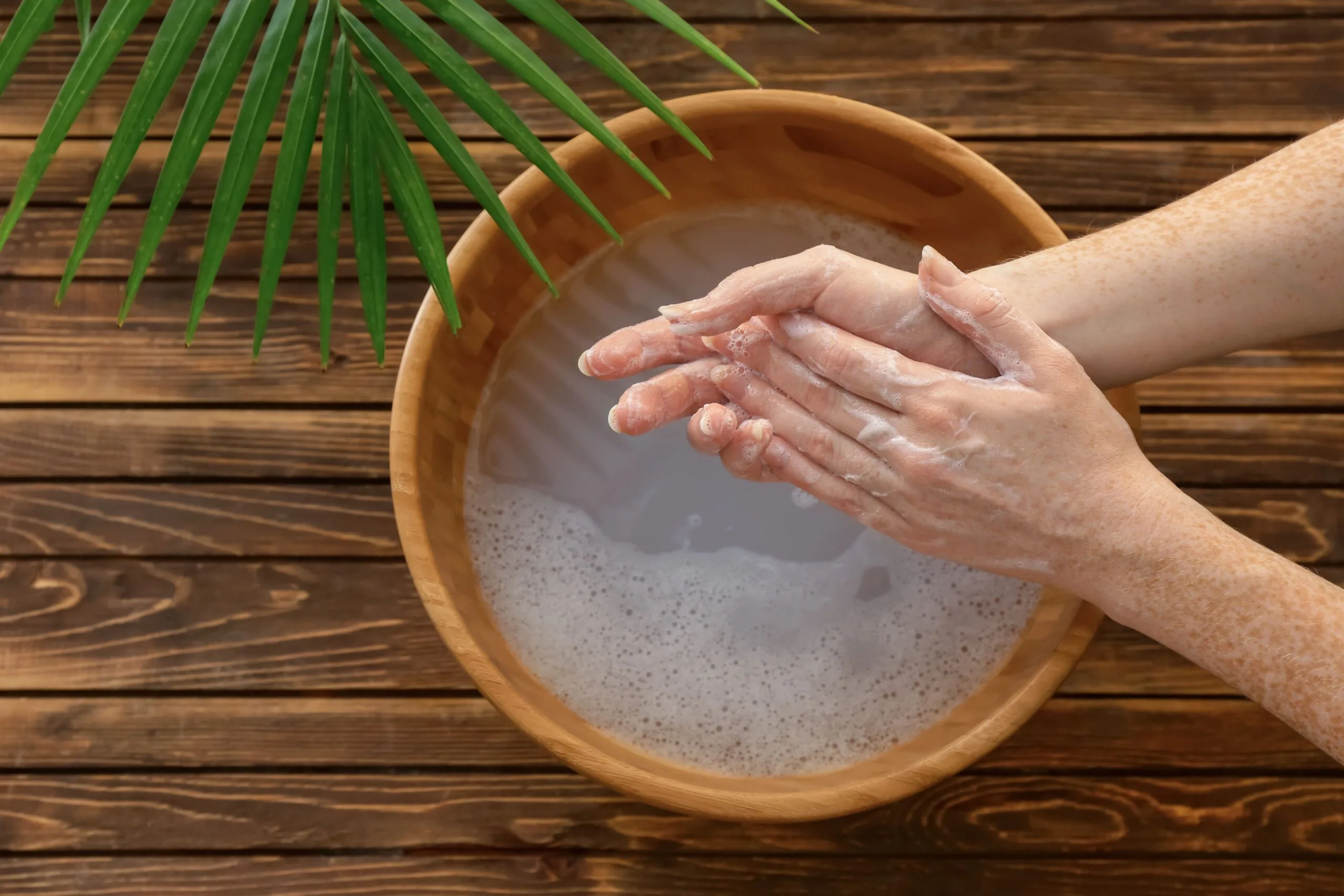
The water was warmer than she expected. She worked the soap between her palms, rinsed, and reached automatically for the towel. It was the kind of action she had performed thousands of times without ever really noticing. But this time she caught the scent before it disappeared down the drain: something green and botanical, clean without being sharp, lingering lightly on her skin after the tap had stopped.
She stood there with her hands resting against the towel, noticing how they felt. The fragrance was still there. So was the warmth of the water.
It lasted perhaps ten seconds.
Then she picked up her bag and carried on with the evening.
Ten seconds is hardly enough time to call something a ritual. It is barely enough time to notice that it happened.
So much of daily care lives in moments like this: washing our hands, stepping into the shower, rubbing oil into dry skin, reaching for something scented before bed. We do these things so routinely that they can disappear into the background of the day.
Perhaps self-care does not always need to be something we add to our lives. Perhaps sometimes it is simply a matter of noticing what is already there.

Mum Was on to Something
There is something revealing about the way we learn to care for other people. Motherhood can make the idea of nurturing feel both instinctive and strangely easy to forget when the person who needs looking after is yourself.
For Jessica Templier, founder of Mum’s Milk, that tension became part of her own understanding of self-care. Motherhood brought the language of nurturing into sharper focus, while her Haitian heritage gave her a longstanding appreciation for plants, herbs, fruits, natural ingredients, and the traditions carried through generations.
Those influences eventually converged with her interest in nature, aromatherapy, and massage therapy. Rather than treating them as separate ideas, she began to see them as different expressions of the same thing: care that involves the senses, the body, and the act of slowing down long enough to notice what you are doing.
A bar of soap becomes something you encounter with your hands several times a day. Body oil becomes more than something applied after a shower; it becomes an opportunity to feel the texture of your skin and notice the scent as it settles. Even fragrance can mark the transition between one part of the day and another.
None of this requires a more elaborate routine. In fact, the appeal lies partly in the opposite idea: that care does not always need to be another task waiting to be completed.
Sometimes it is already there, hidden inside something you were going to do anyway.
It is a philosophy that makes the rituals of washing, applying, touching and smelling feel worthy of attention.
Your Nose Knows
Scent is one of the easiest ways for an ordinary act to become memorable.
A 2020 review in Frontiers in Behavioral Neuroscience looked at how smells and emotional processing may be connected. It also noted that people’s reactions to different scents can vary based on their personal experiences.
That doesn’t mean a particular scent will make everyone feel the same way. Fragrance is deeply personal. A floral scent might remind someone of their grandmother’s garden, while it might remind someone else of a perfume that they can’t stand.
Aromas can become associated with different times of the day, a favorite room, a long shower, or the moment where you can finally feel at ease. Scents can become a part of the routine.
The Oil That Encourages a Pause
The Aromatic Body Oils take that idea into a more tactile part of the routine, drawing on the imagery of earth, air, fire and water.

The Aromatic Body Oils move through different botanical moods, from the warmth of rose and cinnamon to the softer combination of chamomile and vanilla, alongside jasmine and sandalwood and the fresher pairing of hinoki and lemongrass. The appeal is not simply that each one smells different. It is that scent gives the act of applying body oil another dimension: something to notice while your hands are already doing the work.
The oils move between different sensory moods: warmer, softer, earthier or fresher, depending on the moment. After a hot shower, applying a body oil demands both touch and attention. You notice where it goes, how your skin feels afterwards, and how the fragrance develops.
A Soap You Want to Use
Body care usually ends up in the spotlight when it comes to self-care; however, our hands are often an afterthought. We think about the face when we think about skincare, the body when we think about bathing, but the hands are quietly involved in both. With how often we wash our hands, choosing something we enjoy using can make the experience feel a little more considered.

The Jardin Botanique Hand Soap brings that botanical sensibility to one of the most repeated acts of the day: washing your hands.
Something as simple as soap can change the way that your bathroom feels, even without demanding a complete makeover. It can become a part of the room instead of being seen as something that should be hidden away in the bathroom cabinet.
Later that evening, she would wash her hands again without thinking about it. The same sink. The same warm water. The same small movement of soap between her palms.
Her attention to the ritual had shifted. Self-care does not always have to arrive as another appointment, another product, or another thing to fit into an already crowded day. Sometimes it is already waiting at the sink.
A little soap. A little oil. A scent that lingers for a few seconds longer than expected. And, every now and then, the chance to notice.