
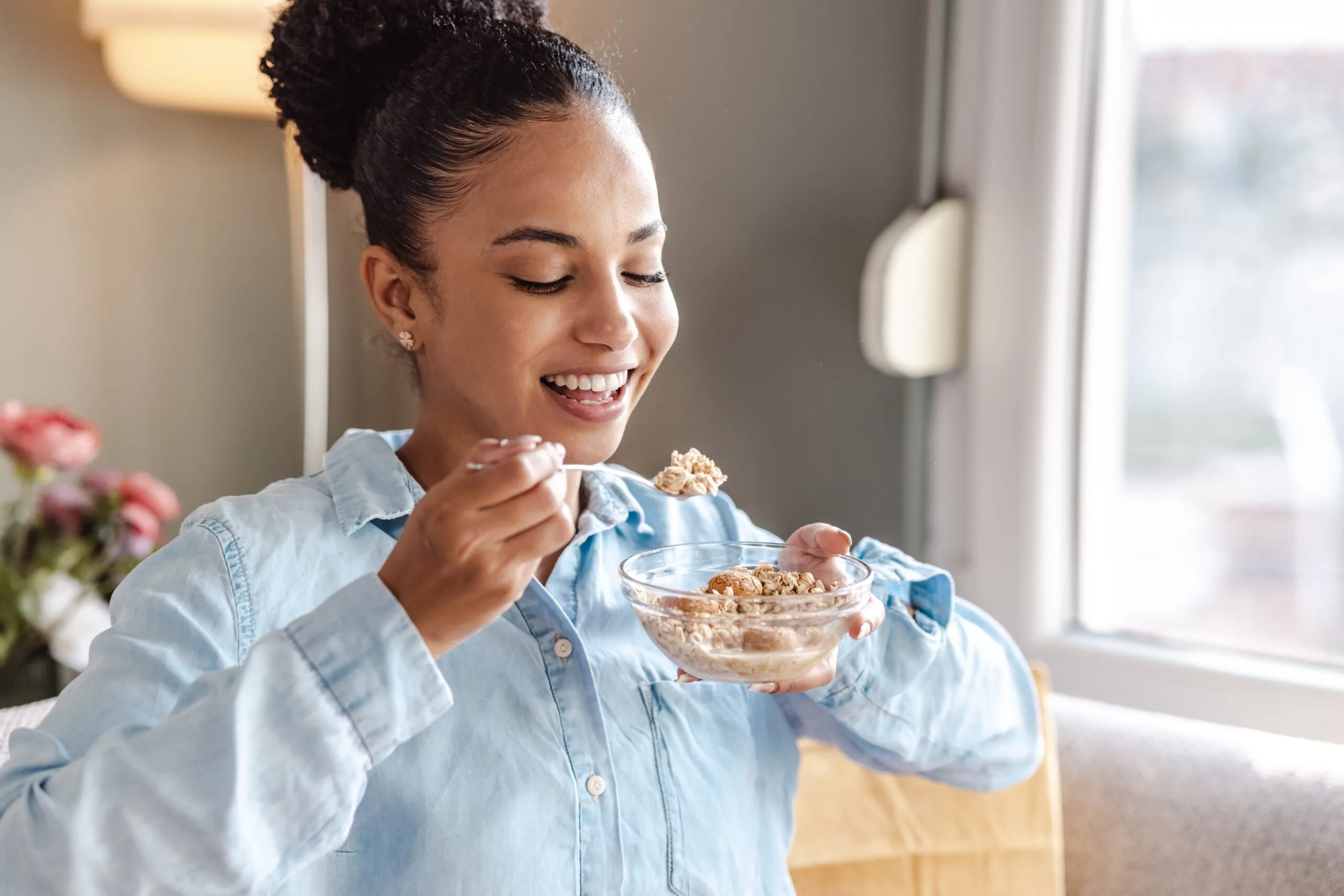
The bag had been open for three days before she noticed what had happened. It was sitting on the kitchen counter, folded over at the top with a wooden clip, next to the coffee machine. Every morning, she had taken a little. A handful while waiting for the kettle. A few crunchy pieces scattered over yogurt. By Wednesday, there was less than half the bag left.
It was only then that she turned it over and read the label.
What is granola made of? Is granola healthy for breakfast? And, perhaps most importantly, how do you choose a healthy granola when the word itself can describe products with very different ingredients?
Granola is often associated with whole foods, outdoor markets, and active lifestyles, yet not every granola is made the same way. One bag may be built around recognizable ingredients such as oats, nuts, fruit, and coconut, while another may contain substantial amounts of added sugars, refined oils, or ingredients that are harder to recognize.
The point is that knowing what is in your bowl can make choosing feel a little more intentional.

What Is Granola Made Of?
At its most basic, granola is a mixture of ingredients that are combined and baked until crisp. Traditionally, oats form the foundation, while nuts, seeds, dried fruit, sweeteners, and fats help create flavor, texture, and those satisfying clusters that make granola difficult to stop eating.
But the beauty, and occasional confusion, of granola is that there is no single recipe.
A thoughtful approach to granola ingredients starts with a simple question: “What is actually doing the work here?”
The Personal Story Behind This Healthy Granola
For the founder of California Crunch, that attention began with someone she loved. Her brother ate cereal and granola every morning, but she was concerned about the foods available to him. As she looked more closely at conventional options, she became increasingly dissatisfied with how many relied on highly processed sugars and oils, artificial flavors, or ingredients that did not fit the kind of food she wanted to share with him.
So, she went into the kitchen.
The first version of what would eventually become California Crunch’s Organic Classic Granola began as an attempt to create something crunchy, enjoyable, and made with ingredients she felt good about giving to her brother.
Her brother loved it. Then friends and family began trying it. At the same time, she was playing professional soccer, and the granola started traveling with her. It moved from kitchen to training schedules, from one place to another, shared with teammates and friends around the world.
After retiring from professional sports and meeting the husband who encouraged her to expand the business, California Crunch continued to grow from a home kitchen to online sales, farmers markets, and eventually its first grocery placement at Bodega and Palms in Venice, California.
When “Healthy Granola” Starts with Ingredients
The brand’s granola is made with organic ingredients and is gluten-free and vegan, with no refined sugars or processed seed oils. Coconut and coconut oil contribute richness, texture, and their characteristic flavor.
Maple syrup provides sweetness without relying on refined sugar, while ingredients such as nuts, fruit, and coconut contribute their own flavors and textures.
The appeal of thoughtfully made healthy granola is partly about knowing what is in the bag, choosing ingredients that align with the way you want to eat, and remembering that food can be both enjoyable and made with intention.
Organic Classic Granola and the Comfort of Knowing What You Like
California Crunch’s Organic Classic Granola is buttery, crunchy, lightly sweet, and balanced with a touch of salt. Pecans, banana chips, cranberries, and coconut flakes give it variety without making the bowl feel overcomplicated.
The banana has a particularly personal place in the story. It was the founder’s favorite snack while playing professional soccer, and bringing that familiar flavor into the granola became a small connection between the food she loved as an athlete and the food she wanted to create.

Nuts and fruit also bring their own nutritional qualities. Pecans provide unsaturated fats and a range of micronutrients, while cranberries and bananas contribute carbohydrates, fiber, and their own distinctive flavors. The nutritional value of any finished granola depends on the complete recipe and serving, but ingredients such as these are part of what makes looking beyond the front label worthwhile.
More than anything, though, the Organic Classic Granola seems designed for real life. It can be part of granola for breakfast, spooned over yogurt or enjoyed with milk. It can become an afternoon snack. And because California Crunch is known for its large crunchy pieces, it can also be eaten exactly the way the woman at the beginning of this story ate hers: one piece at a time, usually more than originally intended.
Organic Almond Joy Granola and the Pleasure of a Little Surprise
Organic Almond Joy Granola combines almond butter and almonds with coconut and a touch of almond extract. Customers have compared its flavor to an amaretti cookie, which says something important about the role pleasure plays in sustainable eating.
There is a tendency within wellness culture to make nutritious food sound serious and functional, but it is also allowed to be delicious. Almond butter and almonds add richness and contribute plant-based protein and fat, while the combination of coconut and almond creates the kind of flavor that feels like something someone genuinely wants to eat.

Versatility may be one of the underrated benefits of granola. A single food can fit into different moments without asking the person eating it to change their entire life around it. Granola can be breakfast or a snack. It can add crunch to a smoothie bowl or texture to yogurt. It can travel in a small container. It can satisfy the desire for something crisp and sweet without requiring preparation.
Is Granola Healthy for Breakfast?
Granola can be part of a balanced breakfast, especially when paired with other foods such as yogurt, fruit, or a source of protein. Its ingredients may provide carbohydrates, fats, fiber, and other nutrients, depending on the recipe.
“Healthy” is not a fixed label that can be applied to every bag. This is why learning how to choose a healthy granola can be more useful than searching for a universally perfect one. Start with the ingredient list. Look at what appears first, since ingredients are generally listed by weight. Consider the types and sources of sweetness and fat. Notice whether the recipe includes whole grains, nuts, seeds, fruit, or other ingredients you value. Then consider whether you actually enjoy eating it.
Simple, Healthy Food for Everyday Life
A sister cared about her brother. She looked at what he was eating and wondered whether she could make something differently. She experimented. She shared it. Other people liked it. She carried it with her through a life that included professional sports, travel, relationships, retirement, and eventually entrepreneurship. The result is a brand that reflects the California lifestyle in more ways than sunshine and farmers markets. It reflects a particular idea of wellness: that food should still feel joyful.
California Crunch’s Organic Classic Granola and Organic Almond Joy Granola are reminders that understanding what is in your bowl can add to the pleasure of eating from it.
There is something reassuring about turning over a package and recognizing the ingredients.
Sometimes well-being looks like a bag of granola on the kitchen counter, disappearing faster than expected, reminding you that the foods we come back to are often the ones that make nourishment feel a little more like pleasure.