
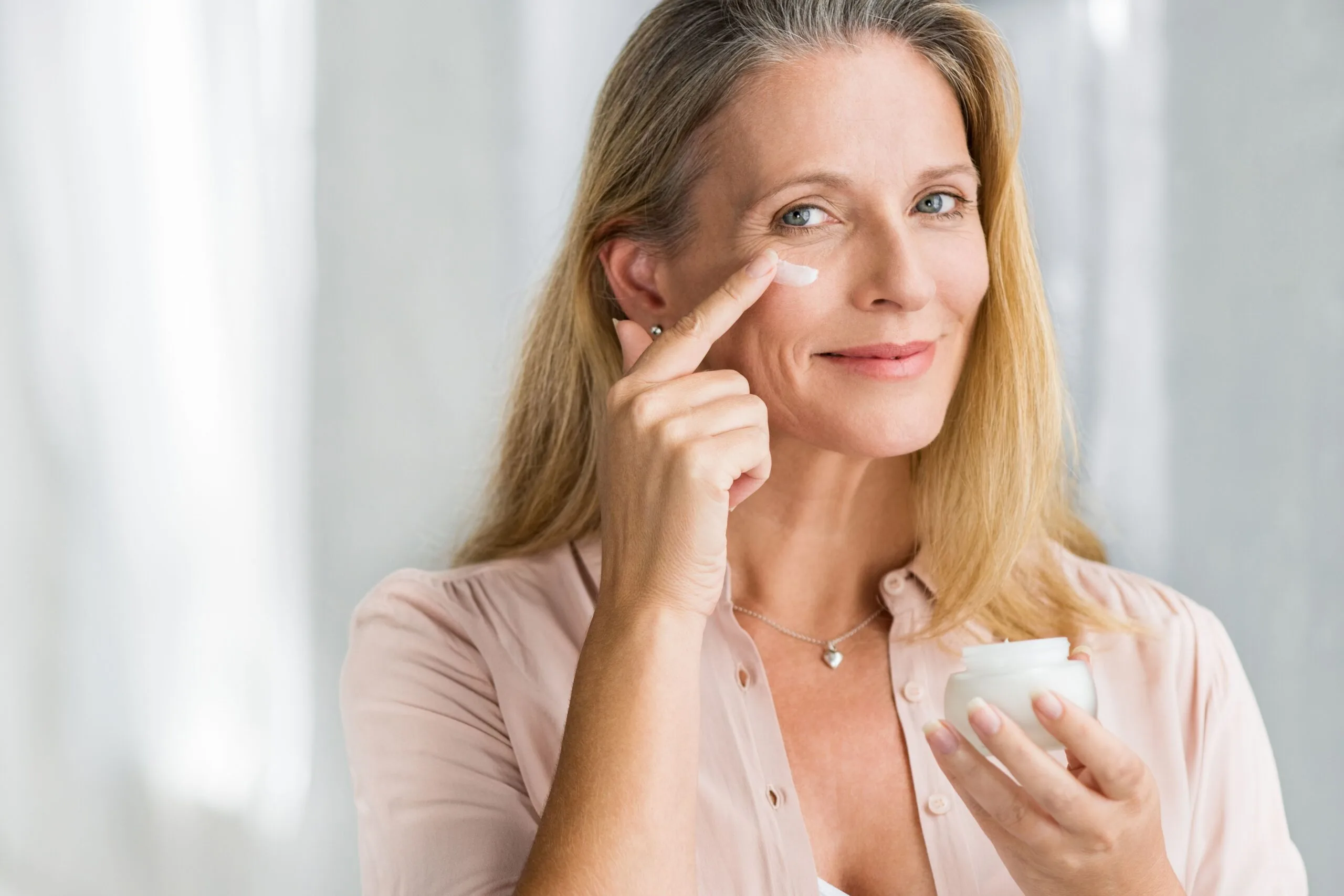
It was one of those nights when the bathroom was the only room still properly lit. The rest of the house had settled down.
Picture the label, not the routine: a jar of whipped tallow, dense and pale, the kind of texture skincare has always promised — but the ingredient line names GHK-Cu and methylene blue, terms that five years ago belonged almost entirely to laboratory literature. The jar looks like skincare. The words on it do not entirely sound like skincare. That gap is exactly what’s drawing researchers and formulators to Restore Peptides’ catalogue — compounds serious enough to interest a lab, backed by the documentation that lets researchers actually trust what’s in the jar.
It was a small moment, but it created an odd interruption. The moisturizer that had been expected to require no thought suddenly required a little. What exactly was GHK-Cu? Why was methylene blue in a whipped tallow formulation? Where did those ingredients come from? And, perhaps more importantly, what did the research say?
The tub was put down. Then picked up again.
That second look is becoming a familiar experience in wellness. Scientific names are no longer confined to laboratories or papers read by people with specialist training. They appear on product labels, in online discussions and in the increasingly crowded space between healthcare, skincare and personal experimentation.
The language has become familiar faster than the science has.

When Scientific Language Leaves the Lab
Restore Peptides positions its catalogue within the world of research chemicals and laboratory materials. Its product pages identify third-party testing and make Certificates of Analysis available for relevant research materials.
In a marketplace where scientific terminology can sometimes become decorative, the intended context of a product matters. A research material remains a research material even when its name becomes familiar outside scientific circles.
GHK-Cu is no longer an obscure combination of letters within contemporary skincare conversations. Methylene blue, too, has travelled far beyond the laboratory contexts in which it has traditionally been encountered. Tesofensine belongs to a different category altogether, but it has similarly acquired recognition in wider conversations about metabolic and neurological research.
The New Skin Conversation
Consider the jar. Restore Peptides’ GHK-Cu Whipped Tallow with Methylene Blue is, at first glance, an unusual collision of worlds. The product is presented as a whipped tallow formulation, while its name places the two compounds directly alongside it. The company identifies it as third-party tested and intended for research purposes only.
GHK-Cu refers to a complex formed when the naturally occurring tripeptide glycyl-L-histidyl-L-lysine binds with copper. Research into the compound has explored its involvement in processes associated with tissue repair and extracellular-matrix remodeling (Pickart & Margolina, 2018). GHK-Cu’s role in fibroblast activity and wound-healing pathways has made it one of the more closely watched compounds in peptide research — which is exactly why every batch undergoes third-party testing and full documentation, giving researchers material they can verify for themselves.
That research is interesting, but the distinction between biological activity and a proven cosmetic outcome matters. A recent review of topical GHK research notes that, despite its established presence in cosmetic products and a body of laboratory research, questions remain around skin permeability and the clinical evidence supporting topical use.


Methylene blue has an even longer scientific history. It is a well-established chemical compound that has been used in medicine and laboratory science, while more recent research has examined its interaction with cellular energy pathways, including mitochondrial function. Some research has also considered methylene blue alongside photobiomodulation and other approaches that investigate mitochondrial activity.
Here again, the details matter. Methylene blue’s biological effects can depend on concentration, exposure and experimental conditions. Research examining mitochondrial pathways, for example, does not automatically establish what a particular topical preparation will do when applied to human skin. Findings can vary according to biological context, reinforcing why a compound’s name alone tells us very little about the behavior of a finished formulation.
This is where the jar becomes more interesting than its unusual ingredient list.
Tallow belongs to an older vocabulary of skincare: fat, nourishment, richness, the tactile language of a balm. GHK-Cu and methylene blue belong to a newer vocabulary shaped by molecular biology, cellular research and the growing public fascination with what happens beneath the surface of the skin.
The juxtaposition reflects something broader about contemporary wellness. Consumers are increasingly encountering research-driven ingredients through scientific terminology before they encounter them through conventional product categories. A compound studied in cells or animal models can become familiar online long before evidence exists for a particular consumer formulation.
Research findings can tell us what happened under specific experimental conditions. They cannot, on their own, tell us what will happen in every person, through every delivery system or in every finished formulation.
The Laboratory Is No Longer So Far Away
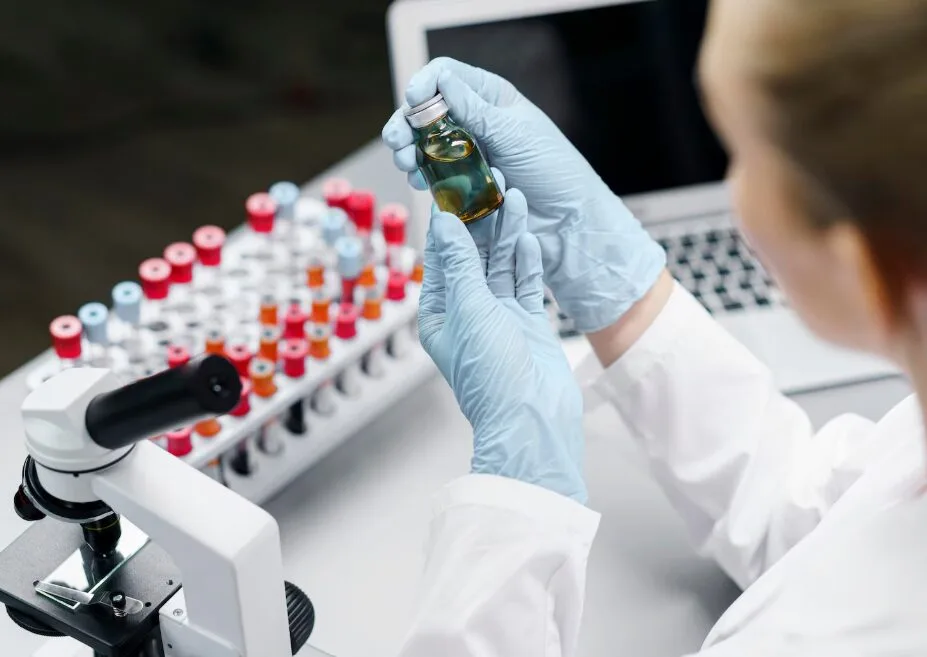
For decades, laboratory science represented distance. It was somewhere behind a closed door, populated by people with specialized training and equipment ordinary consumers would never see. Now the visual and verbal language of the laboratory is everywhere: clear glass, precise measurements, batch numbers, certificates, purity percentages, technical names and controlled processing.
This shift isn’t confined to skincare. The same phenomenon can be seen in research compounds associated with metabolic and neurological studies, where terminology once confined to scientific literature increasingly appears in consumer wellness conversations.
Restore Peptides’ research products make that infrastructure visible. Its Tesofensine listing, for example,identifies the material as a lyophilized research tablet, states a purity of 99%, and gives storage guidance to store it in a cool, dry place. The listing also provides access to a Certificate of Analysis and identifies the material as third-party tested and intended solely for research.
None of those details tells a researcher what an experiment will ultimately discover. What they do is make the material more legible.

What a Certificate Can Actually Tell Us
This brings the discussion back to testing. The Certificate of Analysis is an important document in the world of research materials because it provides documentation connected to a particular material or batch. COAs are also made accessible on the relevant product pages, including the Tesofensine listing.
A certificate does not establish that a compound will produce a desired effect in a person or transform research material into an approved medicine. It does not eliminate the need for appropriate experimental design or interpretation.
What it can do is anchor the conversation. It gives the material an identity beyond a photograph and a product name.
The modern consumer has become accustomed to being told that an ingredient is “powerful”, “advanced”, “revolutionary” or “next generation”. Those words are easy to produce because they require no laboratory equipment.
Words like batch number, purity specification or testing document are different. They are far more concrete.
Where Documentation Stops
Consumers have become accustomed to knowing more about what they buy. They want to know where food came from, how clothing was made, what materials were used and what a company can substantiate its claims.
Research materials are simply another version of that question. Where did this come from? What is it? How was it handled? What has been tested? What documentation exists?
But documentation has boundaries. A purity specification can describe what is present in a material; it cannot establish what that material will do in a human body. A COA can provide information about a particular sample; it cannot substitute for clinical evidence, establish the safety of a particular use or determine how a finished formulation will behave on the skin.
That information does not tell the whole scientific story, but it gives the material a documented starting point.

Back to the Jar
The jar, then, is still sitting on the shelf. It has not become a laboratory because someone placed research terminology on its label. Nor has the laboratory suddenly become a consumer space because scientific compounds have entered popular conversation.
The two worlds remain distinct.
What has changed is the distance between them.
That distance is now close enough for a person standing in an ordinary room to encounter words that once belonged almost exclusively to scientific papers, specialist catalogues and laboratory benches.
That’s a fascinating shift, but it calls for a different kind of literacy: the ability to ask what’s known, what’s actually been tested, what the documentation shows, and where the evidence stops. The jar remains a jar. The tablet remains a research tablet. The laboratory remains the laboratory. What Restore Peptides adds isn’t a shortcut across that distance — it’s the paper trail that lets a serious researcher close it for themselves: third-party testing, a Certificate of Analysis, and a label that says exactly what’s inside.