
The piece of mochi had gone slightly cold by the time she remembered why she had saved it.
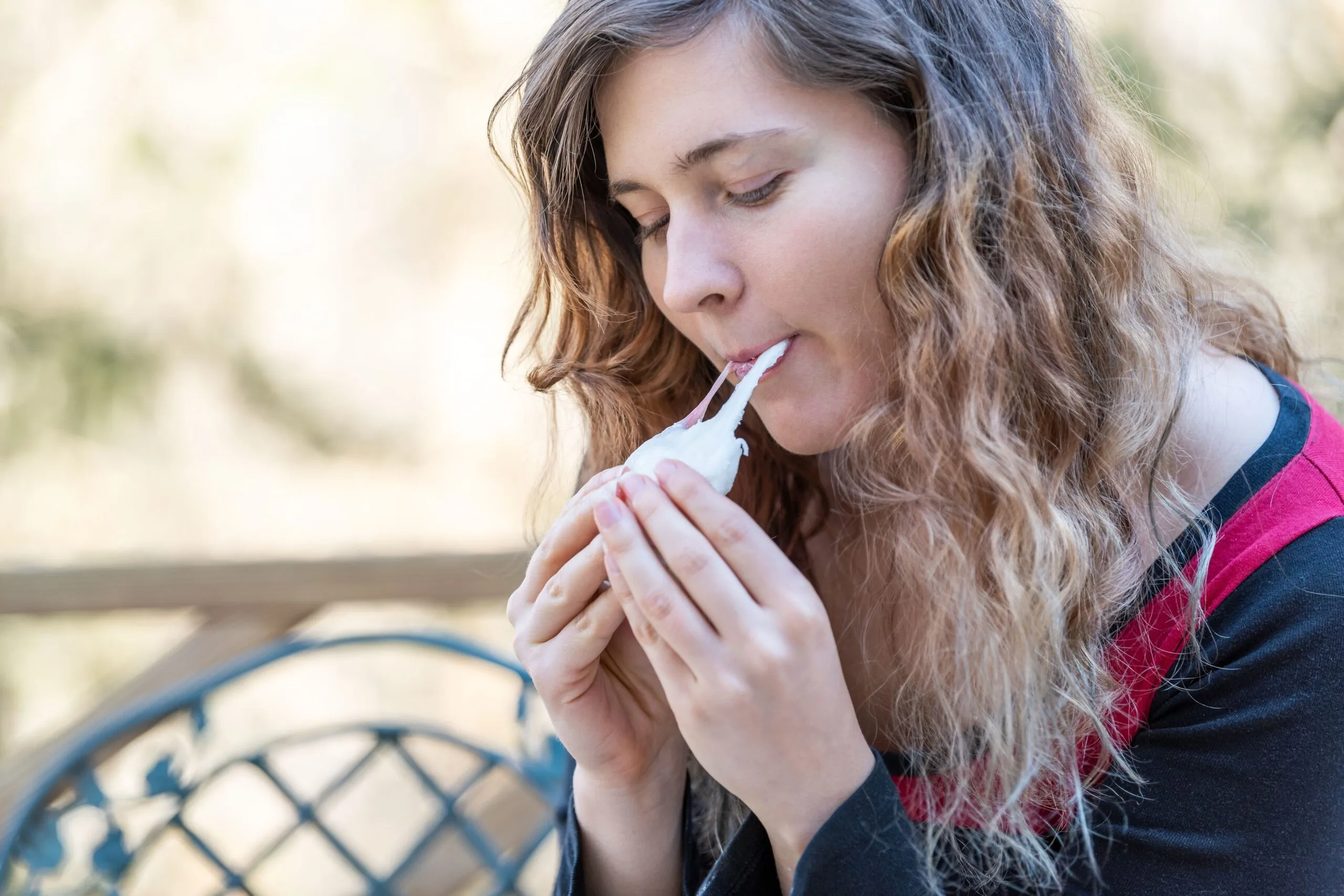
It was sitting on a small plate beside the kettle, softening at the edges where the rice dough had met the warmth of the kitchen. She picked it up with her fingers, turned it over once, then pulled it gently apart. The dough stretched before giving way, leaving that familiar softness between her fingertips.
For a moment, there was no nutrition label to consider, no ingredient list to scan, no calculation about whether something belonged in the category of a “good” snack. There was simply the texture she remembered.
A certain chew can belong to a grandmother’s kitchen. A particular sweetness can bring back a childhood celebration. Something as ordinary as the shape of a snack, the way it feels between the fingers or the first taste can carry an entire history with it.
Which makes changing the way someone eats more complicated than replacing one food with another.
Wellness advice often treats this as an uncomplicated exchange: remove the indulgence, find the healthier substitute, move on. But food does not always work that neatly. What looks like a sweet treat on a nutrition label can also be ritual, memory, culture, comfort or simply one of the small pleasures that makes an ordinary Tuesday feel less ordinary.

Keeping the Comfort, Rethinking the Recipe
At just 23, the founder of Made for MeiMei was diagnosed with diabetes and high cholesterol. Suddenly, something as simple as a snack needed to be looked at more closely.
For the founder, mochi was one of those foods.
Traditionally, mochi was made by pounding glutinous rice until it was soft, stretchy, and chewy. This colorful dessert has seen numerous transformations over the years. For generations, it has been connected to festivities, rituals, and, well, everyday life. Rather than merely concluding that mochi was no longer relevant in his life, the founder started to consider how this cherished dessert could be made differently.
The experimenting eventually became Made for MeiMei, a San Diego-based food brand built around rethinking what can go into a familiar food without losing what made it familiar in the first place.
When “Healthy” Isn’t Quite an Explanation
The word ‘healthy’ has become strangely slippery. This word, along with other terms like “natural,” “protein-packed,” “low-sugar,” “functional,” “clean,” and “better for you,” is prominently displayed on foods in every supermarket.
Some of these labels may be useful, but they can also make a simple snack surprisingly complicated to understand.
The brand’s Ube Mochi brings together the traditional chewiness of rice dough with roasted sweet potato, coconut milk, chicory root fiber and organic pumpkin seed protein.

The Stuff Inside Matters
Made for MeiMei’s Ube Mochi starts with sweet rice flour, keeping the soft, chewy dough that makes mochi recognizable. Inside, roasted sweet potato and coconut milk create the creamy filling, while chicory root fiber and organic pumpkin seed protein contribute fiber and plant protein.
The color comes from Korean chestnut sweet potato and Okinawan purple sweet potato, ingredients that give the mochi its distinctive purple hue and flavor often associated with ube. There is an important distinction here, though. Ube is a purple yam with deep roots in Filipino food culture; purple sweet potato is something different. It may seem like a small detail, but food becomes more interesting, and wellness language more trustworthy, when those distinctions are allowed to remain.
The nutritional profile is part of the reconsideration, too. Each ounce contains 3 grams of plant protein, 2 grams of fiber and 4 grams of sugar. Monk fruit provides sweetness.
None of this turns mochi into a meal, nor does it need to. The appeal lies somewhere between the familiar and the reconsidered: a food that still feels soft, sweet and chewy, while its recipe has been given another look.

A Better Way to Read a Snack
Perhaps the most useful habit is also the simplest: read the food itself before reading the promise on the front of the packet. A few seconds with the ingredient list and nutrition panel can tell a reader more than words such as “healthy” or “clean” can on their own. Look at what the food is made from, notice the protein, fiber and sugar, and consider whether the portion makes sense for the moment it is being eaten.
There is no need to turn every snack into a nutritional calculation. The point is simply to become a little more curious. A food can be enjoyable and still deserve a closer look. Sometimes that small pause is enough to make a choice feel less like following a wellness rule and more like knowing what is being eaten.
Sometimes the Familiar Is Worth Keeping
The piece of mochi beside the kettle was never just a snack.
It carried the texture of something familiar; the kind of softness that can make a food recognizable before its flavor has even registered. That matters because changing the way someone eats is rarely only about changing ingredients. Food can hold family, culture, habit and memory in ways that no nutrition label can account for.
That does not mean every familiar food needs to be remade, or that a different recipe automatically makes a food better. It simply leaves room for another way of thinking about wellness: one that asks what can be changed without losing the part that made something worth returning to in the first place.
That is what allows the idea behind Made for MeiMei to extend beyond the mochi itself. The experiment was not to make a childhood favorite disappear from the table, but to reconsider what could go into it while preserving the soft, sweet, chewy experience that gave it meaning.
There is something quietly useful in that distinction. Wellness does not always have to arrive as a replacement, a restriction or a food that announces itself as virtuous. Sometimes it can be a familiar thing, reconsidered.
The kettle has gone quiet. The plate is still there. When the mochi is picked up again, there is no need to choose between what it has always meant and what it has become.
There is simply that first softness, the slight resistance beneath the fingers, and then the chew.