

It was already evening. She was still sitting in her parked car. The engine was off, her bag was on the passenger seat, and she had already arrived home. She just hadn’t gone inside yet.
She was taking a few minutes before walking through the door.
During the day, there had been meetings, errands, emails, decisions, conversations and a running list of things that still needed doing. Now, for the first time all day, nobody was asking anything of her, and that was when she noticed how difficult it was to simply sit still.
It was a small moment, but a revealing one: after moving from one demand to the next all day, slowing down suddenly felt unfamiliar.
Sleep can work in much the same way.
Getting into bed may mark the end of the day’s schedule, but it does not necessarily mark the end of everything the day has set in motion. The mind may still be sorting through conversations. The body may still feel physically tense. Tomorrow’s responsibilities may already be taking up space.
Perhaps the better question is not only, “What happens at bedtime?” It is also, “What has been carried there?”
Better sleep may begin earlier than many people realize, with the small opportunities throughout the day to pause, move, decompress, reconnect and create a little more space between activity and rest.

What Can Make Sleep Feel Difficult?
Occasional difficulty sleeping is familiar to many people. The reasons vary from person to person, and sometimes there may be an underlying physical or psychological issue that needs professional attention.
For others, though, an exhausting workday, never-ending notifications, upsetting news, family responsibilities, unfinished tasks, stimulating entertainment, or constant self-talk can leave little space to mentally unwind. When everything around us finally quiets down, thoughts that were pushed aside during the day may become harder to ignore.
A useful question is: What is being carried into bedtime? The answer could involve physical tension, emotions that haven’t been fully processed, information overload, worry about tomorrow, or simply a lack of transition between activity and rest.
Recognizing potential patterns can be a first step toward making small, realistic adjustments.
Sleep isn’t shaped by bedtime alone. The body’s internal clock responds to cues throughout the day, including light exposure, activity, and regular patterns of waking and sleeping. Time spent awake also contributes to the buildup of sleep pressure. That means the conditions created during the day can be part of the larger picture when nighttime arrives.
Sleep Hygiene Still Matters
Creating supportive sleep habits does not have to mean following a complicated routine every evening.
Basic sleep hygiene for some might include keeping a reasonably consistent schedule, creating a comfortable sleeping environment, being mindful about evening stimulation, developing a predictable wind-down period, and limiting caffeine later in the day.
Sleep hygiene does not need to become another source of pressure.
For someone already struggling with sleep, a complicated list of rules can make bedtime feel like something that needs to be perfected. Instead, a more sustainable approach would be to identify one or two changes that feel manageable to do and go from there.
A calming evening ritual could involve activities such as reading, gentle stretching, journaling, quiet music, meditation, or breathing practices.
The goal is to create conditions that help make the transition to rest feel easier.
How Daytime Habits Can Support Better Sleep
Instead of treating sleep as something that begins at night, it can be useful to look backward through the day.
Apart from asking, “What should be done at bedtime?”, one might also ask:
- How much mental stimulation has been present today?
- Has there been an opportunity to pause?
- Has the body had a chance to move?
- Has there been meaningful connection with other people?
- Has there been time outdoors?
- What information has occupied the mind?
- Have difficult emotions been acknowledged or continually pushed aside?
- What experiences have felt genuinely restorative?
These questions are not intended to diagnose or solve sleep problems. Instead, they simply encourage greater awareness of the conditions surrounding a person’s daily experience leading up to sleep.
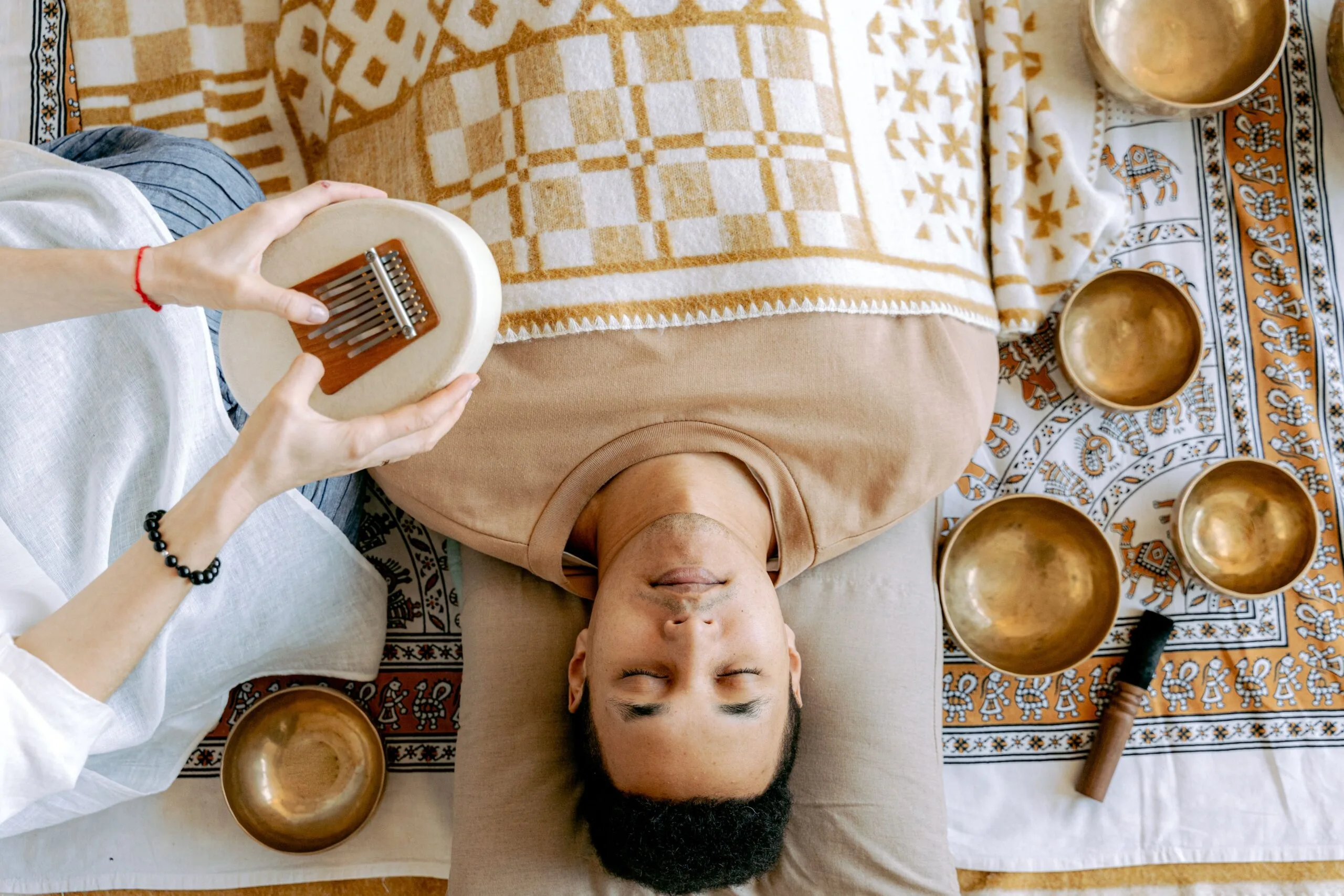
For some people, creating that space for restoration involves practices designed specifically to encourage stillness and body awareness. Reiki is one such practice.
What Is Reiki?
Reiki is a Japanese practice traditionally associated with the idea of a universal life force or energy.
During a Reiki session, a practitioner places their hands lightly on or just above different parts of a person’s body. Reiki is traditionally based on the belief that an energy known as ‘ki’ flows through the body, and practitioners seek to support a sense of balance through hands-on or hands-near practice.

Release, Rest, and Restoration
Odonata Reiki Healing Arts, founded by wellness educator and Reiki Master Gina Ferrara, focuses on three complementary ideas: deep rest, release, and restoration.
Deep rest can mean creating opportunities to move away from constant activity. That could involve meditation, quiet time, a body-awareness practice, or doing less.
Release involves finding ways to put down what has built up during the day. Journaling, breathwork, movement, reflection, or conversation may offer ways to acknowledge experiences rather than carrying them into the evening.
Restoration focuses on what replenishes a person. That might include creativity, laughter, meaningful relationships, time outdoors, spiritual practices, comforting experiences, or activities that bring feelings of pleasure and connection.
These three ideas offer a broader way of thinking about rest: rest does not always look like sleep.
Someone can get a full night’s sleep and still feel as though they need more space for emotional or mental restoration.
Taking the Practice Further: Reiki Certification
For some people, exploring Reiki can become a practice they want to understand more deeply and incorporate into their lives.
Odonata Reiki Healing Arts offers Reiki certification training based on the Usui Shiki Ryoho method, with progressive levels of study. Level 1 introduces Reiki history, hand positions, self-Reiki, attunement, and practice, while Level 2 builds on that foundation with additional training and practitioner-focused guidance.
Private virtual certification and mentoring are also available, along with a Master Level pathway for those who want to deepen their practice and learn how to teach Reiki to others.

An Accessible Starting Point for Sleep Education
For people interested in exploring these ideas further, Odonata Reiki Healing Arts offers a free class, “Let’s Get Back to Sleep!”.
The class explores why sleep might become difficult when the mind remains busy, the role of basic sleep hygiene and routine, and how daytime stress may carry into the evening. It also introduces ideas around release, restoration, and practical support tools.
Included in the session is a guided body scan incorporating Reiki energy and sound healing, along with dedicated time for questions and an introduction to Ferrara’s 30-day program.
These resources are positioned as educational and supportive, not as a replacement for professional care.
A Four-Week Approach to Everyday Sleep Support
For those interested in a more structured experience, Ferrara also offers “Sleep for Real Life”, a 30-day program that focuses on the connection between daytime experiences and nighttime rest.
It is intended for people who wake up during the night with a busy mind, as well as those who want practical support for creating greater calm and restoration in their daily lives.
This four-week program contains guided instruction, meditation practices, practice calendars, a program manual, and additional supportive materials and resources. Some of the practices include gratitude, visualization, Reiki-based support, and sleep meditations intended for nighttime waking.
The program is designed to be self-paced, allowing participants to move through the material according to their own schedules.
Looking Beyond the Bedroom
Sleep does not begin when the lights go out. In some ways, the transition starts much earlier, in the space between one demand and the next, in the decision to step away from a screen, take a breath, move the body, spend time outside, or simply stop for a moment before moving on.
The goal isn’t to make every day perfectly calm or every night perfectly restful. It may simply be to notice what is being carried from one part of the day into another, and to find small opportunities to put some of it down.