

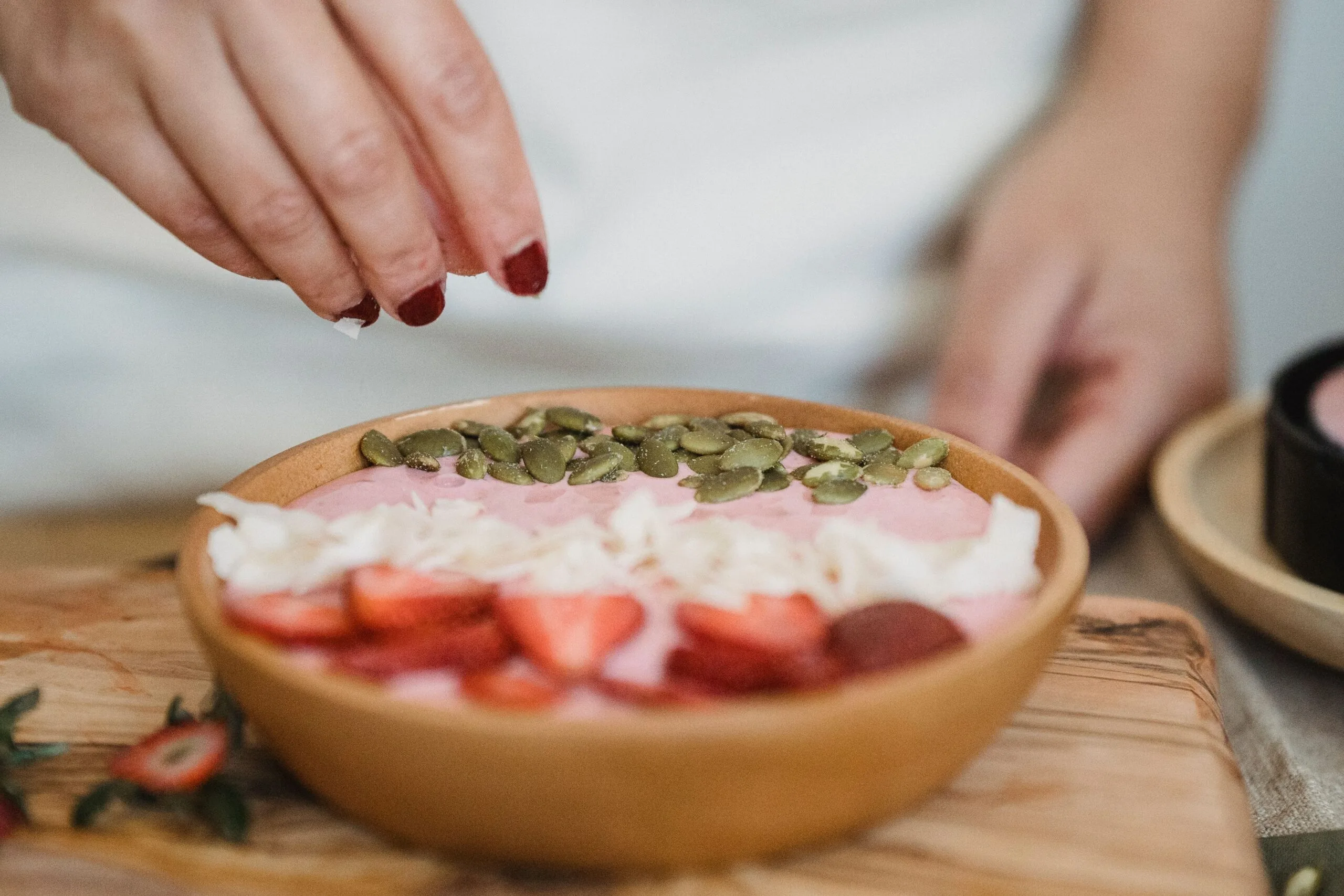
The yogurt is finished before you remember you were eating it. Your phone is in one hand, the spoon in the other. The kettle has gone cold again. Nothing about the morning looks particularly unhealthy. It just looks like a morning.
That is often where the story of gut health really begins; in these forgettable little moments when we eat whatever is closest, move on to the next task, and don’t often stop to consider what is happening farther down the line. The gut, of course, does not forget so easily.
Long after the cup has gone into the recycling bin and the kitchen has been cleared, trillions of microorganisms are getting to work on what we have eaten. Some of the food that passes through us is not really for us at all. It becomes fuel for the microbial community living inside the digestive tract.
We have made gut health surprisingly complicated. Somewhere between the probiotic aisle, the supplement drawer and endless advice about what to eliminate, the basic question has become easy to miss: what are we actually feeding the microbes already living inside us?

What Your Breakfast Leaves Behind
Fiber is valuable nourishment for the community of microorganisms that live inside the digestive tract. The gut microbiome is an ecosystem. What we eat influences which microbes have the resources to thrive, while those microbes help transform parts of our food into compounds the body can use.
A colorful plate filled with vegetables, fruit, whole grains, legumes, nuts and seeds offers far more than vitamins and minerals. It also supplies different types of carbohydrates and plant compounds that can interact with the microbiome.
The challenge is that modern life does not always make this easy. Even people who care deeply about nutrition can find themselves eating the same convenient breakfast every morning, grabbing something quick between meetings, or discovering at the end of the day that they have barely eaten a vegetable.
Knowing Is Not the Same as Eating Well
There is a tendency in wellness culture to make healthy habits sound simple.
A person can know exactly what a balanced diet looks like and still struggle to put it together when the morning begins late, the children need attention, the inbox is full and dinner has to happen in twenty minutes.
Knowing what to eat is rarely the difficult part. Getting it onto the plate on a Wednesday morning is.
Pendulum™ approaches gut health with that practicality in mind. The brand doesn’t suggest that people completely reinvent the way they eat. Instead, it has developed products designed to fit alongside everyday food.
One example is Gut Fuel™ Pouch, a mix-in supplement that provides six grams of fiber per dose alongside diverse polyphenols. Its formula includes oat beta-glucan and baobab, grape seed extract, and resistant potato starch. Pendulum™ describes the resistant potato starch as a substrate that can support beneficial microbes, including Akkermansia.
Gut Fuel™ can be stirred into cool drinks, smoothies, overnight oats, chia pudding, yogurt or other foods.

The Tiny Community at the Table
The more scientists learn about the microbiome, the harder it becomes to think of digestion as a matter of food going in and waste coming out. The gut is home to an enormous community of microorganisms that interact with the foods we consume and with one another. Some produce short-chain fatty acids such as butyrate as they ferment dietary components, while others interact with the gut environment in different ways.
One bacterium that has attracted considerable scientific interest is Akkermansia muciniphila. Pendulum™ has built much of its probiotic research and product development around it, describing it as a ‘keystone’ bacterium connected with the gut barrier and metabolic function.
That does not mean a single bacterium is a magic answer to every aspect of health. The microbiome is far too complicated for that. It is better understood as an ecosystem in which diversity, diet, lifestyle and the broader environment all matter.
Gut Health Is Bigger Than Digestion
The conversation around gut health has also started to move beyond bloating and bathroom habits. Researchers are increasingly interested in the relationship between the gut microbiome and metabolic processes, including the way the body handles nutrients and produces compounds involved in energy regulation. This is one reason the conversation around probiotics has expanded beyond the simple idea of adding ‘good bacteria.’
Metabolic Daily, from Pendulum™, is formulated as a multi-strain probiotic containing Akkermansia muciniphila, Clostridium butyricum, Anaerobutyricum hallii, Clostridium beijerinckii, and Bifidobacterium infantis. The company describes these strains in relation to digestive and metabolic health, including their potential contribution to the production of short-chain fatty acids such as butyrate.

Make the Good Choice Easier
There is nothing particularly impressive about adding berries to oatmeal. No one posts it. No one needs a 30-day challenge to remember it. But these are the habits that tend to survive.
An ordinary morning might mean sitting down for breakfast instead of eating at the kitchen counter. It might mean adding berries to oatmeal. For someone who wants additional support, it could mean stirring a fiber supplement into a morning smoothie or taking a targeted probiotic consistently.
The company’s philosophy fits naturally into that perspective. The company describes itself as focused on next-generation probiotics and was co-founded by CEO Colleen Cutcliffe, PhD, and a team of scientists. The idea is to bring microbiome science into habits that can actually fit into ordinary life.
Let Health Become Ordinary
Sometimes caring for yourself means eating a proper meal. Sometimes it means admitting that a routine has become too complicated to keep up.
A spoonful of oats, a handful of berries, a bowl of lentils, a crunchy salad, a fermented food, or a little more variety across the week. If supplements such as Gut Fuel™ or Metabolic Daily become part of that routine, their greatest value may be that they make the intention easier to keep.
Maybe that is the part worth remembering the next time you find yourself standing at the kitchen counter, finishing breakfast while reading a message on your phone. So, tomorrow morning, maybe the goal is not a better breakfast. Maybe it is simply noticing what is already there. The oats. The berries. The half-finished yogurt. The food we reach for without thinking. Somewhere beyond the stomach, a much larger community is paying attention too.