

In recent years, conversations around burnout, mental fatigue, and stress regulation have become increasingly common. Many people no longer feel simply “busy.” They feel mentally overloaded, emotionally drained, and unable to fully switch off, even during rest.
Part of the reason is that overstimulation has become normalized in modern life. Constant notifications, multitasking, endless scrolling, and always-on digital routines keep the brain continuously engaged with very few opportunities for true mental recovery.
As modern routines become faster and more fragmented, many people are beginning to realize that the problem is not just stress itself, but the lack of meaningful transitions between focus, stimulation, rest, and recovery.
The boundaries between different parts of life begin to disappear.
And when life feels like one continuous stream of notifications, decisions, conversations, and unfinished thoughts, the nervous system never fully resets.
That constant state of alertness is why so many people feel mentally exhausted even after resting.
It’s also why more people are turning toward small daily rituals, especially mindful tea drinking, as a way to create structure, calm, and balance throughout the day.
That’s where Château Brew Tea House enters the conversation. Not simply as a tea brand, but as a modern ritual designed to help people transition more intentionally between states of energy, focus, and rest.

Why Modern Life Causes Mental Exhaustion and Burnout
Modern routines rarely allow the mind to fully stop.
Most people wake up and immediately begin consuming information:
- Emails
- Messages
- Notifications
- News
- Social media
Before the brain has even settled into the day, it is already reacting.
The same pattern continues throughout the day. People work while switching between tabs, eat while multitasking, and attempt to relax while still checking their phones every few minutes.
Even downtime has become overstimulating.
According to growing conversations around stress, burnout, and sensory fatigue, the problem is not always workload alone. Often, it is the absence of clear mental transitions.
There is no clean separation between:
- Work and home
- Productivity and recovery
- Attention and rest
As a result, the brain remains partially engaged all day long.
This is why modern fatigue often feels different from traditional exhaustion. Many people are not simply tired; they are overstimulated without closure.
Why Daily Transitions Matter for Stress Recovery
Human beings naturally function better with rhythm.
For most of history, life contained built-in pauses:
- Morning routines
- Shared meals
- Evening wind-downs
- Social rituals
- Boundaries between work and home
These moments helped the nervous system shift between different states throughout the day.
Today, many of those transitions have disappeared.
Instead of gradually entering the day, people move from sleep directly into stimulation. Instead of fully leaving work behind, many continue mentally replaying conversations and unfinished tasks late into the evening.
Over time, this creates a feeling many people struggle to describe:
- Mentally “stuck”
- Emotionally flat
- Constantly alert
- Unable to fully relax
This is one reason mindfulness practices and intentional routines are becoming increasingly important in modern wellness culture.
How Tea Rituals Help Reduce Stress and Mental Overload
Tea offers something daily life rarely allows: pause.
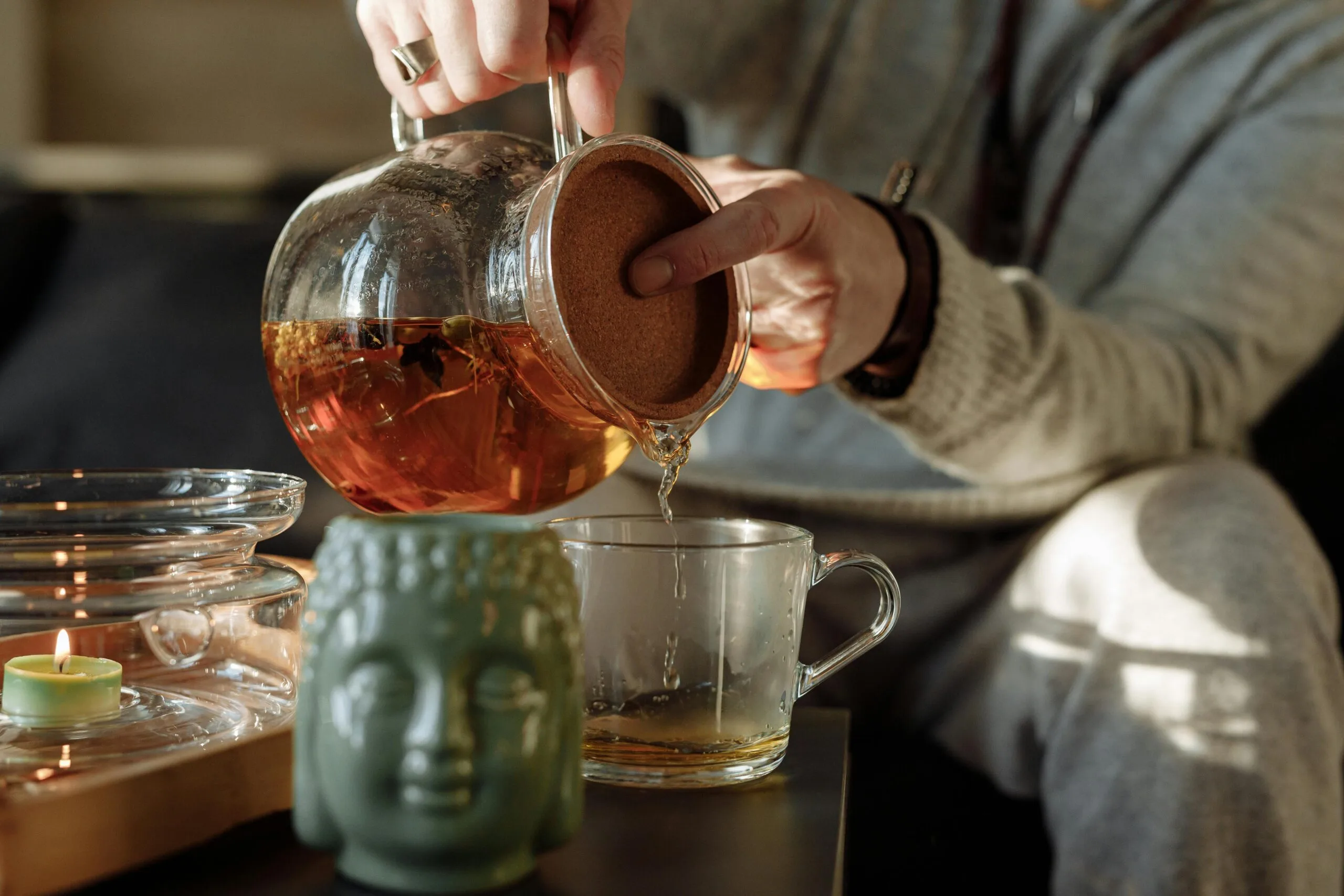
Unlike fast, automatic habits, tea naturally slows the process down. Water must heat. Tea leaves must steep. Attention must shift, even briefly, away from constant stimulation.
That small interruption matters.
Mindful tea drinking creates a natural transition point in the day, a moment where the body and mind are encouraged to move from one state into another.
This is part of the philosophy behind Château Brew Tea House and its mindful tea blends.
Rather than positioning tea as just another beverage, the brand focuses on helping people create intentional daily habits:
- Calmer transition into the evening
- Steadier transition into the morning
- Moments of mental reset during overstimulating days
The Evening Problem: Why So Many People Struggle to Mentally “Switch Off”
One of the biggest challenges in life is that the day rarely feels finished.
Work may technically end, but mental processing often continues for hours:
- Replaying conversations
- Thinking about unfinished tasks
- Checking notifications
- Planning tomorrow
The body becomes still, but the mind remains active. This creates a form of cognitive fatigue that sleep alone does not always solve.
Many people do not necessarily need stronger sleep aids. They need better transitions out of mental activity.
That is where a calming evening tea ritual can become meaningful.
Strawberry Vine Tea and the Importance of an Evening Tea Ritual
Strawberry Vine Tea from Château Brew Tea House is designed to support this shift from activity into rest.

Its profile is intentionally soft:
- Berry-forward flavor
- Light floral undertones
- Gentle natural sweetness
Rather than creating an overwhelming sensory experience, the blend encourages mental quietness and slower pacing.
Many people describe evening tea rituals as calming because they help reduce cognitive noise. Thoughts begin to slow down. Mental loops feel less intense. The nervous system gradually recognizes that the active part of the day is ending.
That distinction matters.
For many people, the challenge is not simply falling asleep. It is mentally finishing the day. A consistent evening tea routine can help create that sense of closure.
Why Modern Mornings Feel So Abrupt
Mornings are often treated like an energy problem.
People search for:
- More focus
- More productivity
- More stimulation
- Faster energy
But the deeper issue is often how suddenly the day begins.
Alarm clocks, emails, social media, and decision-making all arrive within moments of waking up. The nervous system is suddenly pushed from rest into immediate cognitive demand.
That abrupt shift is one reason modern mornings feel stressful before the day has even fully started. Instead of easing into focus, people are pushed directly into cognitive overload.
Chai Villa Tea and Structured Morning Energy
Chai Villa Tea offers a more grounded approach to morning energy.
Made with black tea, cinnamon, ginger, and cloves, the blend is designed to create warmth and gradual activation rather than sharp intensity.
Instead of creating a rapid spike in stimulation, the experience feels steadier and more structured.
This matters because sustainable focus is often less about intensity and more about pacing.
Many people are now searching for morning tea rituals that support:
- Calm focus
- Stable energy
- Intentional mornings
- Reduced caffeine crashes
That shift reflects a broader movement toward more balanced daily routines.

The Real Issue Isn’t Lack of Energy; It’s Lack of Transition
When you strip away wellness trends and productivity language, the deeper issue becomes clear: Modern life has weakened the transitions between mental states. Work blends into rest. Rest blends into distraction. Focus blends into cognitive overwhelm. Without intentional pauses, the body struggles to recognize when to slow down, reset, or recover.
That is why small rituals matter more than many people realize.
Tea rituals were never only about tea itself. Historically, they represented arrival, pause, conversation, reflection, and closure. Those functions remain valuable today because modern life rarely creates those moments naturally anymore.
The Mental Health Benefits of Slowing Down Small Moments
Not every wellness solution needs to be sensational.
Sometimes the most meaningful changes come from slowing down small parts of the day consistently.
Simple intentional living habits can help reintroduce contrast into daily life:
- Preparing tea
- Sitting without screens
- Pausing between tasks
- Creating evening routines
- Easing into mornings gradually
And contrast is important.
The nervous system needs to recognize the difference between:
- Activity and rest
- Focus and recovery
- Stimulation and calm
Without those distinctions, every part of the day begins to feel emotionally similar.
Relearning Rhythm in Everyday Life
At first, a tea ritual may seem small. You simply pause for a few minutes. You slow down long enough to notice temperature, flavor, and timing.
But over time, those moments begin creating something many people are missing:
- Rhythm
- Pacing
- Closure
- Mental separation between parts of the day
That is the deeper value behind restorative tea routines. Not productivity optimization. Not performative wellness. Just intentional moments that help daily living feel less fragmented.
Why Tea Rituals Matter More Today
As digital overstimulation continues shaping everyday routines, more people are recognizing the importance of intentional recovery practices. Mindful tea rituals offer a simple way to create healthier transitions between stress, focus, rest, and emotional recovery. In a culture built around constant stimulation, small moments of pause may be essential for restoring balance and preventing long-term burnout.