
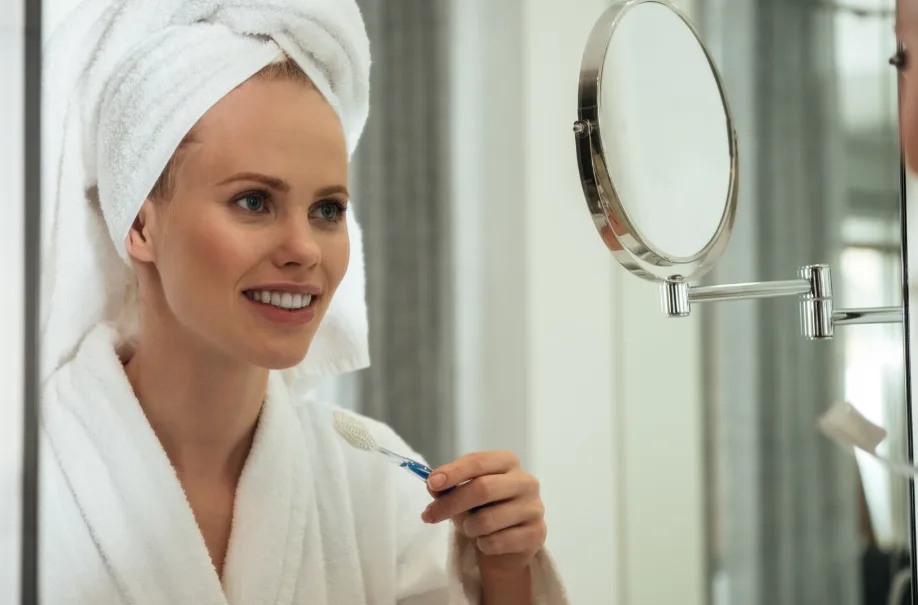
In the incredibly optimized world of wellness, a strange contradiction remains. An average bathroom counter serves as a museum of progress, cold-pressed oils, glass jars of vitamins, and biocompatible serums. Yet, hidden away in the corner is usually a crumpled, multi-layered plastic tube of toothpaste, a design that has not notably changed in well over a hundred years.
This is personal care’s biggest blind spot. While we carefully scrutinize the additives in the food and the chemicals in our skincare, the substance we put in our mouths twice a day, the most absorbent part of the body, is treated as an afterthought. It remains one of the last unchanged categories in the modern home. But as the environmental and health costs of traditional paste become harder to ignore, a change is happening toward a much simpler, drier alternative, the tablet.

The Hidden Logistics of Water
Traditional toothpaste is an environmentally inefficient system disguised as convenience. To get that familiar squish onto a toothbrush, manufacturers fill tubes with approximately 20%-40% water. This water does not actually help clean teeth. It is there purely to create a texture that can be squeezed through a plastic nozzle.
Water is heavy. Shipping millions of gallons of it across the world requires huge amounts of fuel, larger trucks, and an enormous carbon footprint. We are basically burning copious amounts of fossil fuels to transport a liquid that already flows from every tap. When combined with the fact that most toothpaste tubes are made from laminated plastic and aluminum, making them close to impossible to recycle, you have a supply chain built on outdated waste. The industry has long prioritized the low cost of shipping bulk liquids over the long-term health of the planet.
Why a Tablet Works Better
Switching from paste to a pressed tablet is not only about changing the container; it is a complete rethink of material science. Creating a dry tablet that performs as well as a lab-grade paste requires a sophisticated understanding of how minerals react without liquid stabilizers.
The benefits of removing water from the formula include:
- No Harsh Preservatives: Without water, there is no breeding ground for bacteria, completely removing the need for parabens.
- Sulfate-Free: Most tablets ditch the Sodium Lauryl Sulfate (SLS), the foaming agent often linked to mouth sores and irritations.
- Active Potency: Ingredients remain stable and dry until the very moment they touch your saliva, ensuring a fresh activation every time you brush.
- Precision Dosage: Each tablet is a perfect, pre-measured amount, preventing the over-squeeze waste common with tubes.

Streamlining the Footprint
Sustainability in personal care is generally discussed in terms of green ingredients, but the true impact is found in the logistics. This is where the tablet model wins. By stripping away the water and the bulky tube, the product is reduced to its absolute essence.
- Lighter Travel: No messy leaks in the gym bag or the luggage.
- TSA Compliance: Since they are not liquids, they bypass airport security restrictions completely.
- Space Efficiency: Reclaiming drawer and counter space from clunky, half-squeezed tubes.
The Mineral Focus
The flagship entry point for many people making the switch is Whytabs Original. It is created to feel recognizable, offering a crisp, refreshing mint flavor, but the science behind it is a significant step up from average store-bought brands.
The heart of the formula is 5% concentration of nano-hydroxyapatite (n-HAp). While fluoride supports surface remineralization at the tooth surface, n-HAp is a biocompatible mineral that actually makes up roughly 97% of our enamel. Because the particles are nano-sized, they can:
- Penetrate microscopic gaps in the teeth.
- Rebuild the mineral structure of the enamel from within.
- Effectively plug the tubules that cause tooth sensitivity.
- Provide a natural whitening effect by smoothing the tooth surface.

Redefining the Mouth’s Microbiome
For those who are looking for a more comprehensive approach, the Whytabs Plus version moves into the territory of what could be called oral skincare. Ironically, many people treat oral care as a process of constant sterilization, scrubbing and bleaching until every living thing is gone. But your mouth isn’t a surface to be sanitized; it’s a living, breathing ecosystem that actually needs good bacteria to thrive. The PLUS version treats this environment more like a skincare routine. It uses prebiotics to feed the microbes that keep your breath fresh naturally, while postbiotics help keep everything in balance and help reduce gum inflammation.
Putting the microbiome first is a massive departure from the old scorched-earth approach of alcohol-heavy mouthwashes and gritty pastes. Instead of just killing everything in sight, this formula works with your biology. The result is a smooth, polished clean that feels a lot like that slick sensation you get right after a professional dental scaling. It shifts the focus from just avoiding a bad report at the dentist to actively supporting your long-term health.
Designed for the Long Haul
There is something to be said for the environment we build inside our homes. The visual noise of half-empty, mangled toothpaste tubes is an unadorned contrast to a well-curated living space. Switching to glass jars is an aesthetic choice, but it is also a psychological one.
These jars are created to be a permanent fixture on a counter or in a travel kit. They signal a move away from the disposable culture that has dominated the last few decades. The ritual of refilling a jar from a compostable bag transforms a mundane chore into an intentional, sustainable habit. It feels mindful rather than reactive.

Closing the Wellness Gap
The wellness routine is finally starting to feel like it makes sense. By cutting out the hidden waste that usually comes with the oral care industry and replacing it with a model that’s lighter, smarter, and backed by better science, the gap between what we value and how we actually live is closing. Personal care doesn’t need to be heavy or wasteful; it can be as simple as a dry tablet and a glass jar.
The era of shipping water in plastic tubes is slowly becoming obsolete. It’s being replaced by a much more refined, minimalist approach that treats oral health with the same kind of sophistication we already give the rest of our bodies. Ultimately, the tube now feels like a temporary solution, while the tablet represents a more refined long-term alternative.