
The fabled Emperor Shen Nung (the same person who is supposed to have developed tea) allegedly used Cannabis as a medication for the first time between 2696 and 2737 BC in China. Nung was a philosopher, farmer, and hemp aficionado, and his description of the plant’s ‘yin energy’ for malaria, diarrhea, constipation, and rheumatic aches is regarded as the earliest pharmacopeia entry (an encyclopedia of drugs describing their effects and applications). In Africa, there is evidence of cannabis being used medicinally in The Egyptian Ebers Papyrus – a surviving medical document dating to around 1550 BC – for fever, pain, and uterine contraction. Dioscorides, the private physician of Roman Emperor Nero, described it as a cure “for pains of the ears” across the Mediterranean. Meanwhile, evidence suggests that the Arab world employed it as a pain reliever, anti-inflammatory, and anti-epileptic from the 8th through the 18th centuries. Given that the plant is not native to Europe, there is no evidence of its usage in the West until the 17th century, when international commerce began to rise. In his work The Anatomy of Melancholy, English Clergyman Robert Burton proposed cannabis as a therapy for sadness in 1621. However, it was Irish physician William Brooke O’Shaughnessy who pioneered medical testing in Western medicine.

What Is The Difference Between CBD, Hemp, and Marijuana?
Both hemp and marijuana are members of the same species, Cannabis sativa, and their appearances are identical. Within a species, though, significant variations can occur. After all, both great Danes and chihuahuas are dogs, yet they have significant distinctions. The psychoactive component of hemp and marijuana, tetrahydrocannabinol, or THC, distinguishes them. Hemp has 0.3% or less THC, implying that hemp-derived goods do not contain enough THC to produce the “high” associated with marijuana. CBD is a substance present in cannabis. There are hundreds of such chemicals, known as “cannabinoids,” which interact with receptors involved in a range of processes such as hunger, anxiety, sadness, and pain. THC is a cannabinoid as well. CBD has been shown in clinical trials to be beneficial in the treatment of epilepsy. Anecdotal evidence shows it can assist with pain and even anxiety, however scientific data is mixed. Marijuana, which contains both CBD and more THC than hemp, has shown therapeutic advantages for those suffering from epilepsy, nausea, glaucoma, and maybe even multiple sclerosis and opioid addiction. However, federal legislation severely limits medicinal marijuana research. The Drug Enforcement Agency classifies cannabis as a Schedule 1 drug, which means it is treated as though it had no recognized medicinal purpose and a significant potential for misuse. Scientists aren’t sure how CBD works or how it combines with other cannabinoids like THC to give marijuana its medicinal benefits.
Another significant distinction between hemp, marijuana, and CBD is how the law regards them. Despite the fact that recreaFational marijuana is now legal in 15 states, it is still prohibited on a federal level in the United States. Technically, persons in possession of marijuana in a legal pot state might still face federal penalties, and transporting cannabis over state lines is forbidden. The 2018 Farm Bill, on the other hand, makes it legal to produce and sell hemp in the United States. Because THC levels do not exceed 0.3%, hemp-derived CBD should be legally allowed in all states, one would suppose. CBD, on the other hand, exists in a legal limbo. Several states, like Nebraska and Idaho, still classify CBD oil as a Schedule 1 drug, similar to marijuana.
CBD In The Retail Realm
CBD is available in a variety of forms, including edibles, tinctures, and oils, to mention a few. Here are some of the most frequently used words in the shop to describe CBD items. While the phrases “CBD tincture” and “CBD oil” are sometimes used interchangeably, they are not the same. Tinctures are created by soaking cannabis in alcohol, whereas oils are created by suspending CBD in a carrier oil such as olive or coconut oil. The term “pure” CBD, also known as “CBD isolate,” refers to CBD that has been stripped of all other cannabinoids. Terpenes and flavonoids, which give marijuana its pungent scent and earthy flavor, have also evolved.

How Do You Use CBD Oil?
Swallowing CBD oil allows it to travel through the digestive system and be metabolized by the liver, allowing its active ingredients to be distributed throughout the body over several hours. CBD oil is typically consumed in the form of drops, tinctures, and capsules, or it is mixed with foods and beverages such as gummy candies and coffee. CBD may also be consumed as a powder, which is obtained by eliminating all plant materials to expose a crystalline powder with no taste or odor. Another method is to apply a few drops of oil or tincture, or a little amount of powder, beneath the tongue and keep it there for several seconds. This permits the active substances to enter the circulation quickly via the mucous membranes of the mouth. CBD-infused products can be applied directly to the skin to alleviate pain and decrease inflammation. CBD may be inhaled by vaporizing the oil or mixing it with e-cigarettes or tobacco and smoking it. CBD enters the circulation quickly through the lungs, bypassing the digestive system. As a result, “vaping” has become a popular method of consuming CBD. However, an unexplained wave of lung damage connected to inhaling goods has prompted the Centres for Disease Control and Prevention (CDC) to advise individuals to stop vaping until they conduct an investigation.
Maine Drops
The Maine Drops team has developed four distinct terpene formulas to be used with their high quality hemp oil in order to improve and efficiently target the various health advantages that full-spectrum hemp oil has to offer. They created hemp oil tinctures packed with additional health compounds using only natural, botanically obtained terpene extracts to successfully aid with: sleep, stress and tension, pain, energy, and focus. Sophie Laird, the creator, began using CBD oil daily in 2017 to understand the hoopla (and, perhaps, to replace her usage of Advil and artificial sleep aids). Sophie realized she was sleeping better, recovering faster from exercises, and managing stress more easily and consistently after just a week. Sophie Laird discovered a lack of diversity when she began exploring CBD oil products. The ones that were accessible were made by a small number of mass producers. Laird made the decision to collaborate directly with successful farmers in Maine to cultivate CBD-rich hemp. She also experimented with organic plant extracts known as terpenes in combination with CBD oil. When these terpenes are combined with CBD, they have potent impacts on our bodies and minds.
Maine Drops: Calm Drops
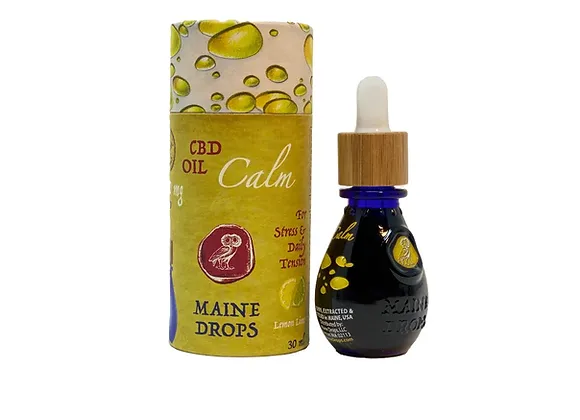

Maine’s Calm Drops Drops are a CBD oil solution flavored with lemon/lime and high in terpenes. They aid in stress relief and mental relaxation. Calm Drops are a natural remedy for stress and anxiety. Calm Drops help people overcome their everyday stress and anxiety. Also, one’s brain, which is prone to overthinking and rushing ideas, calms down. As a result, the body becomes tranquil, hence the name. Begin calming yourself today with only a drop.
Maine Drops: Sleep Drops
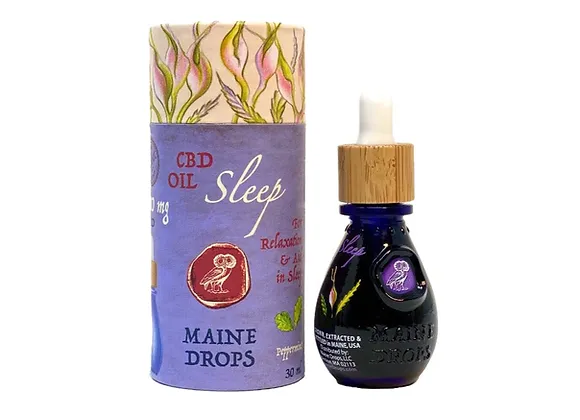
Sleep Drops work wonderfully as a natural sleep aid; each bottle is packed with their high-quality, strong, sustainably farmed CBD oil, which is then blended with sedative and mind-calming terpenes obtained from lavender and hops, before being flavored with a drop of organic peppermint oil. If you’re searching for an all-natural supplement to your evening routine, Sleep Drops are for you – expect an easier transition to sleep, more restorative sleep, and no more sluggish mornings.
Can You Get Stoned With CBD Oil?
CBD oil obtained from hemp is derived from low-THC cannabis plants. This is the CBD that is sold over the counter in health food stores and supermarkets, mixed into lattes at hip coffee shops, and infused into high-end cosmetic products.
Hemp-derived CBD is fueling the CBD frenzy, since it is not intoxicating. What was formerly known as “hippie’s disappointment” is now being accepted precisely because it may produce the soothing benefits of marijuana without affecting your awareness.
How and When Was CBD Oil Discovered?
Even though hemp has been farmed and utilized in a variety of ways by humans for a very long time, we did not fully comprehend its qualities until the last 100 years or so. We are now in a far better position to break down the molecular makeup of the cannabis plant, including CBD, thanks to advances in biology and organic chemistry. Roger Adams developed CBD, an acronym for cannabidiol, in 1940. He extracted CBD and another cannabinoid called CBN (cannabinol) from hemp plants and speculated on the presence of the psychotropic compound THC (tetrahydrocannabinol). Raphael Mechoulam, one of the major names in cannabis science, did not isolate THC until 1964!
The Future of CBD
Large corporations have been cautious to adopt CBD as the business matures from its “Wild West” beginnings. However, as the regulatory situation clears and stabilizes, many corporate giants are expected to try to expand their product lines with CBD and introduce brand-new items that offer up new paths of growth. Companies such as Procter & Gamble, Johnson & Johnson, Coca-Cola, Unilever, and others may enter the CBD industry through acquisitions of existing CBD market leaders. The CBD business is an unstoppable juggernaut in certain aspects. It’s already a multibillion-dollar industry that will only grow as millions more people express their preferences. However, CBD enterprises must still overcome other specific challenges, including getting funding, using ordinary payment processing, and marketing through traditional channels. The FDA’s classification of CBD as a dietary supplement, the industry’s unfettered access to financial services, and an intelligent regulatory framework that improves product quality and safety across the board are critical advances that will eliminate these impediments.
* In partnership with our friends at Maine Drops LLC* Photo courtesy of Maine Drops LLC
* These statements have not been evaluated by the Food and Drug Administration. These products are not intended to diagnose, treat, cure or prevent any disease.
* The information available on ewellnessmag.com, including text, graphics, and other materials is for informational purposes only. Reliance on any information in ewellnessmag.com is at the user’s own risk. Sponsored product placement may appear in the article. The visitor of this website acknowledges that the information available on or through ewellnessmag.com is not and is not intended to be a substitute for professional medical advice. Copyright © 2023 Brawo Press, Inc. All rights reserved.