
A vegan diet, which means excluding all animal products from one’s diet, which includes all meats and dairy (milk, cheese, butter) has gained significant popularity in recent years. Years ago many vegans’ reasons for only eating a plant-based diet, had to do with the ethical (killing animals) and environmental reasoning of how our foods were produced. Over the years, scientific research supports numerous health benefits associated with adopting a vegan lifestyle. A well-planned vegan diet can provide numerous health benefits. It is typically high in fiber, vitamins, minerals, and antioxidants while being low in calories, saturated fat, and cholesterol. This can help reduce the risk of chronic diseases such as heart disease, type 2 diabetes, certain cancers, and obesity.
This type of diet is not a fad, it is a lifestyle. Many celebrities and athletes have been vegan for years; Beyonce, Alicia Silverstone, Natalie Portman, Stevie Wonder, Woody Harrelson, Tobey Maguire, and tennis superstar, Venus Williams, all credit this type of diet to good health, help for chronic conditions, and weight maintenance.
Cutting out all animal products from a diet can be difficult to do 100% of the time. So many prefer to do a “flexitarian” diet. This would mean that the majority, ranging anywhere from 80/20% to 95/5% of one’s diet would consist of plant-based foods for the majority of what they eat daily, while animal products are consumed in smaller quantities and less frequently. Some may equate this to a vegetarian diet, which is mainly vegetables, fruits, legumes, tofu, nuts, and grains, but also allows for the consumption of dairy products and eggs. Since meats provide high amounts of protein, B-12 vitamins, iron, and omega fatty acids.

Reduced Risk of Chronic Diseases
One of the primary benefits of a vegan diet is its association with a lower risk of chronic diseases. Research has shown that individuals who follow a vegan lifestyle have a decreased likelihood of developing heart disease, high blood pressure, type 2 diabetes, certain cancers, and obesity. The abundant consumption of fruits, vegetables, whole grains, nuts, and legumes provides essential fiber, antioxidants, and phytochemicals that promote optimal health.
[restrict]Improved Heart Health
The absence of animal products in a vegan diet inherently leads to a lower intake of saturated fat and cholesterol. As a result, vegans tend to have healthier cholesterol profiles, reduced blood pressure levels, and a diminished risk of heart disease and stroke. A vegan diet’s emphasis on plant-based sources of fats, such as nuts, seeds, and avocados, along with whole grains, helps maintain cardiovascular health.
Weight Management
For individuals seeking weight loss or weight management, a well-balanced vegan diet can be a valuable tool. Plant-based diets are often naturally lower in calories and higher in nutrient density, making them conducive to healthy weight management. The high fiber content found in plant-based foods promotes satiety, aids digestion, and helps control appetite.

Better Blood Sugar Control
The consumption of a vegan diet has shown promising benefits in managing and preventing type 2 diabetes. Plant-based foods with lower glycemic loads and higher fiber content help regulate blood sugar levels and improve insulin sensitivity. This can be particularly advantageous for individuals with diabetes or those at risk of developing the condition.
Enhanced Gut Health
A vegan diet, rich in fiber from fruits, vegetables, whole grains, and legumes, supports a healthy gut microbiome. Fiber acts as a prebiotic, nourishing beneficial gut bacteria and promoting their growth. A balanced and diverse gut microbiome contributes to improved digestion, stronger immune function, and better mental well-being.
Lower Risk of Certain Cancers
Studies suggest that following a plant-based diet, such as a vegan diet, may reduce the risk of certain types of cancer. Colon, prostate, and breast cancers have shown potential associations with plant-based dietary patterns. The abundance of fiber, antioxidants, and phytochemicals found in plant-based foods contributes to this protective effect.
Rockin’ Wellness: Are you ready to do it?
Many people don’t fully understand how to incorporate a plant-based diet into their lives. The stigma around it generally leads people to believe that they will no longer enjoy eating food or being able to indulge in something sweet or a dessert. Rockin’ Wellness Total Body Nutritional Mixes defied this notion by creating one of the original, vegan, plant-based, nutritional chocolate shake mixes. Their signature product is a raw cacao chocolate superfood blend. This delicious, nutrient-rich powder is easily prepared at home as either a smoothie (which is made with ice or frozen fruits and is thicker in consistency) or as a shake (made with milk or plant-based milk, such as almond, soy, oat or rice and is thinner in consistency). Each drink provides daily essential vitamins, minerals, prebiotics, and fiber, plus over 2000mg of omega 3, 6 & 9 fatty acids per serving. Their products are unsurpassed in taste and are definitely more like a decadent treat than a health supplement!
Rockin Wellness Vegan Chocolate Cacao Nutritional Mix
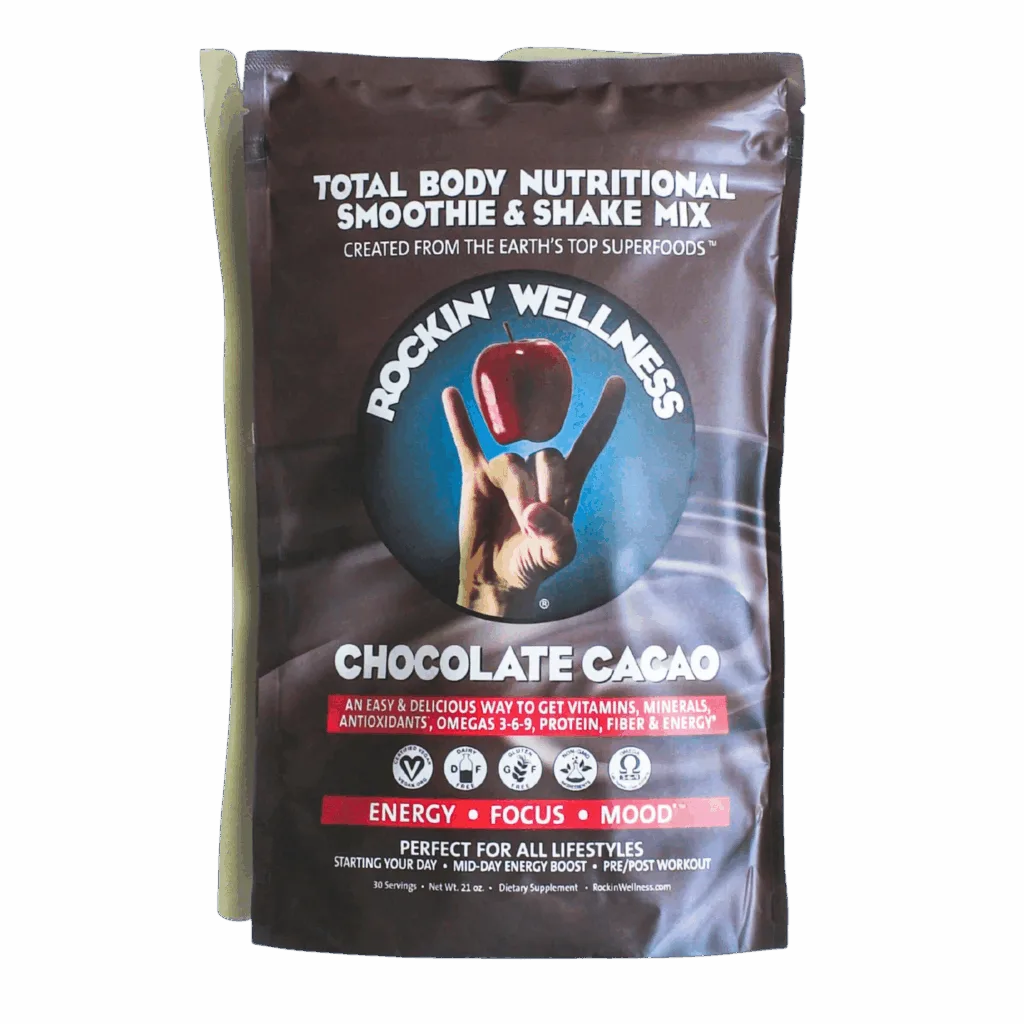

A complete body nutritious smoothie combination called Chocolate Cacao was made with the best superfoods on the planet. The 2000 mg of omega 3, 6, and 9 fatty acids, protein, fiber, and calories are all easily and delectably obtained in this method. This delicious nutritious drink with a chocolate flavor is a great healthy way to start the day.
Undisputed Quality
The integrity of Rockin’ Wellness products is unmatched in the marketplace by using premium, responsibly sourced, and sustainable superfoods that are organically farmed, using only non-GMO, organic, gluten-free ingredients. This was vital to the creator and founder, Seth Luker. He was a stage IV colon cancer fighter that was doing research on the top superfoods to nourish his body from the inside out while going through extensive chemotherapy. Seth’s prior career was as a tour manager for rock bands. His diagnosis and treatment forced him to leave his job abruptly, as he was no longer to physically be on the road touring, as that type of environment was not conducive to his recovery and healing.
Years of his own research and creating different variations of his recipe, lead him to start his journey of changing his health from the inside out. To ensure that he was getting enough protein, omegas, B vitamins, vitamin C, iron, fiber, antioxidants, flavonoids & phytonutrients, Seth chose these main ingredients in his shake mix for optimal health and immune defense – raw cacao beans, chia seeds, hemp seeds, flax seeds, goji berries, brown rice protein, and maca root plus he added in prebiotics for gut health and digestion.
Seth’s dedication to himself was the catalyst for his wanting to share his knowledge and products with the world. Rockin’ Wellness became one of the very first brands to come out with a vegan, superfood shake mix for the masses in 2011. He named his new business to reflect his two passions in life – music and health. Over the years Rockin’ Wellness has put out other products in line with the original Chocolate Cacao mix’s high standards, all with the same incredible nutritional value, quality ingredients, and all truly delicious!
Knowing that changing to a vegan diet can offer numerous science-based health benefits without sacrificing the enjoyment of eating, can make it easier for you to decide if this could be the diet for you! By focusing on plant-based foods, individuals can reduce the risk of chronic diseases, improve heart health, manage weight effectively, regulate blood sugar levels, enhance gut health, and potentially lower the risk of certain cancers. However, it is essential to ensure a well-rounded vegan diet that provides all essential nutrients, including vitamin B12, iron, calcium, omega-3 fatty acids, and protein. You may also want to consult with your doctor or nutritionist to assist in planning a nutritionally balanced vegan or flexitarian diet that meets your individual needs.
* In partnership with our friends at Rockin’ Wellness Inc* Photo courtesy of Rockin’ Wellness Inc
* These statements have not been evaluated by the Food and Drug Administration. These products are not intended to diagnose, treat, cure or prevent any disease.
* The information available on ewellnessmag.com, including text, graphics, and other materials is for informational purposes only. Reliance on any information in ewellnessmag.com is at the user’s own risk. Sponsored product placement may appear in the article. The visitor of this website acknowledges that the information available on or through ewellnessmag.com is not and is not intended to be a substitute for professional medical advice. Copyright © 2023 Brawo Press, Inc. All rights reserved