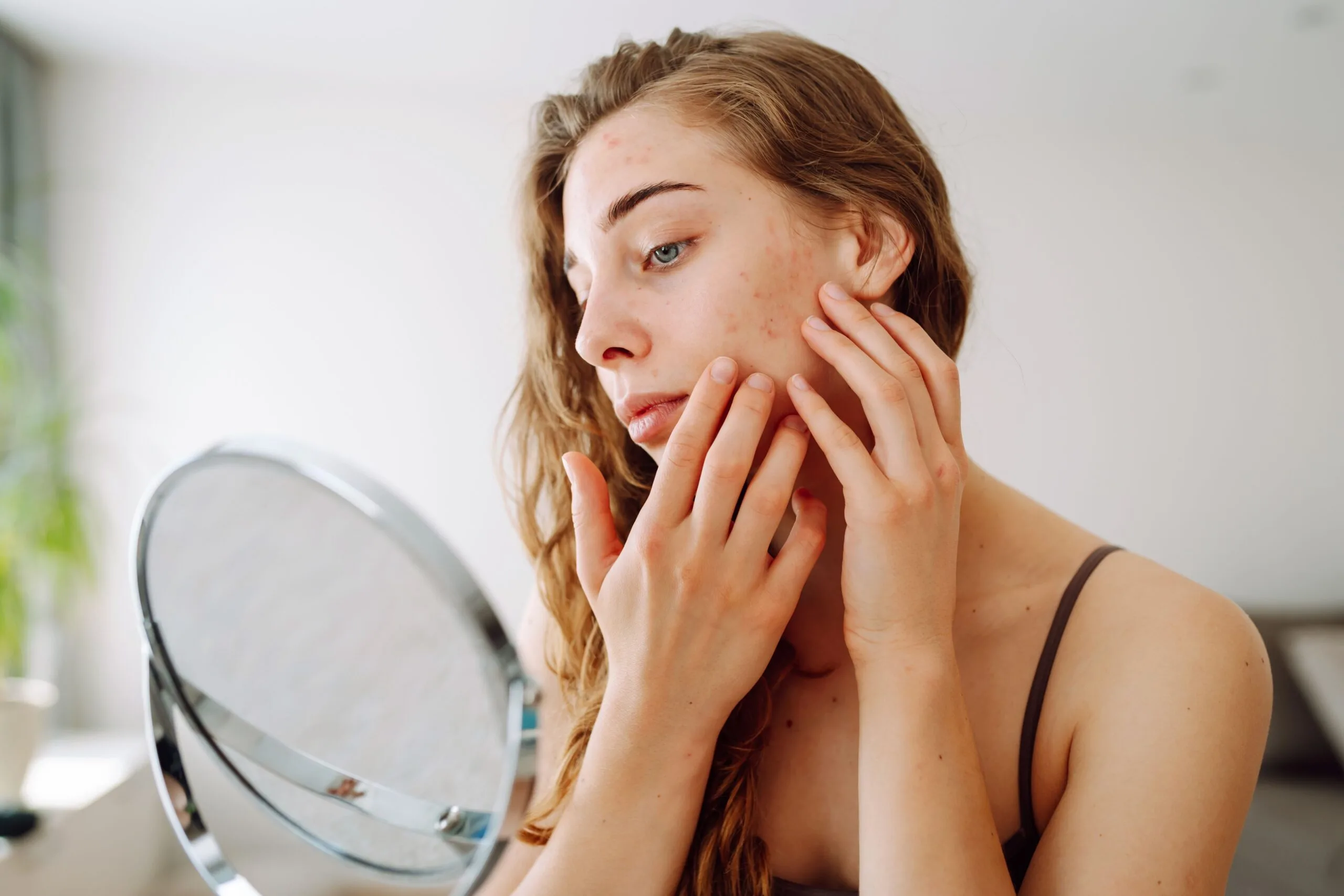


Most skincare routines take place in the bathroom. They involve a cleanser, a serum, and a moisturizer. It’s just part of what you do each morning in between your shower and brushing your teeth. The routine begins and ends at the basin, in front of the mirror. When you leave the bathroom, it’s all forgotten. You did your part; your skin is cared for. Right?
We spend only a few minutes caring for our skin each day. The other 23 hours are spent exposing it to thousands of small interactions that most of us barely notice. What you’re forgetting is that your skin doesn’t live in the bathroom, it lives in everything you do every day. It lives in the fabric from your clothes, the air around you, in movement, in friction, and in repetition. Long before any product is applied, your skin is already responding to a full day of continuous environmental exposure, some visible, but mostly invisible.
One of the skin’s most important roles is maintaining a healthy protective barrier. Every repeated interaction with the environment influences how effectively that barrier functions over time. From friction and changing temperatures to cleansing and moisture loss, the skin barrier is constantly adapting to help protect the body from the outside world.

Modern skincare falls short right around this point. It treats your skin as if it is only influenced by what you put on it, when in fact it is shaped by what it continuously touches.
When you start to really think about that, your perspective changes. Skincare becomes a response to environmental imprinting.
- Skin Operates Like a Living Record of Repeated Contact
Skin continually adapts to repeated patterns of exposure. It doesn’t remember in the human sense, but repeated experiences gradually influence how it responds to its environment.
The same shirt collar brushing the neck. The same phone pressed against the cheek. The same cleansing habits every morning and night. The same environmental exposure on commute routes, workspaces, and home environments.
Each situation doesn’t hold much significance when you consider them in isolation, however, the skin doesn’t treat them in that way. Over time, accumulated environmental exposures can influence the skin’s appearance, including texture, hydration, and overall feel.
This helps explain why two people using similar skincare products can have completely different results. The difference is often not the product, but the environment the skin is repeatedly living inside of. - Friction Patterns Shape Texture More Than People Realize
One of the most overlooked influences on skin health is mechanical stress. That has little to do with irritation from the products you use on your skin, and more to do with the effects of life. Mechanical stress shows up in surprisingly ordinary ways like the shirt collar that brushes your neck each day. Individually, these moments seem insignificant. Collectively, they become part of the environment your skin is constantly responding to.
When you take all of this into consideration, you begin to understand why skincare alone is not enough. A few minutes aren’t enough to counter the effects of the input your skin receives all day, every day.
Skincare doesn’t begin when you reach for a cleanser. It begins with understanding everything your skin encounters before you ever step into the bathroom. - Hydration Is as Much Environmental as It Is Topical
Hydration is often treated as something that you apply to your skin. That view captures only part of the picture. Skin moisture levels are heavily influenced by what surrounds you daily: air conditioning, dry climates, heated indoor environments, and regular cleansing routines. These conditions continuously pull moisture away from the skin before any product enters the picture. If you look at moisturizer in that context, it isn’t where hydration comes from at all. It is merely a response to environmental loss. Moisturizers primarily help reduce water loss and support the skin barrier after daily environmental exposure. Moisturizer is no longer just that last step in your skincare routine, that step that adds a little luxury to your routine, it is the stabilizing layer that helps the skin return to equilibrium after exposure. - The Skin Normalizes What It Cannot Avoid
Your skin is adaptive by design. If a person is constantly exposed to dryness, or environmental stress, the skin gradually adapts to repeated environmental conditions, making those conditions feel normal even when they are not ideal. This adaptation can be misleading. What feels normal is not always what is optimal, it is simply what has been repeated long enough to become familiar. If you can grasp this concept, you will understand why sudden changes in skincare don’t often create lasting improvements. The skin is still adapting to the old environment while being asked to respond to a new one. - Small Contact Points Create Large-Scale Skin Outcomes
Just for interest’s sake, make note of every time you touch your face in a day. The tally will likely leave you dumbfounded.
Throughout the day, your skin responds to hundreds of small interactions, from how you dry your face after cleansing to how often you touch it or the clothing resting against it. Collectively, these moments shape the environment your skin experiences far more than the few minutes spent applying skincare.
Most of these interactions happen so automatically that we rarely notice them, yet together they create the conditions your skin adapts to every single day. - Reset Moments Matter More Than Complex Routines
Healthy skin isn’t built by constantly trying to fix every little flaw. In fact, one of the biggest misconceptions in modern skincare is that every concern requires another product or another step. The reality is often much simpler: skin thrives when it’s given the chance to recover.
Throughout the day, your skin works hard. It faces dry indoor air, changing temperatures, pollution, UV exposure, and the constant friction of clothing, makeup, and even your own hands. By evening, it has spent hours responding to its environment. That’s why skincare shouldn’t always be about adding more; it should be about helping the skin reset.

A good moisturizer plays an important role in that reset. After cleansing, it helps replenish hydration that has been lost throughout the day and supports the skin’s natural barrier, allowing it to feel comfortable, balanced, and refreshed. Rather than overwhelming the skin with layer upon layer of products, a simple moisturizing step gives it the support it needs to recover before facing another day of environmental stress.
This philosophy is reflected in Pink Mink’s Daily Moisturizer. Instead of promising overnight transformations, it encourages something far more sustainable: a consistent daily habit that helps maintain healthy-looking skin over time. It’s a reminder that great skin isn’t usually the result of doing more, it’s the result of showing up for your skin every day with thoughtful, uncomplicated care.

Supporting the Skin Across the Full Day, Not Just in Steps
The same principle extends beyond skincare. Every surface our body encounters throughout the day influences comfort in some way, which is why Pink Mink applies the same philosophy of everyday support across its wider wellness collection.
The philosophy extends naturally into Pink Mink’s broader product collection including the Pink Mink Pedal Complexions Shoes. Daily wellness isn’t created by isolated routines but by the environments we move through and the support we receive throughout the day.

Skin Is Not Separate from the Environment It Lives In
Healthy skin isn’t about chasing perfection or correcting every perceived flaw. It’s about recognizing that your skin is constantly responding to the world around it, and giving it the support it needs to recover. When you shift your focus from doing more to restoring balance consistently, skincare becomes less complicated and far more sustainable.
In the end, the healthiest routines aren’t defined by the number of products on the shelf. They’re built on simple, consistent habits that help your skin adapt, recover, and thrive day after day.