

Just as dinner was being taken out of the oven, the doorbell rang. A delivery had arrived. There was a dish towel over one shoulder, one hand was still holding the oven door, and the parcel had been left against the wall, warming in the late afternoon air.
It was almost left there until the label caught her attention. The box was brought inside and checked before anything else could happen. The vial was still sealed. The packaging appeared intact. The paperwork was there. The lot number matched.
Only then did the parcel stop feeling like another delivery and start feeling like something that needed to be handled differently.
That small interruption says something useful about research materials. A vial does not arrive at the moment research begins. By the time it reaches a researcher, it has already travelled through a series of decisions about how it was produced, tested, packaged, transported and stored. Once it arrives, the chain does not stop.

A Research Material Has a Journey
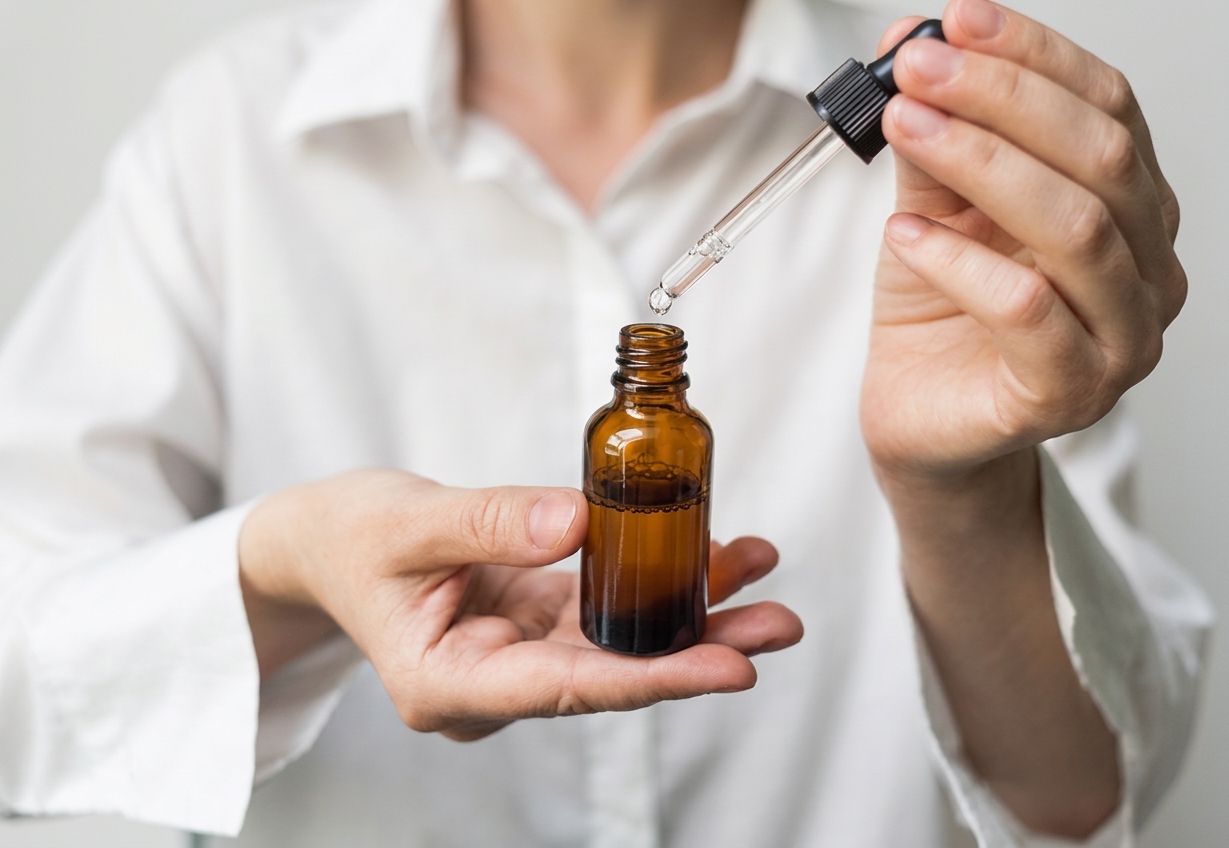
There it is, inside a vial, waiting to be examined. What cannot be seen is the journey behind it. A research material is produced, purified and characterized. It is tested, packaged and transported. Someone receives it, checks it and stores it. Eventually, it becomes part of an experiment.
Every stage introduces another opportunity for something to be documented, verified or mishandled.
This is where the less glamorous side of peptide research becomes important. Before anyone can ask what a peptide might do biologically, there has to be confidence about what material is actually being examined.
Aevria Labs positions GLOW as a research-focused peptide blend intended for studies involving combined cellular signaling pathways, tissue integrity and peptide interaction. The product is listed as 70 mg and is explicitly designated for research use only. The company states that its materials are not intended for human or veterinary use, ingestion, injection or application.
There is one question about a research material: What is it, and can that be demonstrated? Then there is the much larger question of what a particular peptide might eventually mean for biology, tissue repair, aging or human health.
The first can be investigated without pretending that the second has already been answered.
After the Delivery Arrives
The parcel had arrived at exactly the wrong moment. Dinner was almost ready. The oven was still hot. Plates were waiting on the counter. Ordinarily, a box could sit for ten minutes. This one could not simply become part of the kitchen clutter.
Research materials require attention to storage and handling because the condition of a material can matter to the work being conducted with it. Temperature, light, moisture, preparation and repeated changes in storage conditions can all become relevant variables. The point is that correct handling helps preserve the conditions under which the material can actually be studied. The same principle applies to the compounds within GLOW.


GHK-Cu and BPC-157 are biologically interesting for very different reasons. Looking at them separately makes that distinction easier to see. One opens a conversation around tissue structure and remodeling; the other has generated research questions around repair and biological responses to injury.
GHK-Cu and the Architecture of Tissue
GHK-Cu has an unusually interesting history because the GHK component is a naturally occurring tripeptide made up of glycine, histidine and lysine. It is a small copper-binding peptide that has been investigated in relation to skin biology, collagen production, tissue repair and cellular signaling.
Laboratory studies have reported increased collagen synthesis in fibroblast cultures following exposure to GHK-Cu. Fibroblasts are particularly relevant to connective tissue research because they participate in producing components of the extracellular matrix, including collagen.
The compound has been studied in relation to collagen and elastin production, fibroblast activity, extracellular matrix remodeling and processes involved in tissue repair. A review of the peptide’s biological activity describes interactions involving collagen, glycosaminoglycans, metalloproteinases and other components of tissue remodeling.
That makes GHK-Cu particularly interesting when the research question concerns structure.
Aging is often discussed in terms of what disappears: elasticity, firmness, resilience. Molecular research can approach the subject from another direction by asking how the architecture supporting those qualities is constructed and remodeled in the first place.
BPC-157 and the Question of Repair
BPC-157 has been investigated in a range of preclinical models involving tissue repair, vascular responses and musculoskeletal healing. Research has examined processes including angiogenesis, collagen formation, fibroblast activity and the response of blood vessels following tissue injury.
Part of the research has focused on the relationship between healing and vascular signaling.
In experimental models of muscle and tendon injury, BPC-157 has been studied alongside pathways involving vascular endothelial growth factor, or VEGF, and researchers have investigated whether the peptide can influence angiogenic responses during healing.
More recent reviews continue to describe encouraging preclinical findings involving tissue repair, fibroblast activity, angiogenesis and related signaling pathways, while also emphasizing the limitations of the evidence. Much of the research has been conducted in animal models, and robust human clinical evidence remains limited.
Its value as a research subject lies partly in the questions it allows researchers to ask about how damaged tissue communicates, how blood-vessel responses are coordinated and how repair processes might be influenced at a molecular level.
Where GHK-Cu invites investigation into remodeling and structural integrity, BPC-157 has generated research questions around repair and biological responses to injury. The two subjects overlap, but they are not interchangeable.

The Lot Number Is the Thread
The lot number is one of the quietest pieces of information on a vial, but it may be one of the most useful. It connects a physical material to a record.
Aevria Labs provides access to a Certificate of Analysis through its product page and maintains a COA library for its research materials. GLOW’s product listing identifies the material as a 70 mg research blend and provides a certificate reference alongside the product information. That creates a kind of paper trail.
It sounds administrative, but traceability becomes important precisely when something needs to be checked.
The question is no longer simply: What is this? It becomes: Which batch is this, and what was reported about that batch?
That is a much more useful question.
Transparency is not only about putting information on a website. It is about creating enough documentation for another person to follow the thread between the physical material and the analytical record associated with it.
A Certificate Has a Boundary
A Certificate of Analysis is useful because it describes what was tested. It is not useful when it is asked to prove something it was never designed to prove.
Analytical testing can provide information about identity, purity and other characteristics of a particular material or batch. It cannot establish that a peptide produces a particular clinical outcome, reverses aging or extends human lifespan.
That distinction is especially important in longevity research. The field is full of compounds that have fascinating biological mechanisms and equally fascinating headlines. The distance between an interesting molecular pathway and a demonstrated human outcome can be enormous.
The Science Before the Story
Longevity has become a particularly fertile area for storytelling which can make complex science accessible. It can also make a research question sound like a conclusion. A compound studied for tissue repair becomes a regeneration compound. A molecule investigated in cells becomes a longevity intervention. An animal result becomes a human promise. The language can move several steps ahead of the evidence.
Research-only materials occupy a much quieter position: they allow the question to remain a question while the evidence is still being developed.
Aevria Labs explicitly states that its products are intended for in-vitro and pre-clinical research and are not intended for human or veterinary use. It also states that the products have not been evaluated by the U.S. Food and Drug Administration for the claims made on the site.
The Infrastructure of Longevity
Before a discovery can become meaningful, there is an enormous amount of quiet infrastructure underneath it. The material has to be identifiable, the research conditions have to be understood, and the evidence has to remain connected to what was actually studied.
That makes GLOW’s research positioning relevant beyond the vial itself. The blend is presented as a research material for investigating cellular signaling and peptide interaction, rather than as a finished answer to longevity.
Within that context, GHK-Cu and BPC-157 bring two different research questions to the same conversation: one around collagen, fibroblasts and extracellular-matrix remodeling; the other around tissue repair and biological responses to injury.
The questions remain open. That is precisely what makes them worth researching.

What Happens After the Door Closes
By the end of dinner, the delivery had disappeared back into the background. The oven was off and plates were cleared. The parcel was no longer sitting against the wall, and the vial was where it needed to be.
The vial is not the beginning of the story. It is somewhere in the middle.
The label gives the material an identity. The lot number connects it to a record. The Certificate of Analysis provides information about what was tested. Storage and handling provide the physical context in which the material remains available for research.
The individual compounds inside a research blend bring their own questions. What matters is preserving the chain that allows those questions to be examined properly before asking where longevity research might eventually lead.
The next time a parcel arrives while dinner is still in the oven, the moment may look completely ordinary. A box at the door with a label. A vial inside the box and a piece of paperwork.
Something that needs to be checked before it is put away.
Somewhere inside that small interruption is something easy to overlook about scientific progress: the future of a question depends, in part, on how carefully the material carrying that question is treated