Two Greek words, spao (to pull out, to split) and ageiro (to gather, to tie, to unite), are concealed in the term spagyric. Every real alchemical operation is built on these two principles, which is why the oft-quoted adage “Solve et coagula, et habebis magisterium” (Dissolve and bind, and you will have the magistery) was coined.
Three steps are always included in the alchemical process: separation, purification, and cohobation (also known as recombination or the “chymical wedding”). According to the spagyrist, these processes cause the originating species’ curative abilities to grow and be released. Very interesting is the process of producing medicines using alchemical techniques.
Spagyrics were old alchemical herbal remedies that required the alchemists to transform raw plants with known medicinal virtues into more potent forms, increasing their restorative powers. Alchemists purified their materials by first extracting salt, alcohol, and essential oils from plants using extremely basic laboratory equipment. The remaining plant material was then used to “re-bind” these characteristics, creating concoctions that were thought to be far more spiritually potent. Production of spagyrics depended on the manipulation of the three mythologized elements that alchemists thought made up everything: salt, mercury, and sulfur, which translated to the minerals and salts standing in for the “body,” the “soul,” and the “spirit” of alcohol.
Brief History Of Medicinal Plants
Plants were used by our ancient predecessors to treat illnesses, mend injuries, and calm disturbed minds. Since prehistory, people on all continents have employed hundreds, if not thousands, of native plants for treating a variety of illnesses. From these early periods, knowledge about the therapeutic benefits or harmful effects of plants, mineral salts, and herbs gathered to promote health predates all other forms of medical care. The Sumerians, who produced clay tablets with listings of hundreds of medicinal plants (including myrrh and opium), are credited with beginning the recorded study of herbs in Mesopotamia more than 5,000 years ago. From ancient times until the 19th century, when the germ theory of illness was developed, there has been a tight relationship between the history of herbalism and the history of medicine. The scientific method has been used to acquire information that has served as the foundation for modern medicine since the 19th century. In modern medicine, herbal remedies have largely been supplanted by the evidence-based use of pharmaceutical medications, which are frequently derived from medicinal plants. However, many individuals still use various types of conventional or complementary therapy. These systems frequently have a sizable herbal component.
We warmly acknowledge the renowned alchemist and Swiss physician Paracelsus as the founder of homeopathy. He found that the form of each component in a full plant provides us with hints about its therapeutic value. According to his Doctrine of Signatures, the form, color, and texture of a plant’s components might give away which area of the human body it can heal. Numerous of these energy properties and the physical by-products of this intelligent action help treat us because of the inherent affinity between plants and animals, including humans.
[restrict]
Alchemy: A Philosophical and Spiritual Discipline
More than just turning metal into gold is involved in alchemy. It is the activity of inner change. By being true to our best and most authentic selves, each of us has the power to completely reshape our lives. Finding spirit in the matter was the goal of the ancient art of alchemy. It is a means to strengthen your relationship with the holy aspect of existence in contemporary living. The establishment of a connection between our inner and outside worlds is alchemy’s greatest accomplishment. While spiritual alchemy is concerned with releasing your spiritual self from your anxieties, restrictive belief systems, and lack of self-acceptance, physical alchemy is concerned with changing and modifying the characteristics of the physical world. The art of inner change is alchemy.
The entire mass of base metals (the mental body of ignorance) is transformed into pure gold (wisdom) via art (the process of learning) since it is tinctured with insight.
Alchemy can give herbalism a vitally important balance between being able to understand a plant’s pharmacological and biochemical aspects and its spiritual side, which allows us to see it as a living, sentient being with the ability to heal us both physically and spiritually. This is also one of the many reasons that organic ingredients are more beneficial than synthetic ones when it comes to tinctures, elixirs, etc., for health purposes.
Alchemical Skincare Tinctures
The largest breathing, living organ of your body is your skin. When you apply anything to your skin, up to 60% of it is absorbed into your bloodstream and circulates throughout your whole body. However, if you were aware of the poisons that non-organic skin care products carried, you may hesitate before using them. Therefore, it’s not surprising to observe an increase in the use of organic skincare products. It’s time to stop using non-organic items if you still do. The world is going organic right now. Everything organic is available, including organic beds, organic apparel, organic produce, organic milk, food containers, and kitchenware. The growing public knowledge of the harmful effects that conventional, chemical-filled products have on human health and the environment is a primary cause of the organic trend’s increased appeal. What’s even more alarming is that a variety of studies suggest a connection between exposure to synthetic chemicals and several health problems, including cancer and Alzheimer’s disease.
Frecklefarm
OrganicsFrecklefarm Organics is alchemy-infused skincare that is crafted with a variety of natural, high-performance ingredients that enhance the look and health of the skin while uplifting our inner selves with essential oils that promote creativity, self-worth, intuition, love, and sexuality to bring out our inner beauty. They are grateful every day, believe in marvels, and care about nurturing the mind, body, and Mother Earth.
They use organic, natural, fair trade, and handmade components that are in harmony with Mother Earth to create their skincare, bath, and cosmetic products. To enhance our distinctive beauty both inside and out, each component is carefully chosen. Their packaging is recyclable and biodegradable, and they are entirely vegan and cruelty-free.
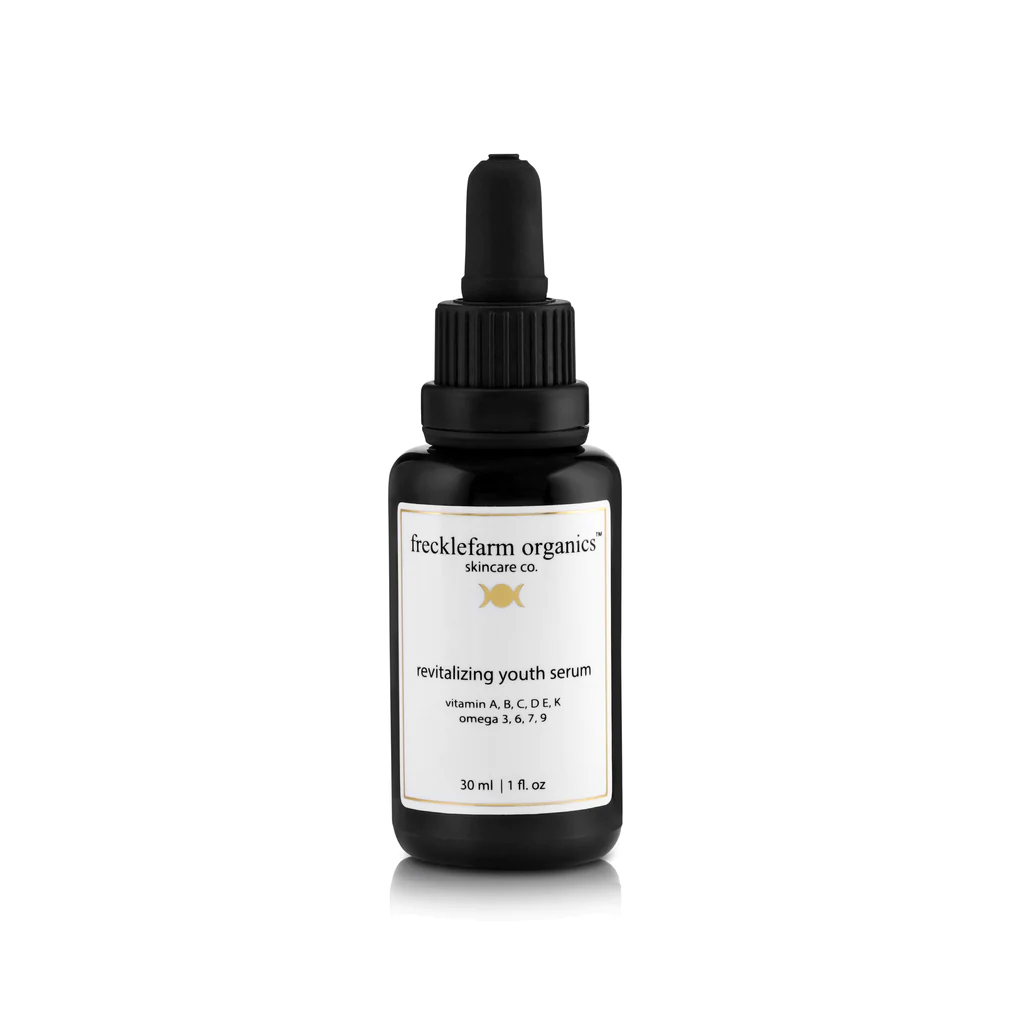
Frecklefarm Organics: Revitalizing Youth Serum
Infused with age-defying 24k Gold to give your skin life power, the revitalizing youth serum is a combination of high-performance fruit seed and floral oils rich in vitamins + minerals including vitamins A, B, C, and E, omega 3, 6, and 9, magnesium, iron, calcium, and potassium. This elegant mixture was carefully chosen to moisturize the skin and produce a luminous and young shine. A few advantages are that it encourages skin elasticity and cell regeneration, reduces the development of age spots and the appearance of premature aging, helps to enhance skin tone and texture, softens, brightens, and tightens pores, adds a glamorous shine, and is uplifting and aphrodisiac.
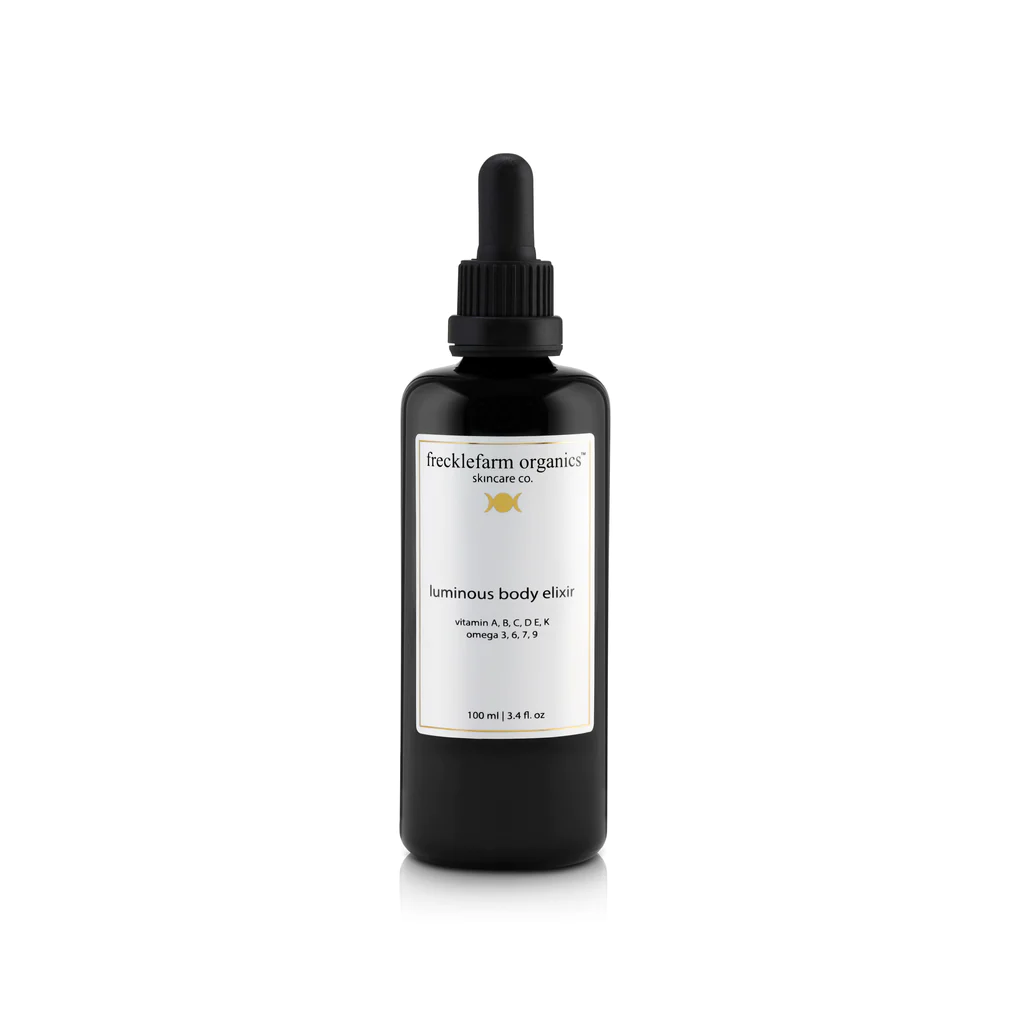
Frecklefarm Organics: Luminous Body Elixir
High-performance fruit seed and floral oils combined to create the luminous body elixir are loaded with omega 3, 6, and 7 plus vitamins A, B, C, and E. It has been carefully chosen to instantly moisturize the skin, give it a beautiful, young shine, and boost the spirit. Using this has never made it easier to turn back the clock.
Why Connecting With Nature Is Profoundly Healing
You must have noticed how amazing you feel after taking a walk outdoors, right? Or how at ease do you feel while lounging on the grass, working in a garden, going barefoot on the beach, or wandering in a park? Something about being in touch with the Earth balances our internal cycles, brings inner serenity, and gives us energy. Both Mother Earth and we are electromagnetic beings. We share the same materials. Naturally, our energy frequency starts to vibrate at the same frequency as the Earth when we get in touch with nature. We focus on her breathing and heartbeat while she holds us.
We get unearthed when we are not grounded to the Earth (think of an electrical cord that is flipping all over the place). It becomes challenging for us to release the frequencies we’ve absorbed on board without grounding. We feel overpowered and flooded by erratic energy. Energies can also refer to unfavorable energies/projections from other people, unnatural objects, tough situations, and the ‘go-go-go’ hyper-stimulation of the modern world. Each of us is a symbol of Mother Earth, and humans to the planet Earth are like cells to the body. We may infer pieces from the whole and recognise completeness within the parts. We represent Mother Nature’s macrocosm in its microcosm. Our body is compared to an ecosystem rich in geographical characteristics in this light, including rivers running through lymphatics and veins, rocks and mountains forming our bones, lakes accumulating in our joints, winds blowing through our lungs, and fires smoldering in our hearts and stomach. Additionally, as we heal from the inside out, Mother Earth benefits as well.
It only makes sense to get in tune with nature (both) psychologically and physically. Physically, what better way than to use products made by those who understand how important alchemy is?
With our eyes constantly glued to our smartphones, for many of us, the number one source of news is your With our eyes constantly glued to our smartphones, for many of us, the number one source of news.
With our eyes constantly glued to our smartphones, for many of us, the number one source of news is your With our eyes constantly glued to our smartphones, for many of us, the number one source of news.
With our eyes constantly glued to our smartphones, for many of us, the number one source of news is your With our eyes constantly glued to our smartphones, for many of us, the number one source of news.
With our eyes constantly glued to our smartphones, for many of us, the number one source of news is your With our eyes constantly glued to our smartphones, for many of us, the number one source of news.
With our eyes constantly glued to our smartphones, for many of us, the number one source of news is your With our eyes constantly glued to our smartphones, for many of us, the number one source of news.