
There is a distinct, harrowing moment in every medical journey that often goes unspoken: the day you look at your closet and realize it has turned into a collection of enemies.
It’s a quiet realization, but a devastating one. You reach for your favorite pair of high-waisted jeans, only to realize they are now a structural hazard for your ostomy. You grab your “go-to” cozy hoodie, but then remember it requires you to practically strip naked in a freezing, fluorescent-lit infusion clinic just so a nurse can access your chest port. In these moments, your clothes aren’t just fabric; they are reminders of everything that has changed, and not for the better.
The Psychological Friction of the “Standard” Wardrobe
Most people think of “healing” as something that happens in a doctor’s office or through a prescription. They forget that healing is also a psychological process of reclaiming your identity. When you spend your day fighting against your clothes, adjusting waistbands that pinch, hiding bulges that make you self-conscious, or shivering in an exam room because your outfit wasn’t “medical-grade”, you are leaking mental energy.
How can you not know that your wardrobe is supposed to work for you, not against you?
Living in a state of “just getting by” means settling for oversized hospital gowns, baggy t-shirts that hide your shape, and the constant threat of an awkward wardrobe malfunction. This isn’t just an inconvenience; it is a slow erosion of your dignity. When your clothing fails to accommodate your reality, it forces you to remain in the “patient” role every second of the day.
[restrict]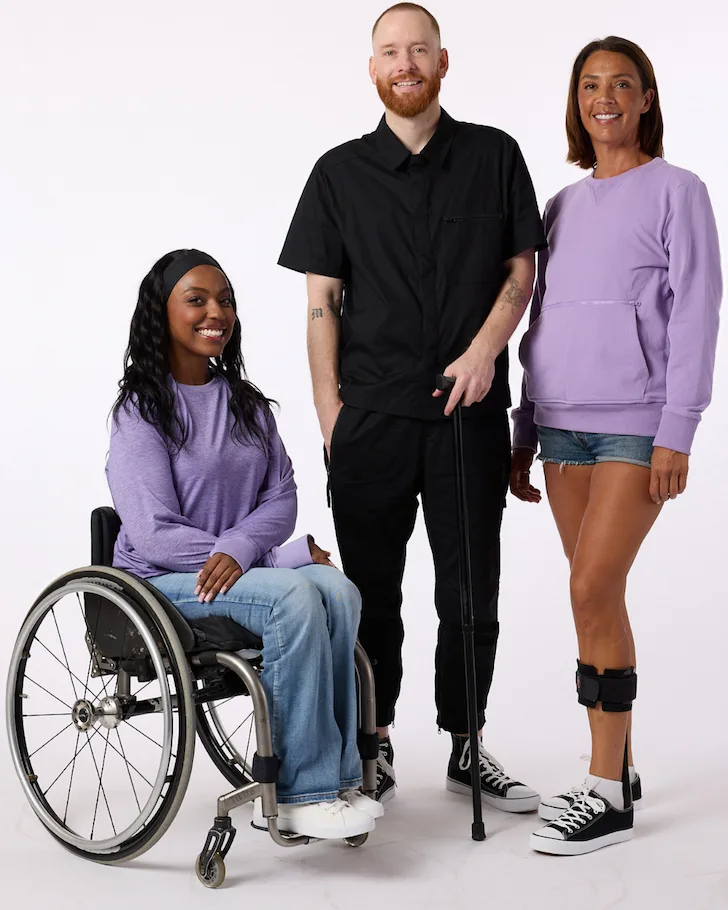
Gear as a Fundamental Right
It’s time to shift the perspective. Adaptive clothing and specialized recovery gear aren’t “luxuries” reserved for a lucky few. They are fundamental tools for your sanity.
- The Port-Access Revolution: Imagine walking into a clinic and, instead of disrobing, simply unzipping a discrete, reinforced opening in a stylish hoodie. You stay warm, you stay covered, and you stay in control of the interaction.
- The Ostomy Shift: Imagine wearing clothes that don’t just “fit,” but actually support the mechanics of your device. When you aren’t worried about a leak or a visible silhouette, your brain is finally free to focus on things other than your illness.
The right gear acts as a bridge between the clinical world and the real world. It provides the “soft” healing that medicine can’t offer: the restoration of your confidence.
Choosing the Path of “Truly Living”
Knowing the difference between surviving your condition and truly living with it will change your life. You have already been through enough; you shouldn’t have to battle your sweater, too.
The secret to modern recovery isn’t just about what’s happening inside your body, it’s about how you house that body. It’s about choosing to put on something in the morning that makes you feel powerful, capable, and human. Stop settling for the “patient” uniform. Reclaim your closet, reclaim your morning routine, and let your clothes become a part of your cure rather than a part of the problem.
The “Gut” Feeling You Should Never Ignore: Beyond the Physical
Let’s address the reality that most people outside the chronic illness community never see: the mental load of living with an ostomy. It is a constant, quiet hum of anxiety that follows you from the bedroom to the boardroom. For many, the “gut” feeling isn’t just a biological reality; it’s a psychological weight. You spend your days performing a frantic mental marathon, hyper-aware of every sensation. You worry about “the bulge” showing through a favorite shirt, the dreaded “leak” in a public space, or the “swing” and weight of a filling pouch as you move.
This constant vigilance is exhausting. It drains your social battery before you even leave the house. But here is the truth: you weren’t meant to live your life as a full-time security guard for your own body.
Engineering Peace of Mind
It is a common misconception that feeling “secure” requires feeling restricted. Many patients assume they have to choose between total insecurity or the stifling, rigid discomfort of a “medieval corset” style binder.
The Ostomy Wrap Support Belt challenges that entire narrative. It isn’t just a piece of fabric; it is a structural masterpiece designed specifically for the mechanics of a body in motion.
- Tactile Security: It provides a snug, breathable embrace that stabilizes your appliance. This significantly reduces the literal “tugging” sensation on your peristomal skin, a sensation that often triggers the panic of a potential leak.
- Active Freedom: Whether you are navigating a high-stakes meeting, hiking a mountain, or simply surviving a long, crowded aisle at the grocery store, this belt acts as a silent partner. It keeps everything tucked, flat, and supported, allowing you to move with fluidity rather than hesitant, jerky motions.
- The “Pat” Habit: Think about how many times a day you unconsciously pat your side to check if your pouch is okay. Imagine the mental energy you would reclaim if you simply… stopped doing that. That peace of mind isn’t a luxury; it’s a necessity for your mental health.

The Cost of Hesitation
Knowing that this level of comfort and security exists, and choosing to stay in your current state of discomfort, is a heavy burden to carry. It’s like being aware of a shortcut that bypasses hours of gridlock, yet choosing to sit in bumper-to-bumper traffic out of habit.
Every day you wait is another day you are giving away your confidence to a piece of medical plastic. You deserve to feel like a person, not a patient. You deserve to look in the mirror and see your outfit, not your appliance. The “gut feeling” you should be listening to is the one telling you that you’ve struggled long enough.
The solution is right here. It’s time to stop managing your anxiety and start living your life.
Port-a-Party: Why Your Hoodie Choice is a Big Deal
Now, let’s pivot slightly north. For those navigating the world of chemo, dialysis, or chronic illness treatments involving a chest port, the “Infusion Shiver” is a very real phenomenon. You sit there, half-unzipped or with your collar pulled down to your elbow, feeling like a lopsided penguin in a drafty room.
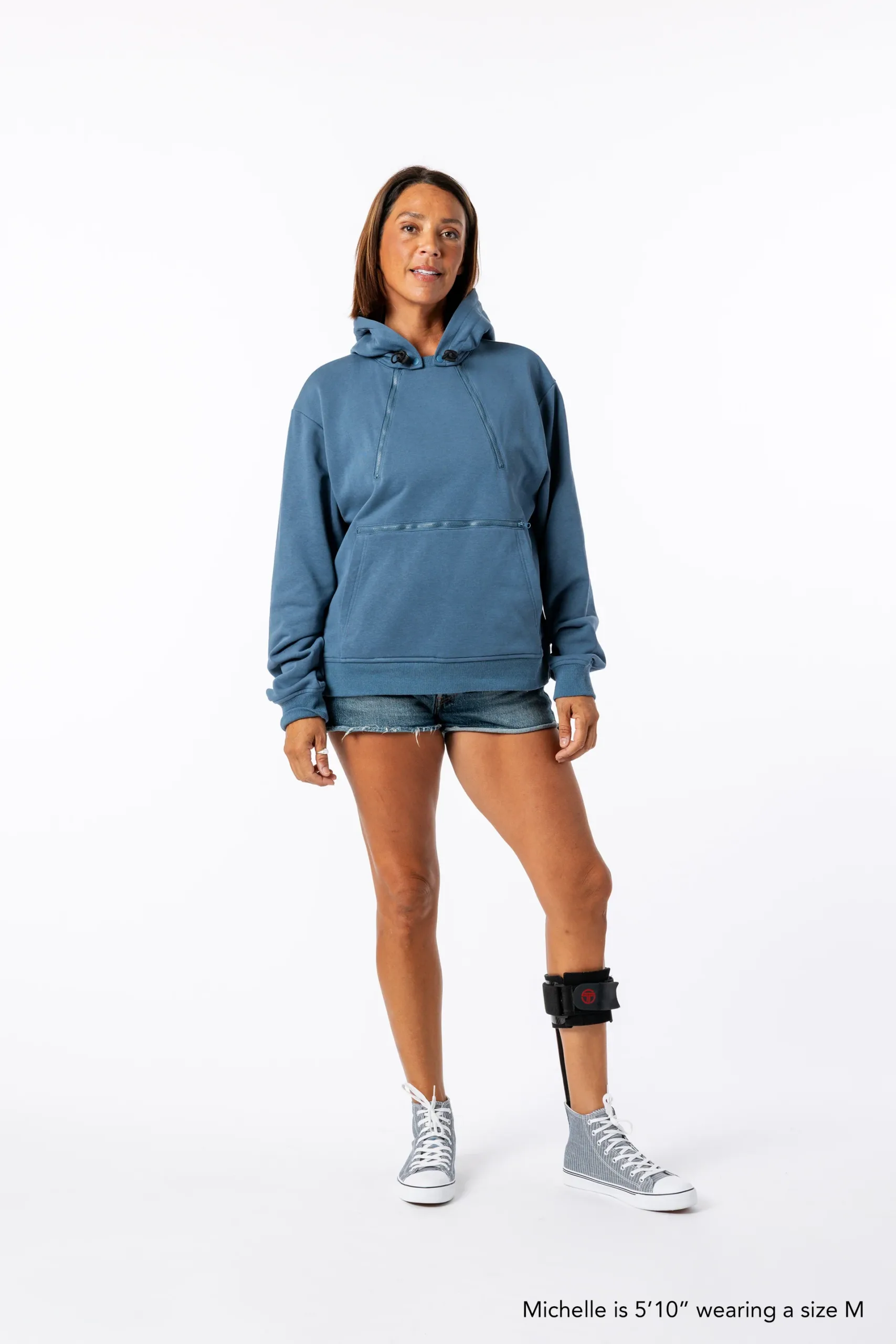
Knowing that you can stay fully clothed, warm, and stylish during a treatment will change your life. Enter the Chest Port Zip Access Hoodie. This isn’t your average “borrowed it from my cousin” sweatshirt. It features strategically placed zippers that allow for medical access without requiring you to sacrifice your warmth or your modesty.
It is professional, it is sleek, and it is incredibly clever. The denim-accented style means you can walk from the clinic straight to a coffee date without looking like you just stepped out of a recovery ward. Why would you ever go back to the “Old Way” of dressing once you know this level of intentional design exists?
Wellness Tips: Treating Your Body Like the VIP It Is
While the right gear is essential, wellness is a holistic game. Here are a few ways to level up your recovery journey while rocking your Spoonie Threads:
- Hydrate Like a Pro: When you have an ostomy, hydration is even more critical. Carry a reusable bottle that makes you feel fancy.
- Skin Integrity is King: Use the Ostomy Wrap Support Belt to prevent the weight of a filling bag from pulling on your peristomal skin. Your skin will thank you by not being irritated and angry.
- The Power of Texture: Recovery can be sensory overload. Choosing soft, high-quality fabrics like those found in the Chest Port Zip Access Hoodie can actually lower your cortisol levels by reducing physical irritation.
Fun Facts: Did You Know?
- Spoonie Heritage: The term “Spoonie” comes from the Spoon Theory, a way to explain the limited energy reserves people with chronic illness have. Spoonie Threads was built specifically to help you save your “spoons” for the things that matter, rather than wasting them on struggling with buttons.
- Zippers with Purpose: The zippers on the access hoodie are reinforced. They are designed to be used frequently, unlike that one cheap jacket in the back of your closet that snags every time you breathe on it.
- Breathable Tech: The fabric in the support belt is moisture-wicking. This means even if you’re nervous about a big presentation (or a first date), your gear is working to keep you cool and dry.
The “Up to You” Ultimatum: Reclaiming the Narrative
In the landscape of chronic illness, “choice” often feels like a foreign concept. From the moment of diagnosis, your life is dictated by schedules you didn’t set, procedures you didn’t ask for, and a body that suddenly feels like it’s operating under a different set of rules. You didn’t audition for the role of a patient. You didn’t sign up for the surgical scars, the semi-permanent presence of a port, or the lifestyle adjustments that come with an ostomy.
In many ways, the medical journey is an exercise in surrendering control. But there is a silent, powerful threshold where that surrender ends and your agency begins. That threshold is found in the mirror every single morning.
The Shift from Patient to Person
When you live with a medical device, the world often tries to define you by it. If your clothes are designed only for “patients,” you begin to feel like one 24/7. But there is a profound psychological shift that occurs when you stop dressing for your illness and start dressing for your life.
Taking action today is about more than just convenience; it’s about refusing to be limited by your layers.
1. The Power of Preparation: Choosing specialized gear, like an Ostomy Wrap Support Belt isn’t just about physical security. It’s about the mental freedom that comes from knowing your equipment is stabilized. It’s the difference between constantly checking your silhouette in a shop window and walking into a room with your head held high, focused on the conversation rather than your bag.
2. The Comfort of Dignity: There is a specific kind of vulnerability that comes with medical access. When you wear a Chest Port Zip Access Hoodie, you are making a choice to prioritize your comfort and your privacy. You transition from being “exposed” during a flush or infusion to being a person who is simply cozy in their favorite sweatshirt. You retain your warmth, your style, and, most importantly, your autonomy.
Owning the Future Version of You
The truth is, your condition isn’t going anywhere, but the way you inhabit your body can change overnight. The transition from “patient” to “person who happens to have a medical device” is a deliberate act of rebellion against the idea that you should be “less than” because of your health.
Every day you spend tugging at ill-fitting waistbands or fumbling with standard shirts at the clinic is a day you aren’t fully present in your own life. You deserve a wardrobe that works as hard as you do. You deserve to feel 100%, not “100% for someone with a port,” but truly, authentically yourself.

The ultimatum is simple: You cannot control the diagnosis, but you are the sole architect of your dignity. Don’t let another morning pass where your clothes remind you of your limitations instead of your strength.
The choice to reclaim your confidence is entirely up.
[/restrict]